Spain Outpaces Major European Economies With Upgraded Growth Outlook
Madrid, Friday, 20 November 2026.
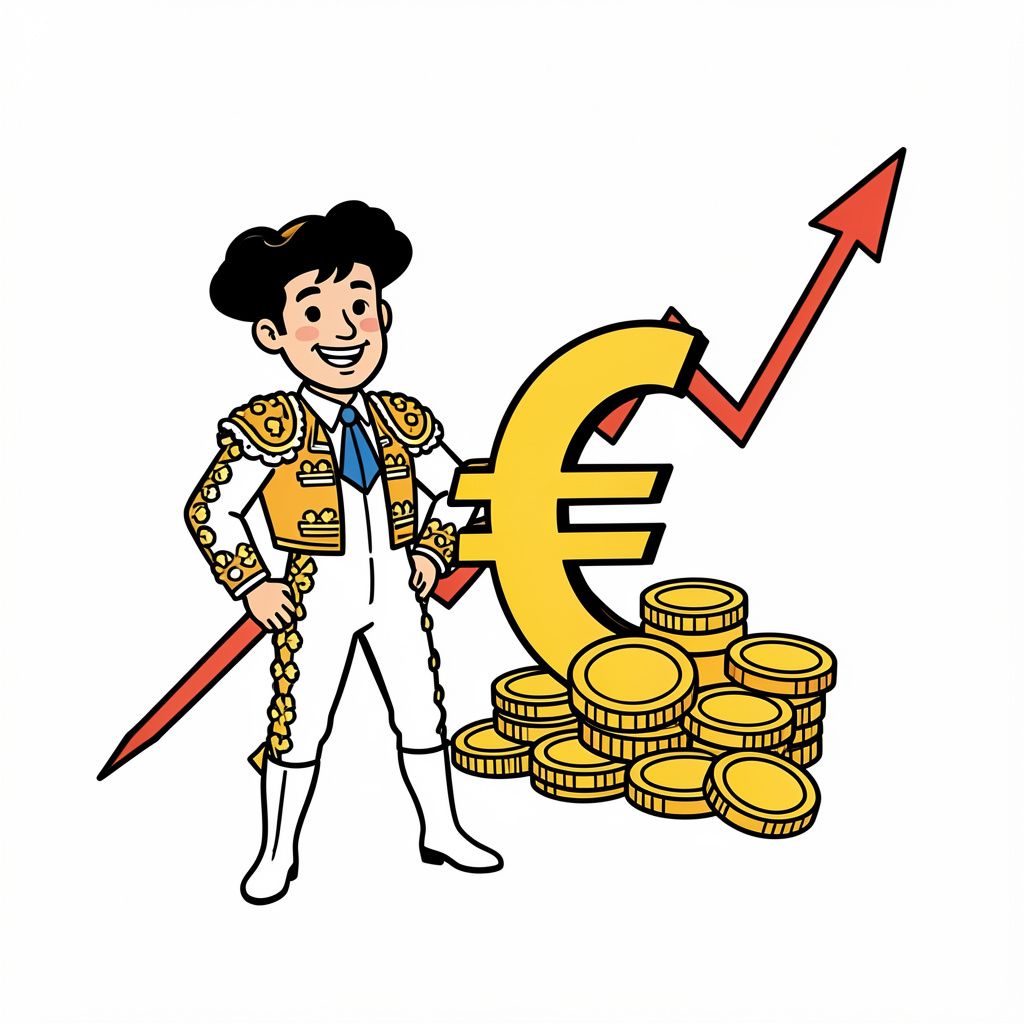
Spain’s 2026 economic growth is projected to reach 2.6 percent, more than doubling the euro area average despite surging energy inflation squeezing household purchasing power.
European Commission Upgrades Spain’s Growth Forecast
On November 19, 2026, the European Commission released its Autumn 2026 Economic Forecast, upgrading Spain’s 2026 GDP growth projection to 2.6%, a significant revision from its earlier estimate of 2.4% [1][2]. This upward revision positions Spain’s growth at more than double the euro area average of 1.2% for 2026, as reported by the Commission [1]. The upgraded forecast underscores Spain’s resilience amid broader economic challenges, including energy price volatility and geopolitical uncertainties [2].
Macroeconomic Resilience Amidst Persistent Inflation Pressures
Spain’s growth trajectory is underpinned by robust domestic demand, with household consumption and public spending contributing 2.6 percentage points to the 2.7% interannual GDP growth recorded in Q3 2026 [3]. However, this macroeconomic strength contrasts sharply with household-level realities, where inflation continues to erode purchasing power. Spain’s year-on-year inflation stood at 4.9% in September 2026, outpacing the eurozone average of 4.0% [1][3]. Economist José Carlos Díez highlighted this disconnect, noting that headline GDP growth does not necessarily translate to improved living standards for all households, particularly given the 3.1% core inflation rate that excludes volatile food and energy prices [4].
Sectoral Strengths and Structural Challenges
The tourism sector, a cornerstone of Spain’s economy, demonstrated remarkable performance in 2026, with international tourist arrivals reaching 80.5 million between January and September—a 5.2% year-on-year increase—and spending hitting a record €114.38 billion, an 8% rise [3]. Tourism now accounts for approximately 13% of Spain’s GDP, supporting over 2.7 million jobs [3]. Despite these gains, industrial production growth remained sluggish at 2% year-on-year in September 2026, with the sector’s contribution to GDP stagnant at around 15%, well below the EU’s 2035 target of 20% [1][3]. The services sector, however, maintained strong momentum, contrasting with weaker retail sales and industrial activity [4].
Public Debt and Fiscal Outlook
Spain’s public debt reached a historic high of €1.767 trillion in September 2026, equivalent to 100.3% of GDP, though this represents a 2.7-point improvement from September 2025 when debt stood at 103% of GDP [5]. The European Commission projects Spain’s debt-to-GDP ratio will fall below 100% by the end of 2026, a milestone not achieved since 2019 [1][2]. Despite this progress, the budget deficit is forecast to widen to 2.6% of GDP in 2026, driven by energy subsidies and flood-related measures, before narrowing to 2.2% in 2027 [2]. The Banco de España reported that while absolute debt levels remain elevated, the relative burden on the economy is easing, providing fiscal space for future investments [5].
Comparative Performance and Future Projections
Spain’s 2.6% growth forecast for 2026 outpaces all major eurozone economies, including Germany (1.3%), Italy (1.0%), and France (0.4%), as outlined in the European Commission’s Autumn 2026 Forecast [1][2]. The Commission’s projections for 2027 and 2028 suggest a moderation in growth, with GDP expansion expected to slow to 2.1% and 1.9%, respectively, reflecting anticipated declines in job creation and the tapering of EU-funded investments [1][2]. Employment growth is projected to decelerate from 2.3% in 2026 to 1.8% in 2027, while inflation is expected to average 3.9% in 2026 before easing to 3.3% in 2027 and 2.3% in 2028 [1][2].