Pentagon Classifies Press Office, Barring Journalist Access
Washington, Tuesday, 2 June 2026.
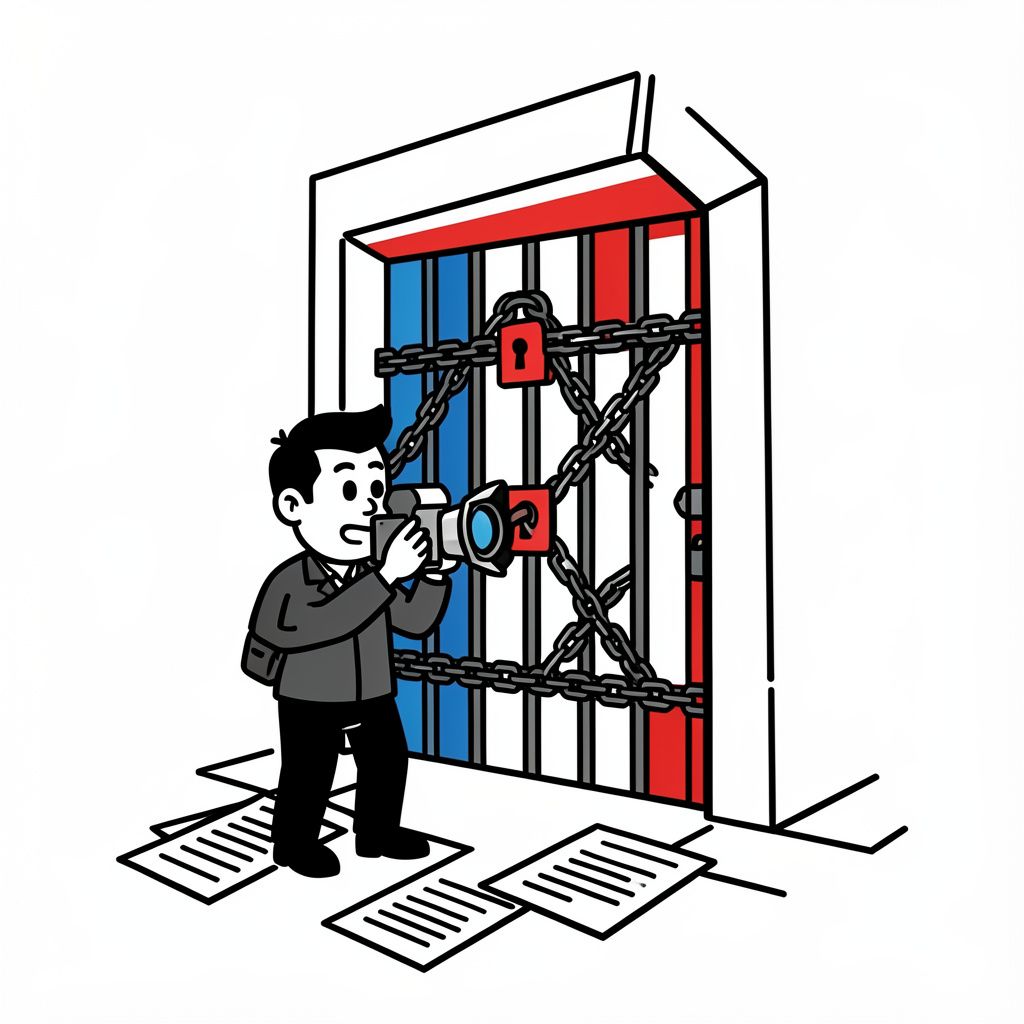
The Pentagon has abruptly barred journalists from its press office by designating it a classified space for speechwriters, sparking immediate concerns over military transparency and government oversight.
The New Policy and Its Immediate Impact
On June 1, 2026, the United States Department of Defense officially implemented a new policy barring journalists from its press office [1][3]. Acting Pentagon Press Secretary Joel Valdez announced the immediate redesignation of the space as a Sensitive Compartmented Information Facility (SCIF) [2][3]. The Trump administration cited the presence of speechwriters from the Office of the Secretary of War—a nomenclature the current administration prefers over the traditional defense department title—who require access to classified materials and the secure SIPRNet computer network [2][3]. This structural change dismantles the historical precedent of previous administrations, under which the press office functioned as an open room where reporters could freely approach military public affairs officials without official escorts [1].
A Timeline of Escalating Restrictions
The June 1 restriction represents the culmination of a broader, ongoing strategy by the Trump administration to regulate media access at Pete Hegseth’s Pentagon [3]. The tightening of press protocols began in September 2025, when the military mandated that journalists sign a pledge agreeing not to gather unauthorized information, with non-compliance risking the revocation of press credentials [2]. By October 2025, the department introduced sweeping changes, prompting many veteran reporters to surrender their passes [2]. In their place, the administration announced a new iteration of the Pentagon press corps, granting access to 60 journalists representing far-right media outlets [2].
Transparency and Oversight Implications
Media freedom advocates and industry observers have raised immediate alarms regarding the long-term impacts of these operational changes [GPT]. Mark Schoeff Jr., President of the National Press Club, publicly condemned the June 1 policy, asserting that independent reporting on the military is a mandatory component of government oversight [3]. He warned that distancing journalists from defense institutions directly deprives the American public of vital information and transparency [3]. Similarly, Seth Stern, chief of advocacy at the Freedom of the Press Foundation, criticized the administration’s rationale, expressing severe skepticism regarding the legitimacy of classifying the press office space [3].