The Impending Legal Showdown Over the Economics of American College Sports
Washington, Friday, 13 March 2026.
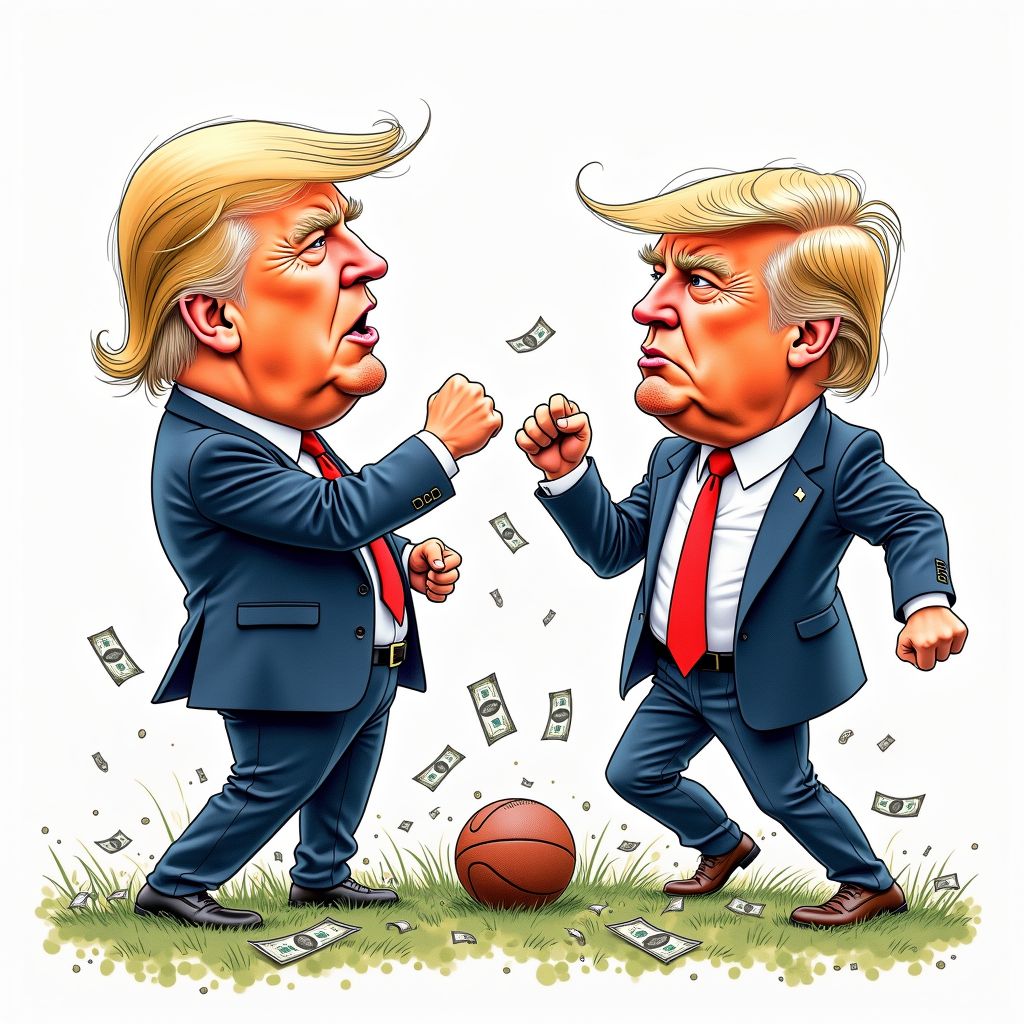
A March 2026 legal battle over President Trump’s executive order threatens to fundamentally restructure the multibillion-dollar economic model of American college sports, targeting athlete compensation and revenue sharing.
From Local Arbitrations to Federal Interventions
The escalating legal friction over the multi-billion dollar college sports industry is no longer confined to regional disputes. As previously reported, eighteen Nebraska football players recently entered arbitration after regulators blocked over $1 million in endorsements—a precedent-setting clash that threatened to dismantle the new oversight system [1]. However, this local controversy has rapidly evolved into a national federal crisis. On March 4, 2026, President Donald Trump convened a White House summit with over 50 stakeholders to address the structural crisis in major college football [2][4]. During the summit, the President pledged to issue a new executive order intended to “solve all of the problems” in college sports, fully anticipating a legal fight given that his previous 2025 executive order yielded little practical effect [2][3].
The financial stakes have never been higher. Following the implementation of institutional revenue sharing in the summer of 2025 and a landmark nearly $2.8 billion antitrust settlement in June 2025 that allowed schools to directly pay athletes, the economic model is transforming at breakneck speed [2][3]. In December 2025, the University of Utah even brokered a deal to accept private equity capital [2]. Now, discussions at the highest levels of government include proposals for restructuring major college football, with entities like Smash Capital potentially pooling media rights [2].
Congressional Interventions and Bipartisan Proposals
Lawmakers are actively debating how to regulate this new era of athlete compensation. On March 10, 2026, Republican Senator Bill Cassidy of Louisiana led a U.S. Senate panel roundtable, declaring that the “current system is actually hurting the student-athlete” [3]. The legislative landscape is currently fractured along party lines regarding the extent of federal oversight. The Democrat-sponsored SAFE Act seeks to establish federal control and regulation over college athletes, whereas the Republican-backed SCORE Act is favored by the NCAA [2].
Despite these partisan divides, some bipartisan efforts are emerging. Republican Senator Eric Schmitt of Missouri and Democratic Senator Maria Cantwell of Washington have introduced a proposal targeting the Sports Broadcasting Act of 1961 [2]. Their legislation intends to provide a new antitrust exemption that would allow college football programs to jointly sell their media rights, making it optional for schools and conferences to pool these assets together [3]. Meanwhile, Republican House Speaker Mike Johnson has expressed optimism that a bipartisan framework for national athlete compensation could pass in the House, even as Democratic Senator Chris Murphy of Connecticut pushes for formal collective bargaining rights for athletes [3].
Employee Classification and Institutional Survival
The core of the impending legal showdown rests on whether student-athletes should be legally classified as employees. For smaller institutions, this designation could be financially ruinous. Jim Carr, president and CEO of the National Association of Intercollegiate Athletics (NAIA), warned that employee classification is critical to the long-term survival of NAIA schools, where athletes make up a significant 36 percent of the student body, leaving non-athletes to comprise only 64 percent of the average campus population [3].
Legal experts highlight severe logistical hurdles if employment status is granted. Bernard Dennis III, a principal at the law firm Jackson Lewis P.C., noted that classifying students as employees would subject universities to the Fair Labor Standards Act (FLSA) [3]. This raises unprecedented questions about compensable work hours, potentially requiring schools to pay overtime or compensate athletes for the time they spend in class simply to maintain their grade point average eligibility [3].
A Potential Breakaway and the Future Landscape
As federal lawmakers debate policy, the major athletic conferences are maneuvering for leverage. White papers detailing the crisis and the consolidation of media rights have been jointly authored by the Big Ten and the Southeastern Conference (SEC), responding in part to lobbying from Texas Tech mega-booster Cody Campbell [2]. Tensions with the NCAA are also reaching a boiling point. On March 12, 2026, it was reported that the NCAA intends to continue its tampering investigations, directly defying a request from the Big Ten for a moratorium [2].
The structural integrity of the NCAA itself is now in question. As of March 10, 2026, SEC Commissioner Greg Sankey acknowledged that factions within the SEC are actively considering breaking away from the NCAA entirely [2]. With a Senate Health, Education, Labor and Pensions Committee hearing scheduled for later in March [alert! ‘Exact date in March 2026 is unspecified in current reports’], the future of college sports remains deeply uncertain [2]. Industry analysts project that by 2030, the landscape could be radically reorganized into a Super League dominated by the Big Ten and SEC, fundamentally altering the century-old tradition of American university athletics [2].