Intuitive Machines Secures $180 Million NASA Contract for Lunar South Pole Mission
Houston, Tuesday, 24 March 2026.
Intuitive Machines won a $180.4 million NASA contract to deliver international rovers to the lunar south pole, debuting a new cargo-class lander and driving shares up nearly 14%.
Scaling Up with the Nova-D Lander
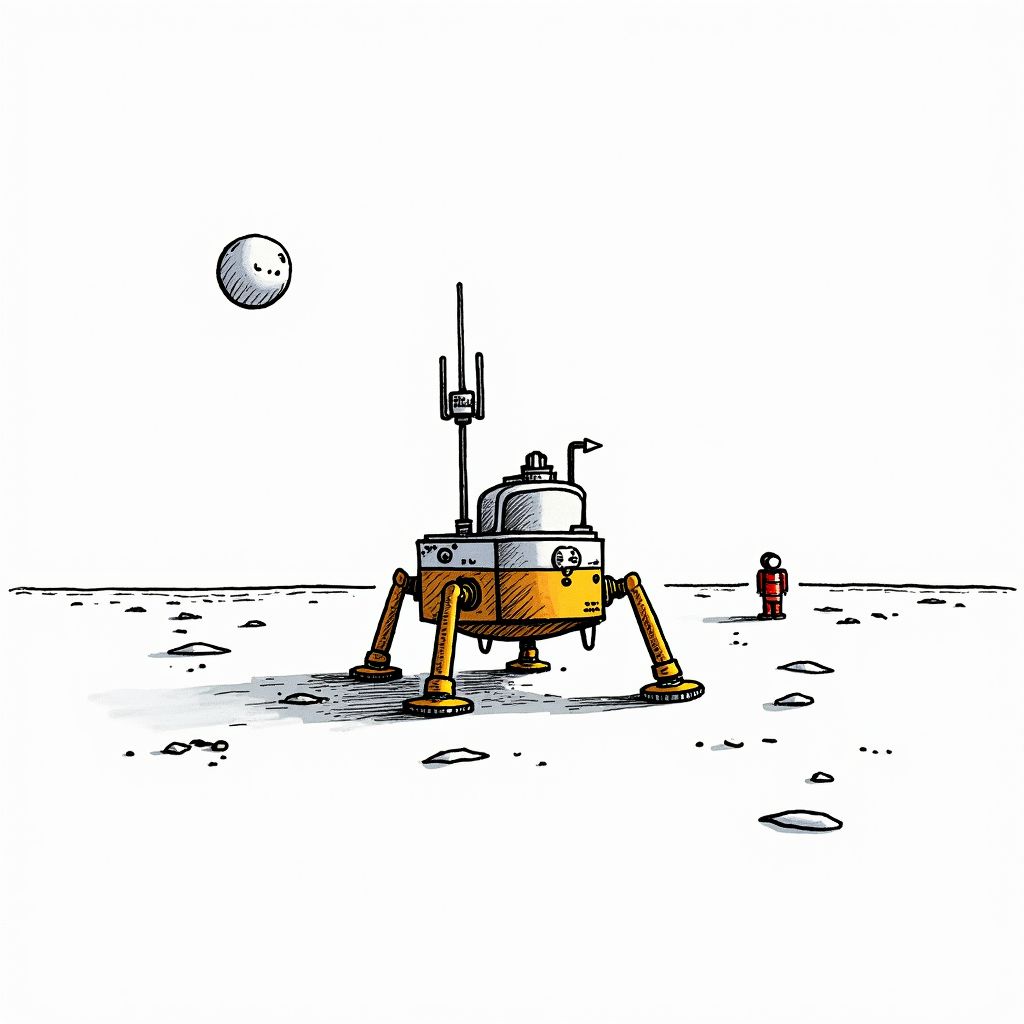
On March 24, 2026, Houston-based Intuitive Machines (Nasdaq: LUNR) announced its selection by NASA for a $180.4 million Commercial Lunar Payload Services (CLPS) contract [1][2]. This award, designated for the upcoming IM-5 mission, represents the company’s fifth CLPS task order and marks a pivotal operational shift: it is the first mission that will require the deployment of the larger, cargo-class Nova-D lunar lander [1][3]. Designed to autonomously operate on the lunar surface, the Nova-D lander significantly scales the company’s commercial capabilities by accommodating heavier and more complex equipment [2][3].
Strategic Targeting at Mons Malapert
For this mission, Intuitive Machines has targeted Mons Malapert, a prominent ridge situated near the Moon’s South Pole [1][2]. This specific landing site was selected for its strategic geographical advantages, offering access to permanently shadowed regions that are of high scientific interest for potential water-ice deposits [2][GPT]. Furthermore, the location provides stable illumination and continuous Earth visibility, which are critical for maintaining robust communications and navigation links during the mission’s lifespan [2].
Financial Momentum and Market Reaction
The financial markets reacted swiftly to the March 24 announcement, reflecting strong investor confidence in the company’s expanding aerospace footprint [GPT]. Shares of Intuitive Machines experienced a notable surge, gaining 13.91% from a pre-news closing price of $20.31 [2]. Trading volume also spiked dramatically to 18,509,667 shares, significantly outpacing the stock’s 20-day average volume of 11,506,354 shares [2]. This represents a trading volume increase of 60.865 percent above the recent average [2].