Orban Escalates EU Rift by Formally Declaring Ukraine an Enemy Over Energy Policy
Budapest, Saturday, 7 February 2026.
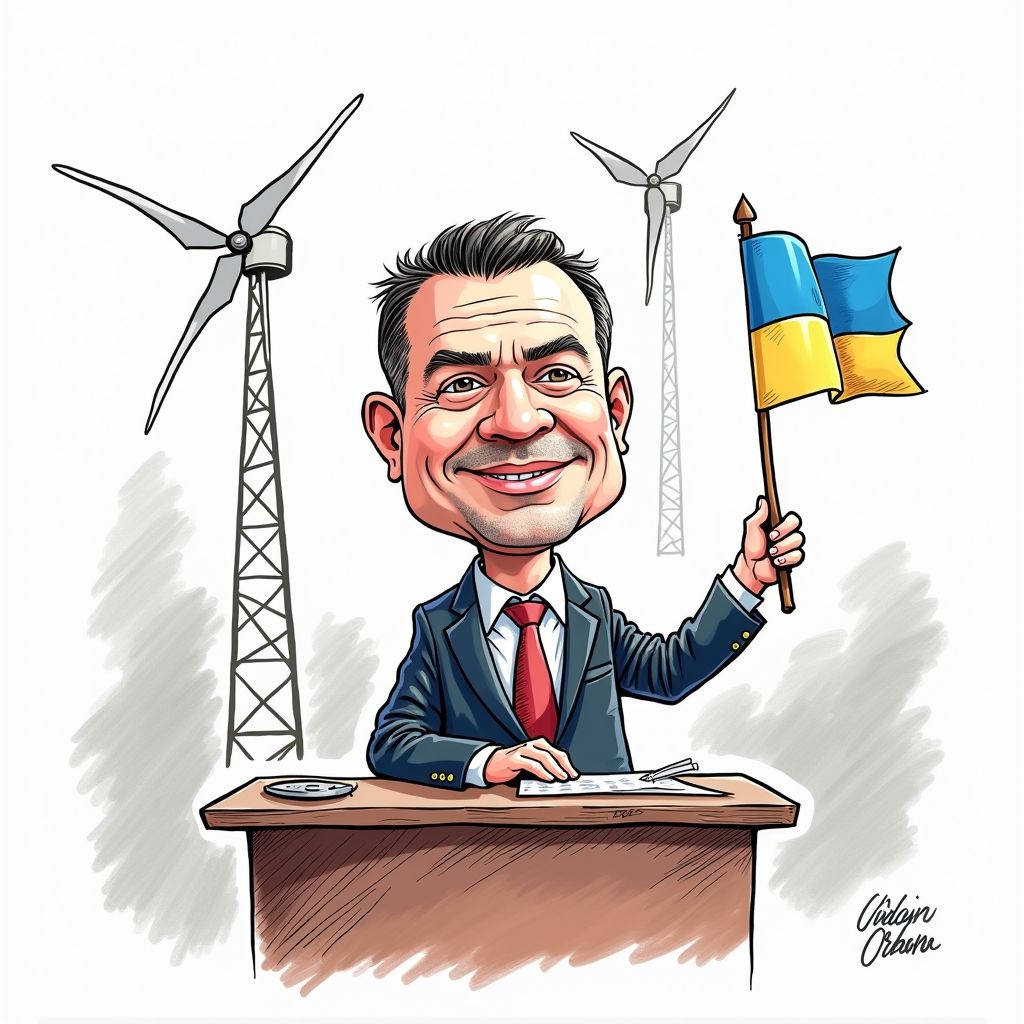
In a sharp escalation of diplomatic rhetoric on February 7, 2026, Prime Minister Viktor Orban declared Ukraine an ‘enemy’ of Hungary. Speaking in Szombathely, Orban asserted that Kyiv’s push to cut Russian energy imports endangers Hungary’s economy, framing the upcoming April election as a critical choice between war and economic survival.
Defining the Enemy: Energy Sovereignty at Stake
Addressing supporters in Szombathely on February 7, 2026, Prime Minister Orban drew a stark line in the sand regarding European energy sanctions. He explicitly categorized Ukraine as an “enemy” of Hungary, a designation he attributed directly to Kyiv’s persistent demands that the European Union halt imports of cheap Russian energy [1][2]. Orban argued that this pressure violates Hungary’s “elemental interests,” stating that anyone advocating for the severance of these energy ties is acting against the nation [2][7]. The Prime Minister emphasized that while strategic partnership with Ukraine is necessary, full EU membership is out of the question, warning that admitting Ukraine into the bloc could drag member states into a future military conflict with Russia [2][6].
The Economic Calculus: Household Solvency
The crux of Orban’s hostility lies in the protection of his administration’s signature utility cost reduction policy, known as “rezsicsökkentés.” He contended that without access to Russian oil and gas, Hungarian families would face a drastic spike in living expenses [4]. To illustrate the potential financial devastation, Orban compared Hungary’s current energy costs to those in Poland, where similar subsidies are absent. He noted that while the average Hungarian household pays approximately 250,000 HUF annually for energy, their Polish counterparts pay 800,000 HUF [4]. This represents a difference of 220 percent, a margin Orban uses to justify his refusal to sever ties with Moscow. He further criticized international corporate figures, specifically targeting former Shell executive István Kapitány, suggesting that external forces are actively working to dismantle Hungary’s price caps [6].
Financial Burdens and Geopolitical Alignments
Beyond immediate energy prices, Orban highlighted the immense fiscal strain Ukraine’s integration would place on the European Union. He cited a massive funding request from Kyiv totaling 1.5 trillion USD over the next decade—comprising 800 billion USD for state operations and 700 billion USD for armaments [3]. Consequently, an EU audit report from late January 2026 indicated that member state contributions, including Hungary’s, might need to increase by 1.5 times to accommodate such expenditures [3]. Orban framed the upcoming years, specifically 2026 to 2030, as the most dangerous in recent history, predicting that the EU is drifting toward a war economy [3]. In a move to solidify alternative alliances, he announced plans to travel to Washington, D.C., on February 20, 2026, to attend the inaugural meeting of the “Peace Council” led by U.S. President Donald Trump [5].
Election Stakes and Domestic Tensions
This aggressive foreign policy stance serves as a central pillar of Orban’s campaign for the parliamentary elections scheduled for April 2026 [1]. With polls showing the Prime Minister trailing opposition leader Peter Magyar, Orban is framing the election as a binary choice between his pro-peace government and a Brussels-backed opposition that would allegedly send Hungarian funds and soldiers to Ukraine [1][3]. The Szombathely rally itself underscored the contested nature of his political ground; Fidesz has lost the city in the last two municipal elections, and the local sports hall was closed to the public days in advance to secure the venue for the Prime Minister’s “Digital Civil Circles” tour [5]. Orban concluded by warning that the safety Hungary currently enjoys is conditional, existing only “as long as there is a Fidesz government” [3].
Sources
- kyivindependent.com
- www.portfolio.hu
- miniszterelnok.hu
- www.origo.hu
- 444.hu
- www.vg.hu
- magyarnemzet.hu