Surging Oil Prices Threaten Survival of British Small Businesses
London, Monday, 26 October 2026.
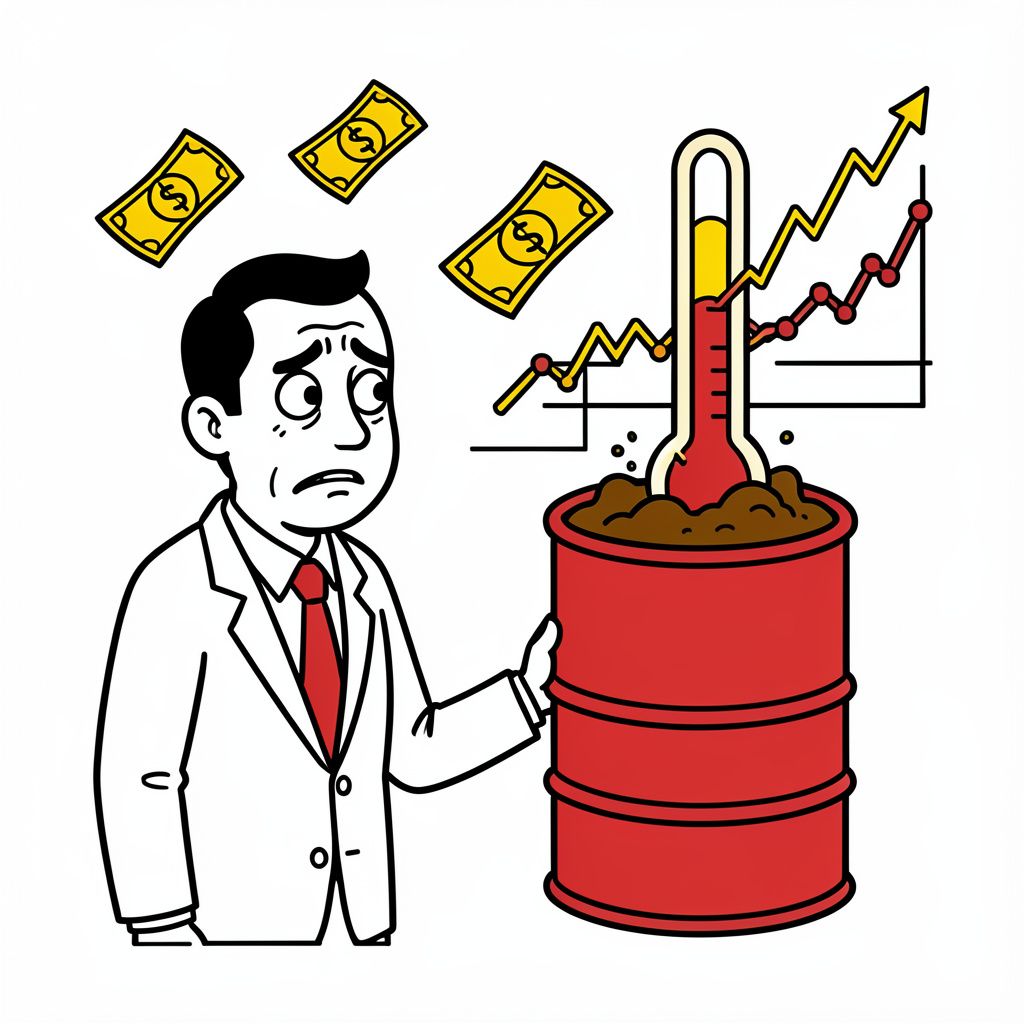
Crude oil topping $116 per barrel has pushed nearly one in four surveyed UK small businesses to the brink of collapse, exposing severe commercial vulnerability without targeted intervention.
Record Oil Prices Trigger Economic Alarm in the UK
On Sunday, 25 October 2026, Brent crude oil closed at approximately $116.72 per barrel, marking its highest level in nearly six months and sending shockwaves through the British economy [1]. This surge—up 2.8% in a single session—has intensified pressure on already strained supply chains and corporate margins across Europe [3]. The immediate consequence has been a sharp sell-off in global equity markets, with the FTSE 100 falling as much as 0.8%, the Cac 40 in Paris down 1%, and the Dax in Frankfurt dropping 1.1% [3]. Meanwhile, U.S. markets experienced parallel declines, with the Dow Jones Industrial Average down as much as 1% and the tech-heavy Nasdaq Composite falling 2.6% [3].
Small Businesses at the Brink of Collapse
A newly published survey by British advocacy group FairFuelUK, conducted between 2026-10-20 and 2026-10-25, reveals that 22.5% of 6,607 surveyed small businesses believe they cannot survive much longer under the current energy cost pressures [1]. The survey further indicates that 30.4% of firms are struggling to survive, while only 3.1% report being in a comfortable position [1]. Howard Cox, founder of FairFuelUK, warned that “nearly one in four small businesses now believes it cannot survive much longer” and that this sentiment was captured before oil prices breached $116 per barrel [1]. Cox emphasized the absence of meaningful government relief, stating, “While dozens of countries have introduced fuel-tax reductions, subsidies, or rebates, Britain has effectively chosen to do nothing” [1].
Operational Impact on UK Enterprises
The direct financial strain on small businesses is already visible. According to the FairFuelUK survey, 34.7% of firms have been forced to raise prices, 17.0% face existential viability threats, and 15.3% report severe profit reductions [1]. Cash-flow problems affect 13.3% of respondents, 8.6% have jobs at risk, and 6.2% have delayed critical investments [1]. One small business owner reported that fuel bills had doubled from £150 per week to nearly £300 per week, while another noted a decline in customer visits due to rising travel costs [1]. These operational disruptions are compounded by broader inflationary pressures rippling through European supply chains, threatening to erode corporate margins and destabilize cross-border trade [1].
Policy Crossfire and Political Uncertainty
The escalating energy crisis has ignited political debate in the UK. Patrick Spencer, MP for Central Suffolk and North Ipswich, has publicly urged Chancellor Rachel Reeves to scrap a planned 3p increase in fuel duty scheduled for January 2027 [4]. Similarly, calls for broader fiscal relief have intensified on social media platforms, with motorists and business owners expressing frustration over perceived inaction [5][6]. Adding to the uncertainty, Labour MP John Healey is reportedly drafting plans for a new “green tax” on imported petrol, potentially further increasing pump prices and exacerbating the cost burden on consumers and businesses [7].
Broader Market Reactions and Geopolitical Risks
The oil price surge is not isolated to the UK. Geopolitical tensions in the Middle East have fueled fears of renewed strikes on Iran following U.S. midterm elections, with Brent crude climbing more than 4% over the week ending 25 October 2026 [3]. Market analysts note that oil’s rapid ascent has contributed to a global sell-off in equities, particularly in technology stocks, as investors reassess risk amid tighter monetary conditions [3]. The yield on 10-year U.S. Treasury bonds—a key global borrowing benchmark—fell by the largest margin since March 2023, signaling a flight to safe-haven assets [3]. Asian markets also reacted, with Japan’s Nikkei 225 dropping as much as 2.3% and South Korea’s Kospi index declining 4.1% before a late-day recovery [3].
Sources
- www.einpresswire.com
- www.facebook.com
- www.telegraph.co.uk
- www.facebook.com
- www.facebook.com
- www.facebook.com
- www.facebook.com
- www.facebook.com