Thailand's $580 Million Asset Seizure Signals Escalating Risks for Foreign Investors
Bangkok, Saturday, 18 April 2026.
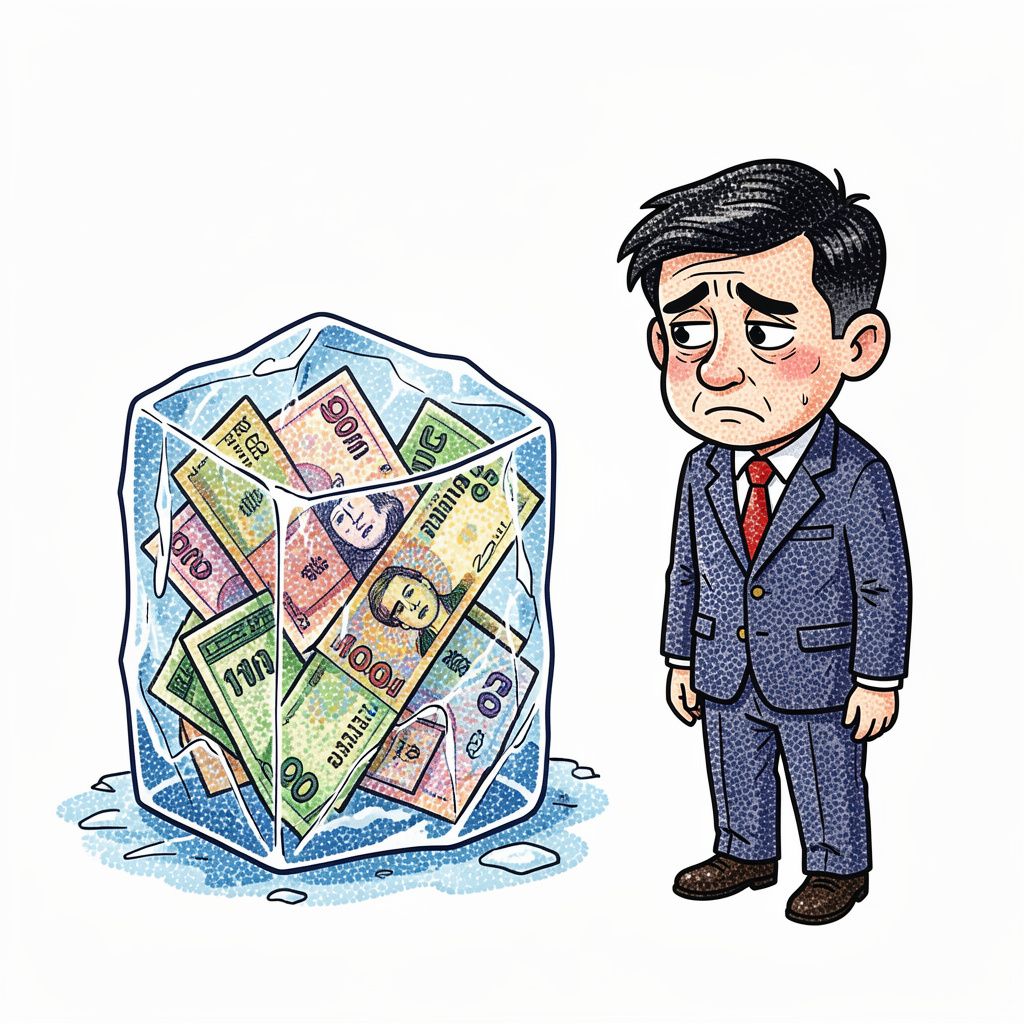
Thailand’s recent $580 million asset freeze—astonishingly triggered by a routine $165,000 transfer—highlights escalating regulatory risks and the critical need for strict financial compliance among foreign investors.
The Anatomy of a $580 Million Freeze
On April 8, Thailand’s Anti-Money Laundering Office (AMLO) executed a sweeping freeze on 34 items—ranging from vehicles and cash to deposits and securities accounts—totaling 8.269 billion baht [1]. This regulatory action compounds a previous court-ordered seizure of 12.123 billion baht, bringing the total frozen assets linked to Cambodian businessman Yim Leak and his wife, Veereenyah Yim, to over 20 billion baht, or approximately $580 million [1][2]. [alert! ‘Source materials present a discrepancy, citing these exact freeze dates in both 2024 and 2026; however, the ongoing legal fallout is currently unfolding in 2026’]. Notably, under Thailand’s Anti-Money Laundering Act, the government possesses the authority to execute these massive asset seizures without formally filing criminal charges [2].
Reversing the Burden of Proof in Cross-Border Flows
The genesis of this $580 million regulatory storm was astonishingly minute: a standard $165,000 foreign exchange transfer [2]. The case exposes a controversial methodology in Thai regulatory enforcement regarding pooled-account settlement systems, which process roughly 40 to 55 percent of all cross-border fund flows into the country [2]. Instead of placing anti-money laundering liability on the system operators and banking partners, AMLO traces transactions backward through these pooled accounts, effectively treating downstream recipients as primary suspects [2]. This aggressive approach represents a stark reversal of standard international compliance norms, creating a new layer of exposure for investors that reportedly did not exist prior to December 2025 [2].
Systemic Implications for Thailand’s Economy
These aggressive enforcement mechanisms arrive at a precarious moment for Thailand’s macroeconomic ambitions. The nation currently holds an estimated $306 billion in Foreign Direct Investment (FDI) stock, representing over 57 percent of its Gross Domestic Product [2]. However, Thailand’s competitive edge is demonstrably eroding; its share of global FDI has plummeted from 1.2 percent in 1990 to approximately 0.6 percent today [2]. This represents a staggering -50 percent contraction in its global FDI market share. While the Board of Investment celebrated a robust $24 billion in investment promotion applications in 2023, the arbitrary freezing of assets belonging to figures like the BIC Group chairman—whose funds were locked after a standard currency exchange—casts a long shadow over future capital inflows [2].
Navigating the New Compliance Landscape
Looking ahead, the immediate legal battle faces strict statutory deadlines. Under Thai law, asset seizures are temporary and strictly limited to 90 days from the date of execution [2]. For the April 8 freezes, this places the critical regulatory deadline in early July [2]. Despite the intense scrutiny, representatives from the Yim Family Office have publicly reaffirmed Yim Leak’s commitment to cooperating with Thai authorities through proper legal channels, emphasizing his hope that the process will adhere to the fundamental legal principle of the presumption of innocence [1].