Why Warren Buffett Warns Speculative Trading Is Drowning Out Real Stock Market Value
Omaha, Thursday, 16 July 2026.
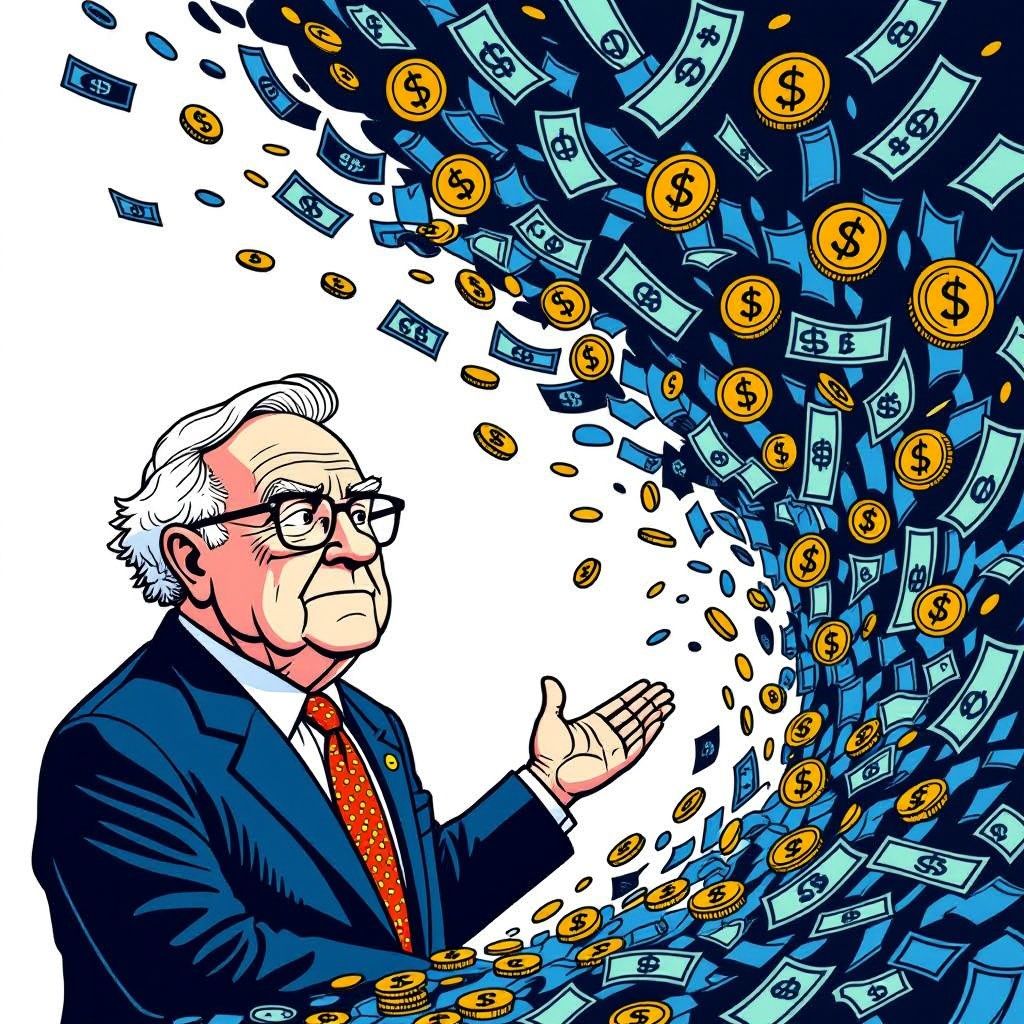
Warren Buffett warned that rampant speculative gambling is distorting stock prices, noting that the financial industry now makes more money cultivating short-term gamblers than long-term investors.
The Lure of the Financial Casino
During a comprehensive interview broadcast yesterday on July 15, 2026, the 95-year-old chairman of Berkshire Hathaway, Warren Buffett, sat down with CNBC’s Becky Quick in Omaha to discuss the current state of global financial markets [1][3][4]. Buffett expressed deep concern over the shifting dynamics of modern stock markets, arguing that finding real intrinsic value has become exceptionally difficult in an environment increasingly dominated by short-term trading [1][3]. According to the veteran investor, the widespread preference for speculative behavior over disciplined, long-term commitment has severely distorted traditional market mechanisms [1][3].
A Systemic Shift Toward Speculative Trading
This critical assessment is part of a broader pattern of warnings from the billionaire investor. Earlier this year in May 2026, Buffett likened the stock market to ‘a church with a casino attached,’ specifically pointing to the explosive growth of one-day options trading as a form of pure gambling [1][3]. He noted that because human nature is inherently drawn to speculation, the financial services sector often finds it far more profitable to cultivate and cater to short-term gamblers rather than nurturing patient, long-term investors [1][3]. This systemic incentive structure continues to draw massive capital flows into high-risk, high-frequency trading instruments [1][3].
Distorting Forces in a Record-Breaking Market
The timing of Buffett’s warning is particularly notable as major stock indices have rallied to all-time highs in 2026, defying severe geopolitical and macroeconomic headwinds [1][3]. The market has climbed a ‘wall of worry’ that includes a significant energy shock stemming from an ongoing military conflict with Iran [1][3]. Under traditional economic models, such geopolitical instability would typically prompt caution; however, speculative momentum has continued to push equity valuations upward, illustrating a growing disconnect between asset prices and underlying economic realities [1][3][GPT].
The Amplifiers of Modern Market Exuberance
Market analysts and skeptics point to intense speculation surrounding the artificial intelligence build-out as a primary driver of this market exuberance [1][3]. This speculative fervor has been heavily amplified by highly leveraged exchange-traded funds (ETFs) and short-term options, which act as financial accelerants [1][3]. Retail traders have entered the market en masse, aggressively purchasing shares of memory chipmaker Micron and participating in highly anticipated market events, such as the initial public offering (IPO) of SpaceX [1]. This influx of retail capital into volatile assets has further compressed the yields and opportunities available to value-oriented investors [1][3].
The Value Investor’s Patient Dilemma
For disciplined market participants, Buffett emphasized that genuine value opportunities are naturally rare and require a highly methodical, patient approach [1][3]. He explained that while there are anomalous periods when lucrative investment opportunities present themselves in rapid succession, the standard state of a healthy market should require years of diligent searching to find a single high-quality asset [1][3]. The current saturation of speculative capital, however, has driven asset prices to levels where traditional value plays are increasingly unaffordable or simply non-existent [3].
Broader Economic Impacts of Asset Mispricing
The broader economic consequences of this shift are profound for corporate executives, policymakers, and asset managers alike. When short-term speculative activity begins to drown out long-term investing, it compromises the stock market’s primary economic function: the efficient allocation of capital to productive enterprises [GPT]. Mispriced assets can lead to corporate overvaluation, risky corporate mergers, and misaligned capital expenditures [GPT]. For those tasked with managing institutional portfolios or steering corporate strategy, Buffett’s high-level warning serves as a critical reminder that prevailing market prices may no longer reflect fundamental economic health [1][3][GPT].