Investigations Expose Systemic Discipline Disparities for Indigenous Students in New Mexico
Gallup, Tuesday, 10 March 2026.
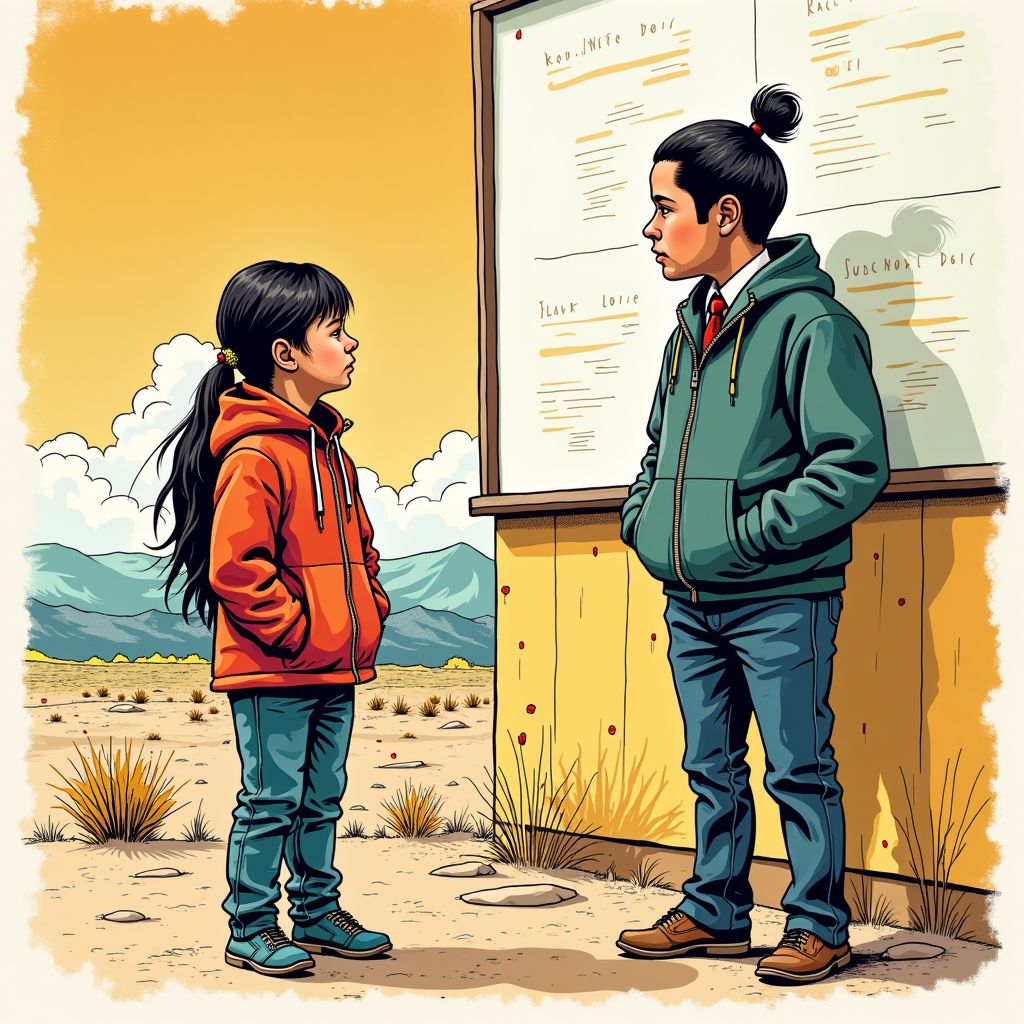
Recent 2026 investigations reveal that New Mexico’s Gallup-McKinley school district, which holds the highest Navajo enrollment in the nation, enforces disproportionately harsh disciplinary actions against its Indigenous students.
A Legacy of Disparity and New Findings
On March 1, 2026, the Navajo Nation Human Rights Commission published a 25-page report detailing systemic discrimination against Navajo students within the Gallup-McKinley County Schools [1]. Addressed directly to Navajo Nation leaders, the document highlights a pattern of excessive disciplinary measures targeting Native American youths [3]. This was closely followed by the March 5, 2026, conclusion of a long-running investigation by New Mexico Attorney General Raúl Torrez’s office, which similarly identified “troubling disciplinary practices” within the district [1][2]. These recent developments echo a prior December 2022 investigation that found Indigenous students were disproportionately punished during the four-year period ending in 2020 [1].
Financial Fallout and Legal Liabilities
Beyond civil rights concerns, the district’s administrative turbulence has spilled over into significant financial and legal liabilities, drawing the attention of market and policy observers [GPT]. In February 2026, the Gallup school board voted to settle a massive lawsuit with educational contractor Stride K12 for $50 million [2]. The dispute originated when the district terminated its contract with Stride in May 2025—shortly after former Superintendent Mike Hyatt was rejected for a position with the company [2]. Following the settlement, a modified contract with Stride K12 was reinstated through June 2026 [alert! ‘It remains unclear if the district will seek a new long-term contract or transition to other providers after June 2026’] [2].
Leadership Overhaul and the Push for Reform
Amid mounting legal and public pressure, the district is undergoing a major leadership transition [2]. Former Superintendent Mike Hyatt, who faced 2023 complaints describing his leadership style as akin to a “bully,” retired at the end of February 2026 [2]. He was succeeded by Jvanna L. Hanks II, who was formally appointed as interim superintendent in late February 2026 [2]. This administrative shift coincides with a broader governance change, following a November 2025 election that introduced three new reform-minded members to the school board [2].
Legislative Hurdles and Restorative Justice
While local leadership attempts to course-correct, systemic enforcement remains hampered by legislative gaps at the state level [1][2]. Lauren Rodriguez, the Attorney General’s Chief of Staff, noted on March 1, 2026, that current state law lacks a “clear statutory pathway” to pursue formal legal action against the district for its disciplinary conduct [2]. Attorney General Torrez has been advocating for broader civil rights legislation since 2023 to grant his office the authority to investigate local agencies, though a previous bill was pocket-vetoed by Governor Michelle Lujan Grisham [1][2]. Torrez’s office maintains that he remains committed to seeing such legislation pass in the future [alert! ‘The exact timeline for reintroducing or passing the proposed civil rights legislation is not specified’] [1].