White House Data Reveals Energy Costs Drive Inflation Gap Between Conservative and Liberal States
Washington, Wednesday, 24 December 2025.
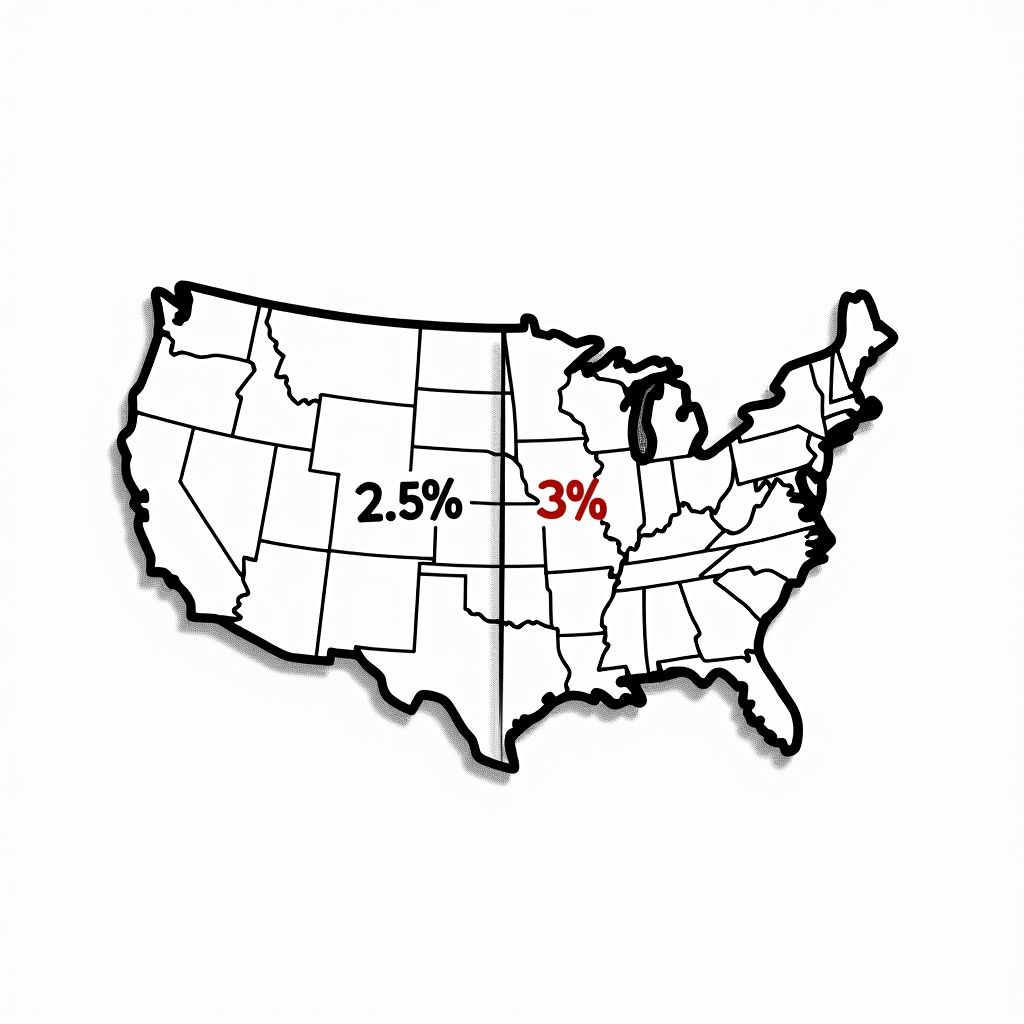
New data reveals conservative states average 2.5% inflation compared to 3.0% in liberal states, a divergence driven largely by steeper energy and transportation costs in liberal-led metro areas.
Regional Divergence in Consumer Prices
The analysis, conducted by the White House Council of Economic Advisers (CEA), draws upon Consumer Price Index (CPI) data from the Bureau of Labor Statistics through November 2025 [1]. Due to the absence of official state-level CPI metrics, the CEA utilized regional inflation data adjusted for state population figures to determine these trends [1]. The data indicates a distinct economic split: conservative-led states averaged an inflation rate of 2.5 percent, while liberal-led states faced a higher average of 3.0 percent [1]. This amounts to a variance of 20 percent between the two groups, a significant gap that policymakers are closely watching as the fiscal year concludes.
Metropolitan Cost Drivers
When examining metropolitan areas specifically, the inflation divide widens further. Metro areas located in conservative states reported a year-over-year inflation rate of 1.9 percent, significantly lower than the 3 percent observed in metro areas within liberal states [1]. The primary catalysts for this discrepancy are energy and transportation costs, which account for a substantial portion of the inflation gap [1]. Major urban centers such as Baltimore, Chicago, Los Angeles, and New York have seen energy prices increase far more rapidly than their counterparts in conservative regions, impacting households through higher costs for essentials like electricity, gas, and commuting [1].
Infrastructure and Budgetary Pressures
The tangible impact of these inflationary pressures is evident in state-level governance and budgeting, particularly regarding transportation infrastructure. A clear example of this strain is Washington state, where Governor Bob Ferguson released a supplemental budget proposal on December 22, 2025, to address a $2.3 billion deficit [2]. The proposal attributes $855 million of the budget increase to unavoidable cost pressures, explicitly citing inflation and caseload growth [2]. The state faces significant capital requirements to maintain its transport network, with $1 billion allocated to replace three aging ferries and another $2 billion designated for preserving roads and repairing ten critical bridges [2].
Housing Market Dynamics and Policy Response
While energy and transportation are the primary differentiators, housing inflation remains elevated nationwide, though it is rising slightly faster in liberal-led states [1]. Addressing this sector remains a priority for the incoming year; White House Economic Director Kevin Hassett stated on Sunday that the administration is taking an “all-hands-on-deck” approach to the housing affordability crisis [1]. While Hassett indicated a sweeping proposal is expected early in the new year, recent analysis suggests that some touted initiatives, such as the “warrior dividend,” may rely on housing assistance funds that Congress had already approved in the summer of 2025 [3].