Regulators Open Inquiry to Modernize Competitor Collaboration Rules Amidst Antitrust Leadership Turmoil
Washington D.C., Thursday, 26 February 2026.
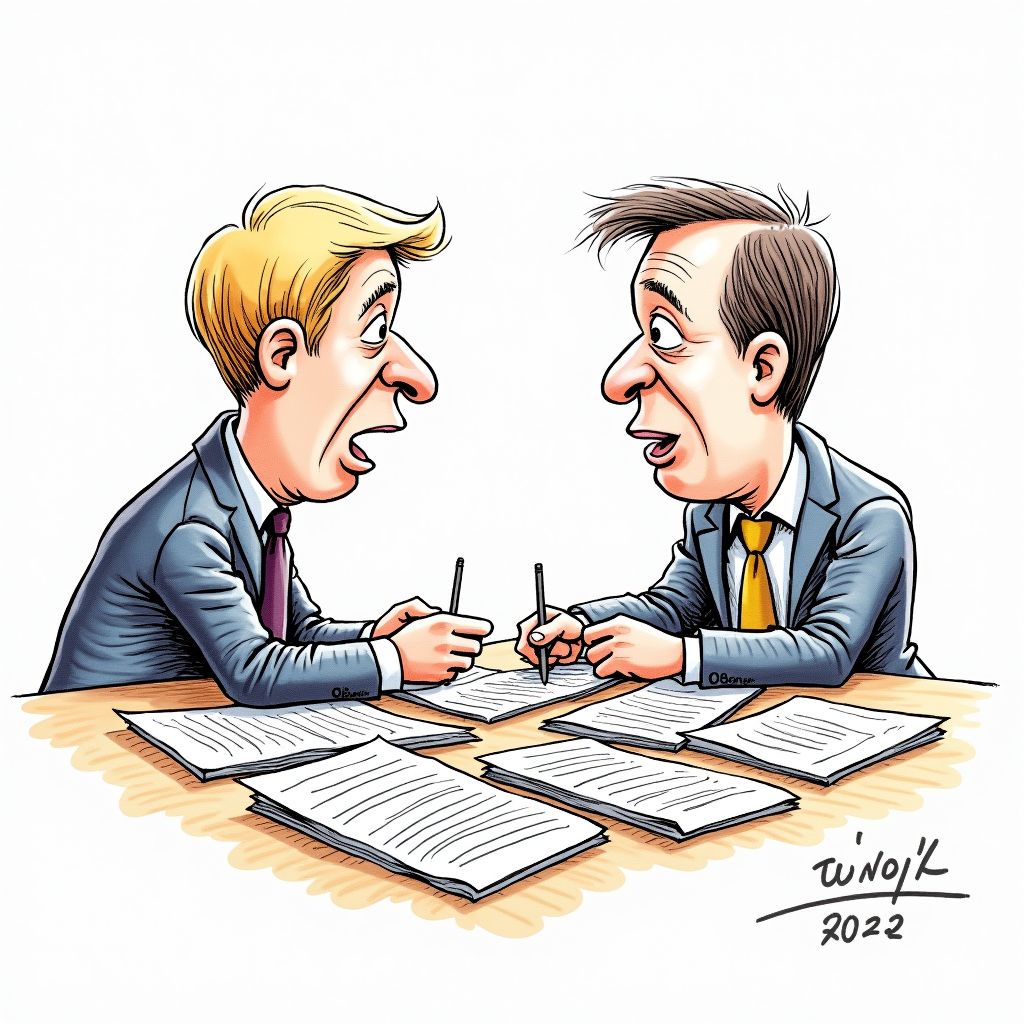
The Department of Justice and Federal Trade Commission have launched a pivotal inquiry to draft new guidelines for competitor collaborations, seeking to replace frameworks withdrawn in late 2024. This initiative aims to clarify legal boundaries regarding modern practices like algorithmic pricing and AI data sharing, with public comments due by April 24, 2026. However, this push for regulatory clarity stands in stark contrast to the deepening chaos within the Antitrust Division following the abrupt February 12 resignation of chief Gail Slater. While officials argue for greater transparency, House Democrats are simultaneously investigating allegations that Slater’s ouster was engineered to facilitate specific corporate mergers, including the controversial handling of the Hewlett Packard Enterprise case. The juxtaposition of establishing new enforcement standards while facing accusations of political corruption highlights a fragile moment for U.S. economic policy.
Defining the Rules of Engagement
The push to modernize the regulatory framework officially began on February 17, 2026, when the agencies initiated a joint public inquiry to address the void left by the December 2024 withdrawal of the 2000 Antitrust Guidelines for Collaborations Among Competitors [6]. With the digital economy fundamentally altering how firms interact, regulators are soliciting public feedback on specific mechanisms such as algorithmic pricing, data sharing, and joint licensing [6]. FTC Chairman Andrew Ferguson described the initiative as a necessary step to provide “transparency and predictability” for businesses navigating an ever-changing economy [6]. Omeed Assefi, the acting assistant attorney general for antitrust, emphasized that the new guidance aims to support lawful procompetitive collaborations while ensuring that technological advancements—specifically those involving aggregated industry data—do not become vehicles for collusion [1][6]. Stakeholders have until April 24, 2026, to submit comments on how these practices should be policed [6].
Allegations of Political Interference
This technical policy work is proceeding under a cloud of suspicion following the February 12, 2026, resignation of Assistant Attorney General Gail Slater [4]. Her departure has sparked a potential investigation by House Democrats, including Judiciary Committee ranking member Jamie Raskin and Jerry Nadler, who questioned whether the move was orchestrated to clear obstacles for corporate consolidation [2]. On February 19, 2026, lawmakers demanded a briefing from Attorney General Pam Bondi, citing concerns that Slater’s removal might be linked to her resistance against specific mergers [2]. The legislators’ letter described a “leadership vacuum” at the Antitrust Division, alleging that principled experts are being purged to allow for a “cascade of corruption” facilitated by lobbyists with ties to the administration [2].
Mergers Under the Microscope
The controversy centers on several high-profile transactions where political influence is alleged to have trumped regulatory rigor. Scrutiny has intensified regarding the Department of Justice’s handling of Hewlett Packard Enterprise’s (HPE) $14 billion acquisition of Juniper Networks [2][4]. Although the DOJ initially sued to block the deal in January 2025 under the Clayton Act, the agency shifted course to negotiate a settlement by June 2025 [4]. This reversal followed reports of intense lobbying by individuals connected to the presidency, leading to accusations that Slater’s relationship with administration officials deteriorated over her stance on the case [2][4]. Furthermore, Democrats are seeking answers regarding the expedited approval of Compass Inc.’s acquisition of Anywhere Real Estate Inc., which was cleared without a comprehensive investigation [3].
Implications for Future Enforcement
The leadership instability raises critical questions about the DOJ’s capacity to manage its current docket of historic cases. The agency is approaching a March 3, 2026, trial date in its antitrust lawsuit against Live Nation and Ticketmaster, a case that former officials suggest could be vulnerable to political pressure [2][4]. Simultaneously, the division has opened a formal investigation into potential bids by Netflix and Paramount to acquire Warner Bros. Discovery, probing whether such a merger would violate the Sherman Act by creating a vertically integrated streaming monopoly [2][4]. As the April deadline for the collaboration guidelines approaches, the antitrust agencies face the dual challenge of defining the future of economic competition while defending the integrity of their present-day enforcement actions [6].
Sources
- www.reuters.com
- www.theguardian.com
- www.law.com
- www.lexology.com
- www.msn.com
- www.executivegov.com
- www.concurrences.com
- www.vitallaw.com