AI-Powered Cleaning Robots Revolutionize Maintenance in Madrid's Subway System
Madrid, Monday, 9 March 2026.
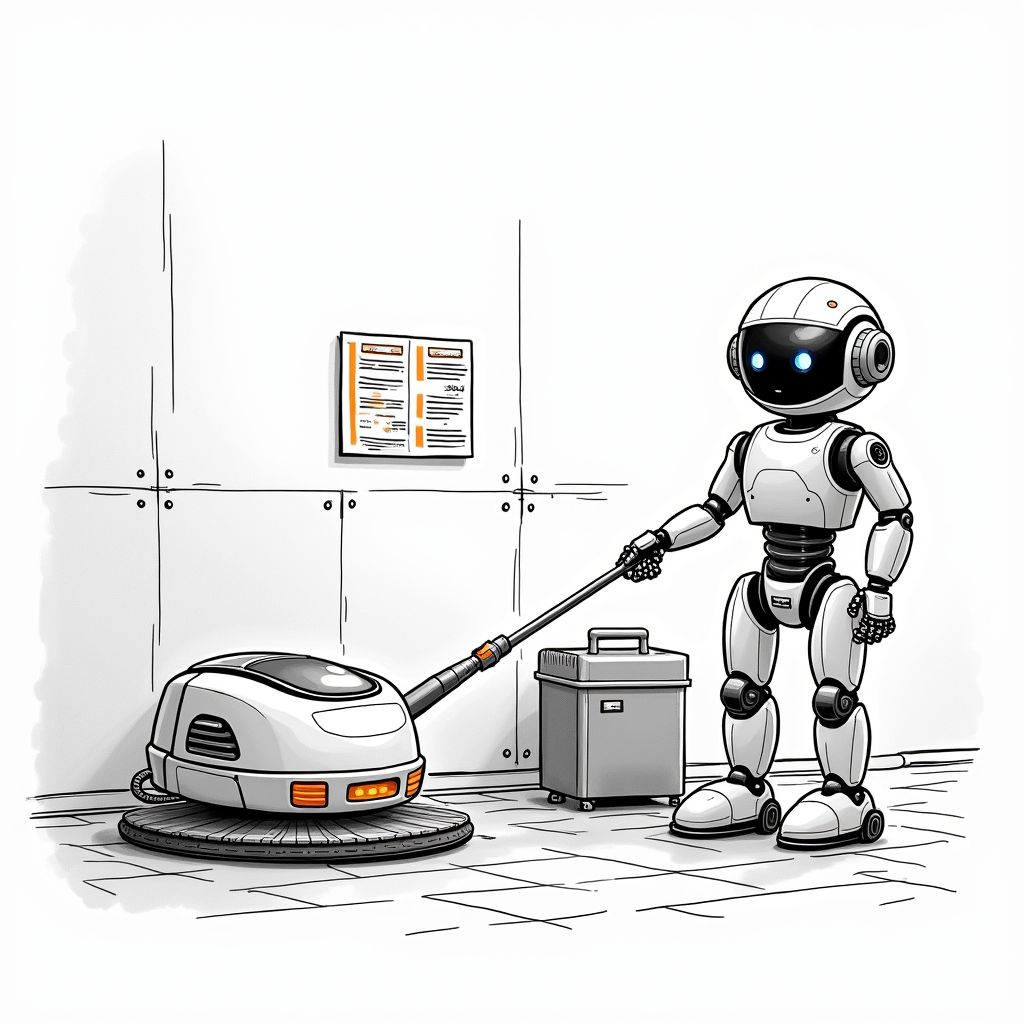
Madrid’s subway network has deployed AI-powered cleaning robots to combat rising operational costs. Strikingly, these autonomous units slash freshwater consumption by 80% while navigating around two million daily passengers.
Technological Integration in High-Traffic Transit
Announced on March 9, 2026, the integration involves three specific units of Gausium’s Scrubber 50 model [1]. These units officially began navigating the station corridors as of March 8, 2026, tasked with maintaining facilities that handle over two million daily passengers [1]. The scale of the Metro de Madrid network necessitates highly efficient maintenance solutions; in 2025, the system facilitated 736 million passenger trips across its nearly 300 kilometers of track and more than 300 stations [1]. This volume represents an average of roughly 2.453 million annual passenger trips per station, creating a relentless demand for continuous sanitation [1][GPT].
Economic Drivers and Environmental Impact
Beyond mitigating rising labor costs, the deployment addresses environmental sustainability mandates common in modern public infrastructure [GPT]. The Scrubber 50 features an internal water recycling system that reduces the consumption of freshwater by approximately 80% [1]. To facilitate this localized deployment, Gausium partnered with Darlim, a Spanish distribution company with over four decades of industry experience [1]. Operating out of four distribution centers located in Madrid, A Coruña, and Porriño, Darlim supports a workforce of 85 professionals and manages a portfolio of more than 6,000 active clients, generating an annual turnover of roughly €27 million [1]. This operational scale equates to a revenue generation of approximately 317647.059 euros per employee [1].
The Broader Market for Commercial Robotics
Gausium, founded in 2013, has steadily expanded its footprint in the commercial robotics sector [2]. The company currently services a client base of over 6,500 customers distributed across more than 70 countries and regions [1][2]. Its product ecosystem extends beyond floor cleaners to include docking stations, cloud management platforms, and proprietary application software [2]. This comprehensive approach allows facility managers to monitor and optimize fleet performance remotely, bridging the gap between hardware deployment and digital oversight [GPT].