Lawmaker Questions Diversion of Secret Service Security Funds to White House Construction
Washington, Thursday, 24 September 2026.
Senator Maggie Hassan is demanding answers regarding the reallocation of up to $415 million in Secret Service funds toward White House renovations, threatening protective operations and scam prevention efforts.
Lawmaker Questions Diversion of Secret Service Security Funds to White House Construction
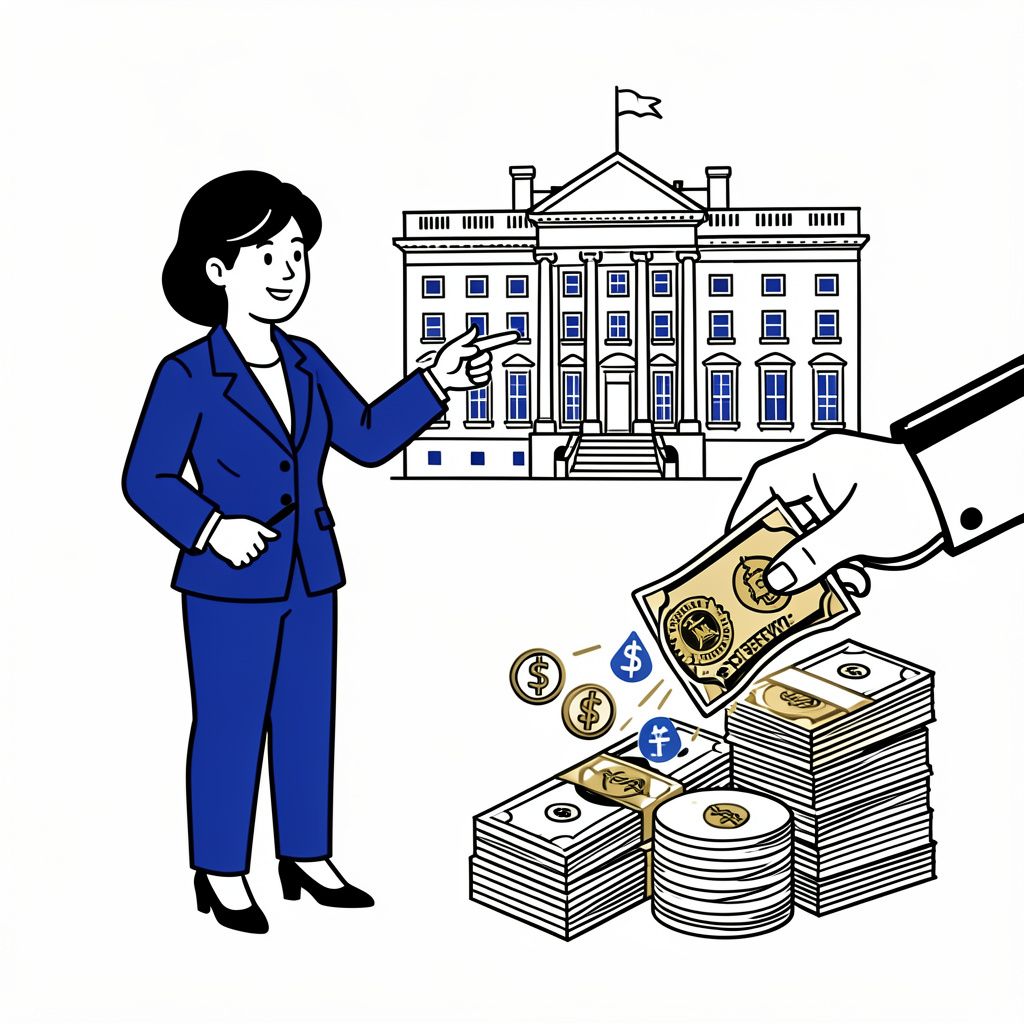
On Thursday, 24 September 2026, U.S. Senator Maggie Hassan (D-NH) issued an official inquiry to the U.S. Secret Service regarding the redirection of over $400 million in agency funds to White House construction projects [1]. The congressional inquiry targets the federal allocation and management of security funds, specifically questioning the fiscal propriety and legal authority behind shifting critical protective resources toward capital improvements [1]. Media reports circulating on social media platforms corroborate the scope of the investigation, noting that Senator Hassan is asking how the reported diversion of more than $350 million dollars from the budget has impacted the service’s operations [2][3]. The White House has reportedly diverted more than $400 million in Secret Service funding to cover the costs of White House renovation projects, including President Trump’s new ballroom, despite claims that these projects would not be constructed with taxpayer money [1].
Legislative Appropriations and Fund Diversion
According to the details outlined in the Senator’s inquiry, at least $396 million was redirected in June 2026 from a $1.17 billion appropriation originally designated for the Secret Service under the 2025 One Big Beautiful Bill Act [1]. This appropriation mandated that the funds be used strictly for agency resources, including personnel, training, programming, technology, and agent bonuses [1]. Washington Post reporting cited in the inquiry indicates total Secret Service fund diversions to White House construction reach $415 million, representing nearly 44.768 of the projected $927 million in total renovation costs [1]. Senator Hassan emphasized that the appropriation specified that the funds ‘may only be used for’ additional agency resources, highlighting a potential violation of congressional intent [1].
Operational Impact and Resource Strain
The diversion of funds comes at a critical time for the agency, as a June 2026 DHS Office of Inspector General report identified that Secret Service resource constraints and burnout and attrition jeopardize mission effectiveness and protectee safety [1]. Operational strain is documented by 10,000 protective cases opened between 1 January 2026 and 24 September 2026, representing a 40% increase compared to the same period in 2025 [1]. In July 2026, Secret Service Director Curran described the threat environment as off the charts and the highest he had ever seen, underscoring the urgency of maintaining full operational capacity [1]. Senator Hassan noted that in the months prior to this unexpected diversion of funds, the Secret Service had already raised concerns about its lack of resources even with the additional appropriation [1].
Financial Crime Priorities and Oversight Requests
Beyond physical protection, the funding shift impacts financial crime investigations, which were testified as a significant priority and core mission area in April 2026 [1]. Secret Service successes in FY 2025 included recovering over $751 million in cyber-enabled financial crime losses, making over 700 arrests, and responding to more than 600 network intrusions [1]. Senator Hassan is demanding documentation and explanations regarding the diversion, specifically requesting copies of correspondence between the Secret Service, the Office of Management and Budget, and White House offices [1]. At a time of rising scam threats, any obstacle to the Secret Service performing its mission to protect the nation from individuals and criminal organizations intent on scamming Americans represents a grave threat to American families and the U.S. economy [1].