Trump’s 10% Credit Card Rate Cap Ignites Wall Street Battle as Deadline Looms
Washington D.C., Sunday, 18 January 2026.
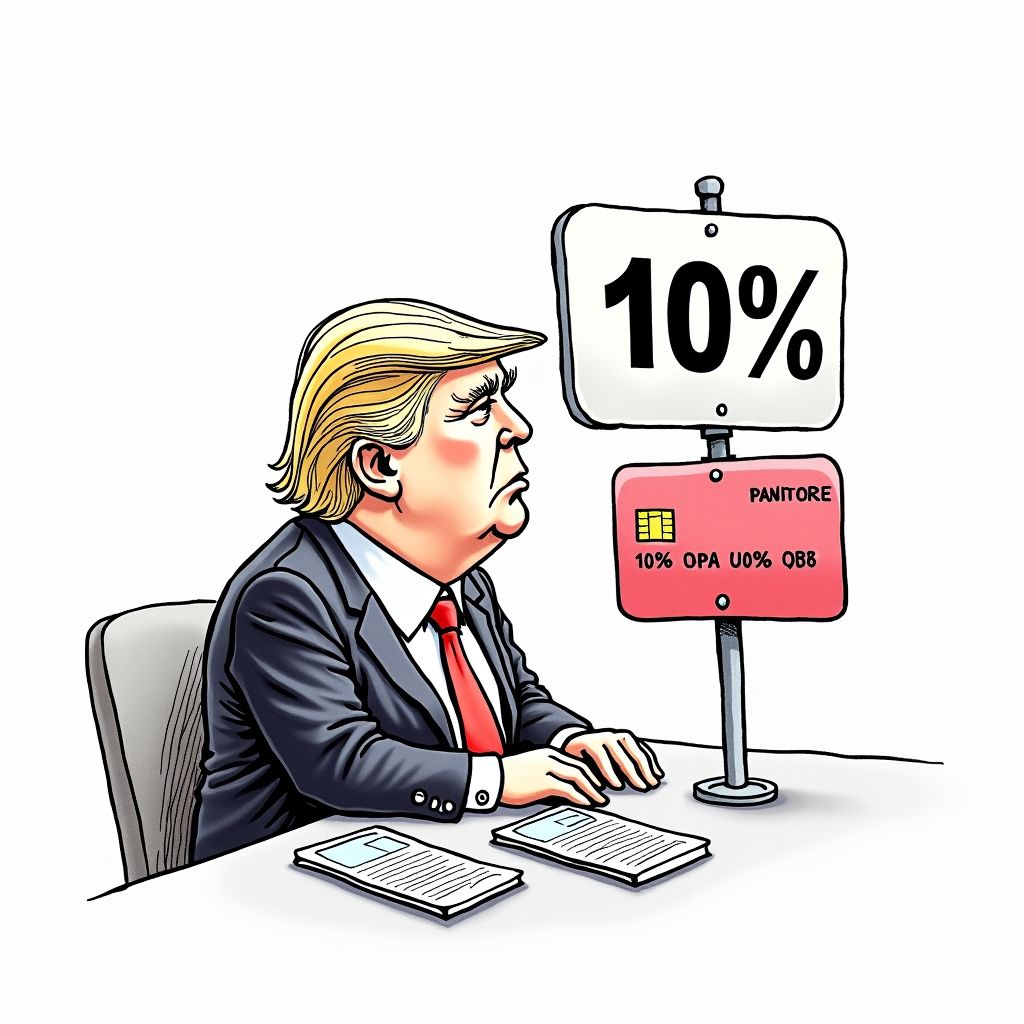
Facing a January 20 deadline, President Trump’s controversial push for a 10% credit card interest rate cap has unsettled Wall Street and created rare bipartisan alignment. As banks warn of credit contraction, the White House is pivoting to a voluntary “Trump card” model to circumvent legislative gridlock.
A Populist Demand Meets Market Realities
With only two days remaining until President Trump’s self-imposed deadline of January 20, 2026, the financial sector is scrambling to interpret the administration’s demand for a 10% cap on credit card interest rates [2][6]. The proposal, first floated during the 2024 campaign and formally demanded via social media on January 9, 2026, aims to alleviate the financial strain on American households grappling with record debt [2][5]. While the White House has characterized this cap as a temporary one-year measure to curb what the President describes as “rip-off” rates, the banking industry lacks clarity on how such a mandate would be legally enforced without congressional legislation [1][3].
The Economic Context: Soaring Rates and Debt
The push for a cap comes against a backdrop of significantly tightened credit conditions for consumers. Between 2021 and 2025, average credit card interest rates jumped considerably, rising from 14% to 21% [6]. This represents a staggering increase of 50% in borrowing costs over just four years. Other data points suggest rates are even higher, averaging approximately 22% as of November 2025, up from 13% a decade prior [1]. With total U.S. credit card debt now exceeding $1 trillion and 37% of adults carrying a balance, the administration argues that a cap could save Americans approximately $100 billion annually [1][2]. However, banking executives warn that artificially suppressing rates below market risk levels will force lenders to restrict access to credit, particularly for the lower-income borrowers the policy intends to help [1][4].
The “Trump Card” Pivot
Recognizing the hurdles of passing such a cap through Congress—or the legal tenuousness of an executive order—the administration appears to be pivoting toward a voluntary compliance model. On January 15, White House economic adviser Kevin Hassett floated the concept of “Trump cards,” suggesting that major banks could voluntarily offer a specific product capped at 10% [3]. Hassett indicated that the administration is in discussions with industry leaders, expressing an expectation that legislation might not be necessary if banks present these voluntary options [6]. This strategy attempts to bypass the legislative logjam by leveraging public pressure and branding rather than statutory force [6].
Strange Bedfellows in Washington
The proposal has created a unique and fractured political landscape in Washington, aligning populist Republicans with progressive Democrats while alienating traditional fiscal conservatives. Senator Elizabeth Warren (D-Mass.) and Senator Bernie Sanders (I-Vt.) have signaled strong support, with Warren directly telling President Trump that Congress could pass the legislation if he fights for it [1][4]. This echoes previous legislative attempts by Sanders and Republican Senator Josh Hawley to cap rates, a bill that was reopened for discussion on January 12 [4].
A Sector Under Pressure
For the banking industry, the stakes are quantifiable and massive. In 2024 alone, interest charges generated $160 billion in revenue for banks and major lenders [1]. A forced reduction to 10% would severely undercut this revenue stream, prompting warnings from the American Bankers Association that consumers would be driven toward less regulated, more costly alternatives [4]. As the January 20 deadline arrives, the financial world waits to see if the administration will attempt a high-risk executive action or settle for voluntary concessions from a few cooperative fintechs [3][5].
Sources
- www.bbc.com
- abcnews.go.com
- www.reuters.com
- www.nbcnews.com
- www.consumerfinanceandfintechblog.com
- www.newsnationnow.com
- thehill.com