Black Leaders Sound Alarm as the U.S. Homeownership Divide Reaches Historic Highs
Washington, Thursday, 19 November 2026.
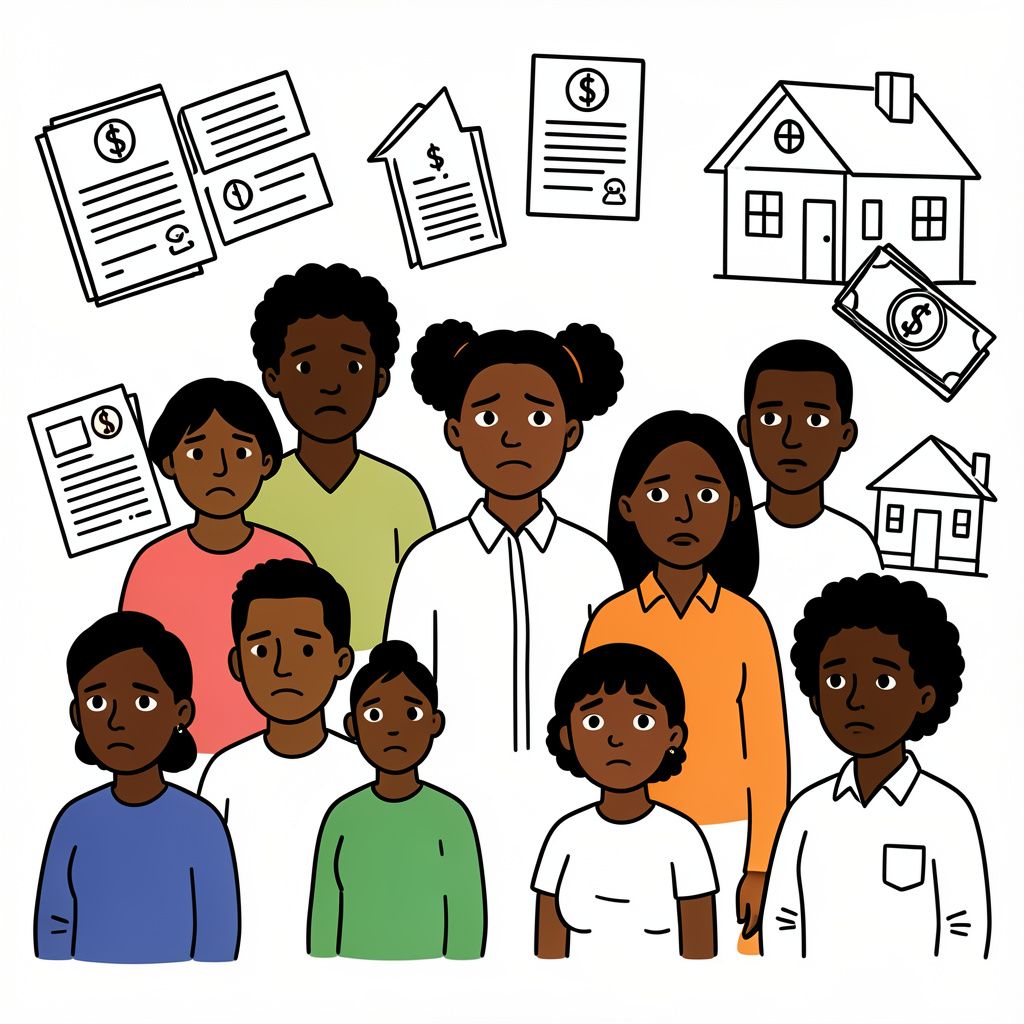
The Black-white homeownership gap has widened beyond 1970 levels, with studies revealing non-financial factors account for 59% of mortgage rejections facing Black applicants across the United States.
A Historic Reversal: Black Homeownership Falls Behind 1970 Levels
On November 18, 2026, Black civil rights leaders, legal experts, and policymakers convened at the National Association of Real Estate Brokers (NAREB) 7th Annual Black Homeownership Summit in Washington, DC, to sound the alarm on an alarming trend: the Black-white homeownership gap has widened to levels not seen since 1970, two years after the passage of the Fair Housing Act [1]. According to NAREB’s 2026 State of Housing in Black America (SHIBA) report, the disparity in homeownership rates has reversed progress made in the decades following the Civil Rights Movement, marking what many describe as the ‘unfinished fight’ of the civil rights era [1]. The summit, led by NAREB President Ashley Thomas III, highlighted systemic barriers including rising mortgage rates, tighter credit standards, and the erosion of federal protections as primary drivers of this regression [1].
The Mortgage Denial Enigma: Non-Financial Factors Drive 59% of Rejections
A Federal Reserve study analyzing over 30 million mortgage applications revealed a stark disparity in lending outcomes: observable financial characteristics account for only 41% of the mortgage denial gap for Black applicants, leaving 59% of denials attributable to non-quantifiable factors [1][2]. Civil rights attorney Ben Crump emphasized this disparity during the summit, stating, ‘Observable financial characteristics explain only 41% of the denial gap. In other words, 59% of the time, Black Americans were denied for reasons other than financial characteristics’ [1]. This finding underscores the persistent role of systemic bias in mortgage lending, where Black applicants face rejection despite meeting traditional creditworthiness criteria. The study’s conclusions align with broader economic data showing that Black households are disproportionately impacted by underwriting practices that fail to account for historical and systemic inequities [1][2].
Economic and Demographic Pressures Exacerbate the Crisis
The homeownership crisis is compounded by broader economic and demographic challenges. Black unemployment stands at 7%, nearly double the rate for white Americans [1]. Median Black wealth has declined by a quarter over the past three years, eroding the financial foundation needed to secure homeownership [1]. Additionally, $51.6 million in HUD-approved housing counseling funds has been frozen due to White House rescission efforts, limiting access to critical resources for prospective Black homebuyers [1]. The time required for Black renter families to save for a starter home has ballooned to approximately 21 years, compared to 8 years for a typical renter family of any race [alert! ‘Data from 2019 cited in source 1’]. Compounding these issues, Black Gen Z homeownership rates have fallen to 14% while white peer homeownership rates have risen, highlighting a generational divide in wealth-building opportunities [1].
Policy Responses and the Path Forward
In response to these challenges, summit participants advocated for a suite of policy reforms, including the bipartisan 21st Century ROAD to Housing Act and targeted initiatives to address heirs’ property issues through the National Bar Association [1]. Speakers such as Rep. Emanuel Cleaver II (D-Mo.) condemned the status quo, stating, ‘In the United States of America, in the year 2026, we cannot accept a status quo in which the opportunity to build wealth depends so heavily on the color of your skin, or the zip code in which you were born’ [1]. NAREB President Ashley Thomas III framed the issue as a dual economy, where national economic health masks the struggles of Black communities: ‘Oftentimes, we feel that in America, there are two economies. Although the country might be doing well, our communities might be suffering’ [1]. The summit’s focus on systemic appraisal disparities and affordability barriers underscores the need for comprehensive reforms to underwriting standards, federal enforcement, and targeted homeownership programs to reverse the tide of declining Black homeownership [1].