Texas Bans Popular Alternative Cannabis Products Today with Severe New Penalties
Austin, Friday, 31 July 2026.
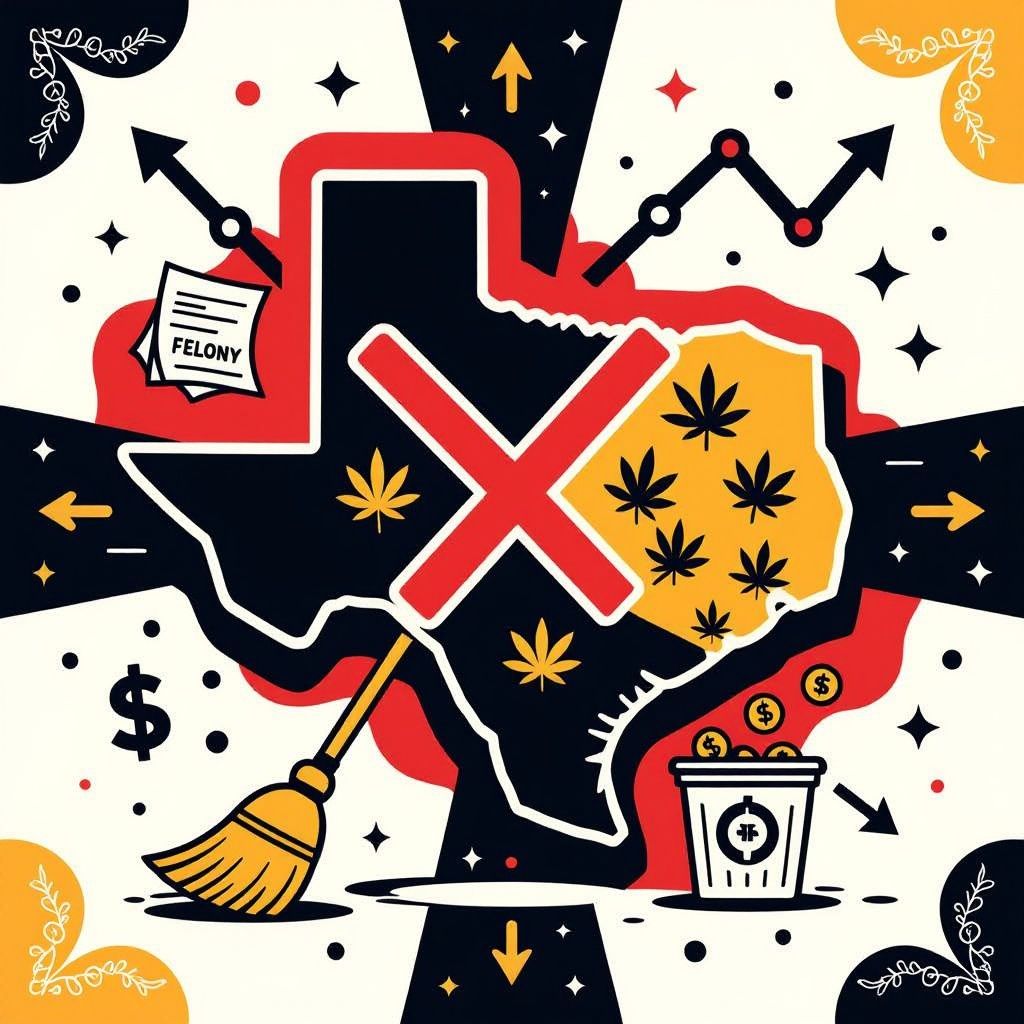
Effective July 31, 2026, Texas has reclassified synthetic THC products as felony-level controlled substances, threatening up to 90% of inventory across 14,000 licensed retailers statewide.
Regulatory Reclassification and Legal Penalties
Effective July 31, 2026, the Texas Department of State Health Services (DSHS) has reclassified synthetic hemp-derived THC products, including Delta-8 and Delta-10, as Schedule I controlled substances [1][2]. This regulatory shift reinstates a 2021 rule following a Texas Supreme Court decision in May 2026 that overturned a longstanding injunction [1][5]. Possession of these banned substances is now classified as a state jail felony, carrying penalties ranging from 180 days to two years in prison and fines up to $10,000 [3][6]. For quantities exceeding one gram, charges can escalate to third-degree felonies with prison terms up to 10 years [3]. The Austin Police Department confirmed that possession violations will be treated as felony offenses under the new framework [6]. This enforcement marks a significant departure from previous guidelines where such items were treated under misdemeanor policies [6].
Market Disruption and Licensing Costs
The new regulations impact approximately 14,000 retail stores licensed to sell consumable hemp products across Texas [1][5]. Industry experts estimate the ban will remove between 60% to 90% of THC products from store shelves immediately [1]. Financial barriers for surviving operations have increased substantially, with annual retail registration fees rising from $150 to $5,000 [3]. This fee adjustment represents a percentage increase calculated as 3233.333 [3]. Manufacturing fees have also surged from $250 to $10,000 per year [3]. Businesses violating the ban face potential license revocation and fines reaching $10,000 per violation per day [3][6]. Some retailers, such as ATX Organics, anticipate a 25% reduction in sales revenue due to the removal of inventory [1]. Industry projections suggest non-specialized retailers may need to discard 75% to 90% of existing inventory [1].
Public Health Data and Safety Rationale
State officials cite public health concerns as a primary driver for the tightened restrictions [3]. The Texas Poison Center Network reported a rise in cannabis-related poisoning calls from 923 in 2019 to 2,669 in 2025 [1]. These incidents primarily involved children under five and teenagers [1]. Advocates for the regulations argue the industry does not sell safe products and that the change protects Texans from THC dangers [1][3]. Conversely, industry representatives argue the move recriminalizes products that have been legal for many years [1]. Delta-9 THC products remain legal provided they adhere to the federal 2018 Farm Bill limit of no more than 0.3% Delta-9 THC by dry weight [1][2]. Smokeable hemp products remain available due to a separate paused injunction originally slated for March 31, 2026 [1].
Legislative Horizon and Future Outlook
Legal challenges continue despite the enforcement date, with some companies considering litigation [6]. State Senator Charles Perry has indicated plans to introduce new legislation during the upcoming Texas legislative session beginning January 12 [4]. The Lieutenant Governor has charged a state Senate committee to study the impact of THC on healthcare costs and mental health emergency detentions [4]. The Texas Hemp Business Council advised businesses to evaluate inventory and prepare to remove non-compliant products following the July 10 public notice in the Texas Register [2]. While recreational marijuana remains illegal under state and federal law, medical use of low-THC cannabis is permitted through the Compassionate Use Program [2]. The economic landscape for hemp retailers in Texas has fundamentally shifted as of today, July 31, 2026 [1][5].