President Trump Explicitly Claims Ownership of Current Economic Landscape
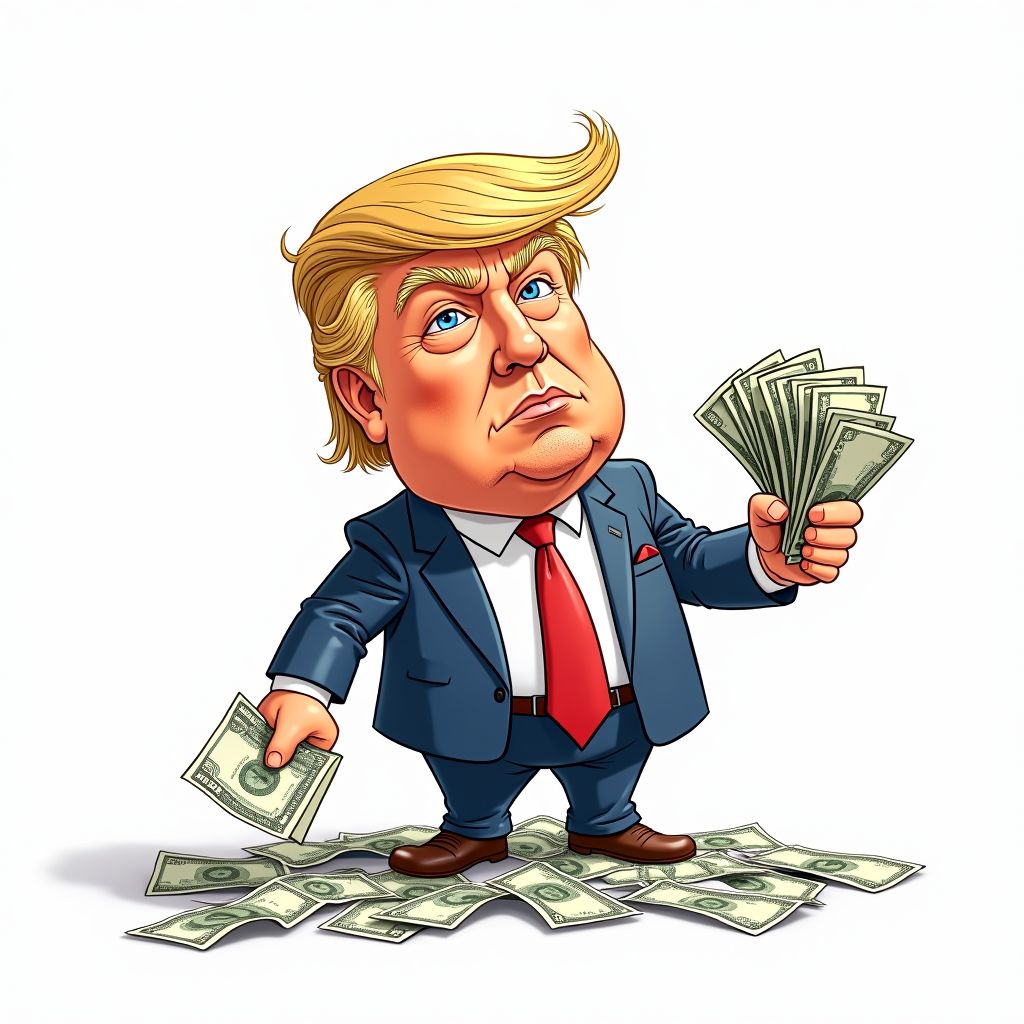
Washington D.C., Monday, 9 February 2026.
President Trump declared the “Trump economy” has arrived, claiming ownership of current conditions and citing $18 trillion in investments—nearly double the figure listed on the White House website.
The Pivot to Total Ownership
In a strategic rhetorical shift broadcast nationally just prior to Super Bowl LX on February 8, 2026, President Donald Trump explicitly declared that the United States has transitioned into the “Trump economy.” [1][5] During an exclusive interview with NBC News anchor Tom Llamas, taped on February 4 at the White House, the President abandoned his previous tendency to attribute negative metrics to the prior administration while claiming credit only for positive indicators. [1][7] Instead, he asserted full responsibility for the current financial landscape, stating, “I’d say we’re there now. I’m very proud of it,” and claiming that he has “fixed the problem” inherited from Democrats. [1][7]
Investment Claims Versus Official Data
Central to the President’s confidence is a massive influx of capital he claims is reshaping the American industrial base. President Trump cited a figure of $18 trillion currently being invested in the country, suggesting that these funds are driving the construction of factories and businesses nationwide. [1] However, this figure diverges significantly from official administration data; the White House website lists foreign investment totals at $9.6 trillion, approximately half of the amount cited by the President during the broadcast. [1][7] Despite this discrepancy, the administration views these capital flows as a leading indicator that 2026 will economically outperform the previous year. [1]
Growth Metrics and Public Sentiment
The administration’s optimism is partially supported by recent volatility turning into growth. Following a contraction in economic output during the first quarter of 2025, the economy rebounded to grow at an annualized rate of 4.4% in the third quarter of that year. [1] However, data for the fourth quarter of 2025 remains unreleased due to a government shutdown, leaving a gap in the current macroeconomic picture. [1] Furthermore, public sentiment has not yet aligned with the President’s positive assessment; a survey released on January 31, 2026, indicates that 59% of adults disapprove of Trump’s handling of the economy, compared to 36% who approve. [1]
The Affordability Narrative
President Trump also utilized the platform to challenge the narrative regarding the cost of living, a central issue that propelled Democrats to election victories in Virginia, New Jersey, and New York in November 2025. [1] Asserting that prices have “already come down,” the President claimed that Democrats have ceased using the word “affordability” in response to these improvements. [1][7] To illustrate this, he cited gasoline prices in Iowa ranging from $1.85 to $1.99 per gallon. [7] This anecdotal evidence contrasts with data from AAA, which places the average price in Iowa at $0.68 per liter. [7]
Strategic Timing
The interview, segments of which aired during the Super Bowl pre-game show, allowed the President to frame the economic narrative before a massive television audience, despite his decision not to attend the game in person. [5][6] By claiming full ownership of the economy less than halfway through a term that expires in January 2029, the White House is signaling a high-stakes political gamble that current positive trends in growth and investment will outweigh lingering public concerns over inflation and affordability. [1]