Citigroup Reports United States Stock Market Reaches Highest Risk Level Since 2008
New York, Saturday, 6 June 2026.
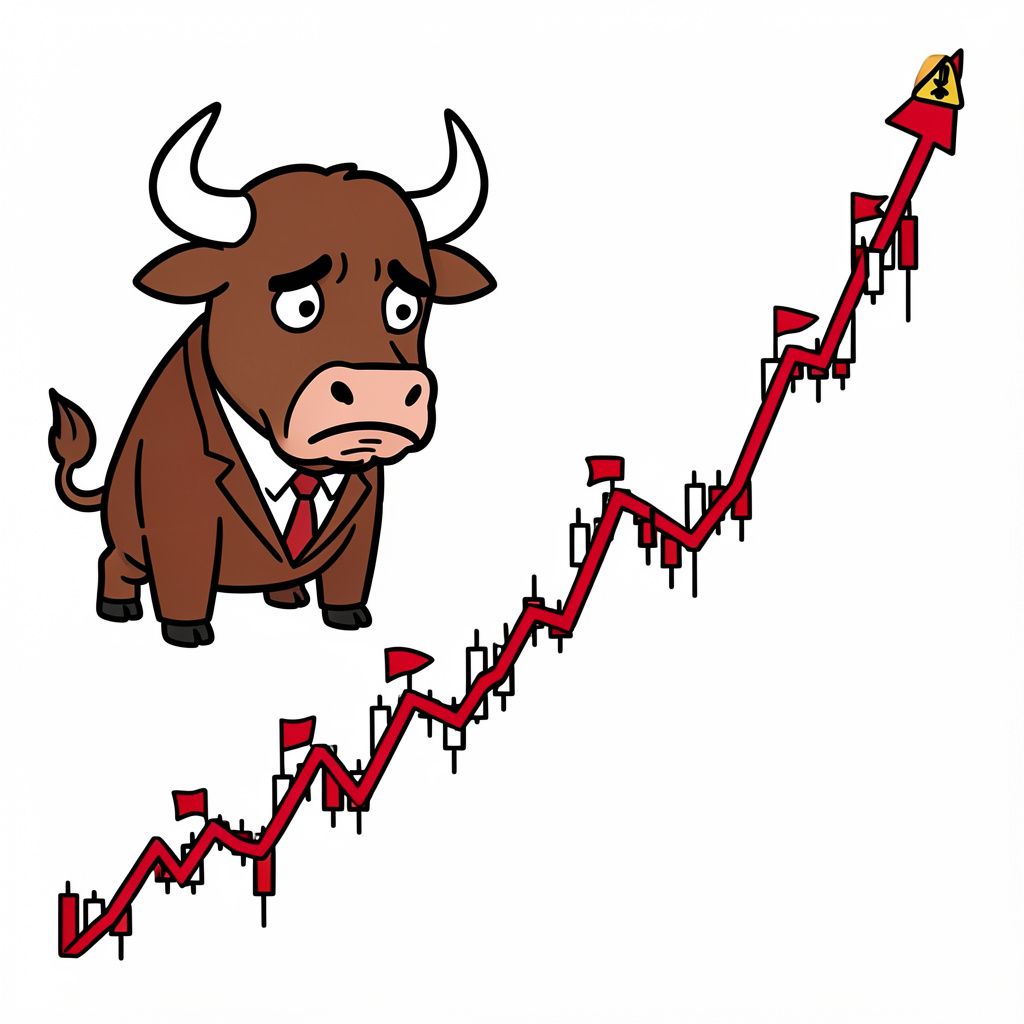
Citigroup’s latest analysis triggers 11.5 of 18 warning flags for United States equities, signaling the highest level of market vulnerability since the 2008 global financial crisis.
Decoding the Bear Market Checklist
On May 29, 2026, a strategy team at Citigroup, led by Beata Manthey, released findings indicating a highly speculative environment in global and domestic equities [1]. The firm’s proprietary Bear Market Checklist triggered 10 out of 18 warning flags globally, representing 55.556 percent of the total checklist indicators, while United States equities triggered 11.5 out of 18 flags, or 63.889 percent [1]. While these figures represent the highest risk levels observed since the global financial crisis, they remain below the historical bear market peaks of 17.5 recorded in the year 2000 and the 13 flags triggered just before the 2008 crisis [1]. The broader economic impact of these metrics suggests that while the market is undeniably frothier than it has been in nearly two decades, an immediate collapse is not necessarily a foregone conclusion [1][alert! ‘Market conditions can change rapidly and unpredictably based on unforeseen macroeconomic shocks, making exact timing of any downturn uncertain’].
The Anatomy of Current Market Froth
The underlying causes of this market vulnerability are multifaceted. By June 4, 2026, Citigroup strategists had identified several active warning indicators driving the checklist higher [1]. These include stretched equity valuations across major indices and highly optimistic investor sentiment [1]. Additionally, there has been a noticeable pickup in initial public offerings (IPOs) and broader equity issuance [1]. A significant driver of this exuberance has been the artificial intelligence sector, with elevated capital expenditure growth observed from AI hyperscalers contributing heavily to the speculative fervor [1].
Counterbalancing Forces and Economic Outlook
While the checklist highlights numerous vulnerabilities, the current economic landscape also features counterbalancing forces that complicate the forecasting of a market downturn [1][GPT]. From January 1, 2026, through June 4, 2026, the yield curve flattened—a traditional harbinger of economic slowdown [1]. Yet, this flattening has been offset by fast-paced market indicators, such as credit spreads, which have remained tight throughout the same period [1]. Tight credit spreads typically send a positive signal, indicating that corporate borrowing costs remain relatively low and that bond investors are not demanding excessive premiums for taking on corporate risk [1][GPT].