Congo Military Strikes Key Mining Hub Linked to US Investment Deal
Kinshasa, Saturday, 28 February 2026.
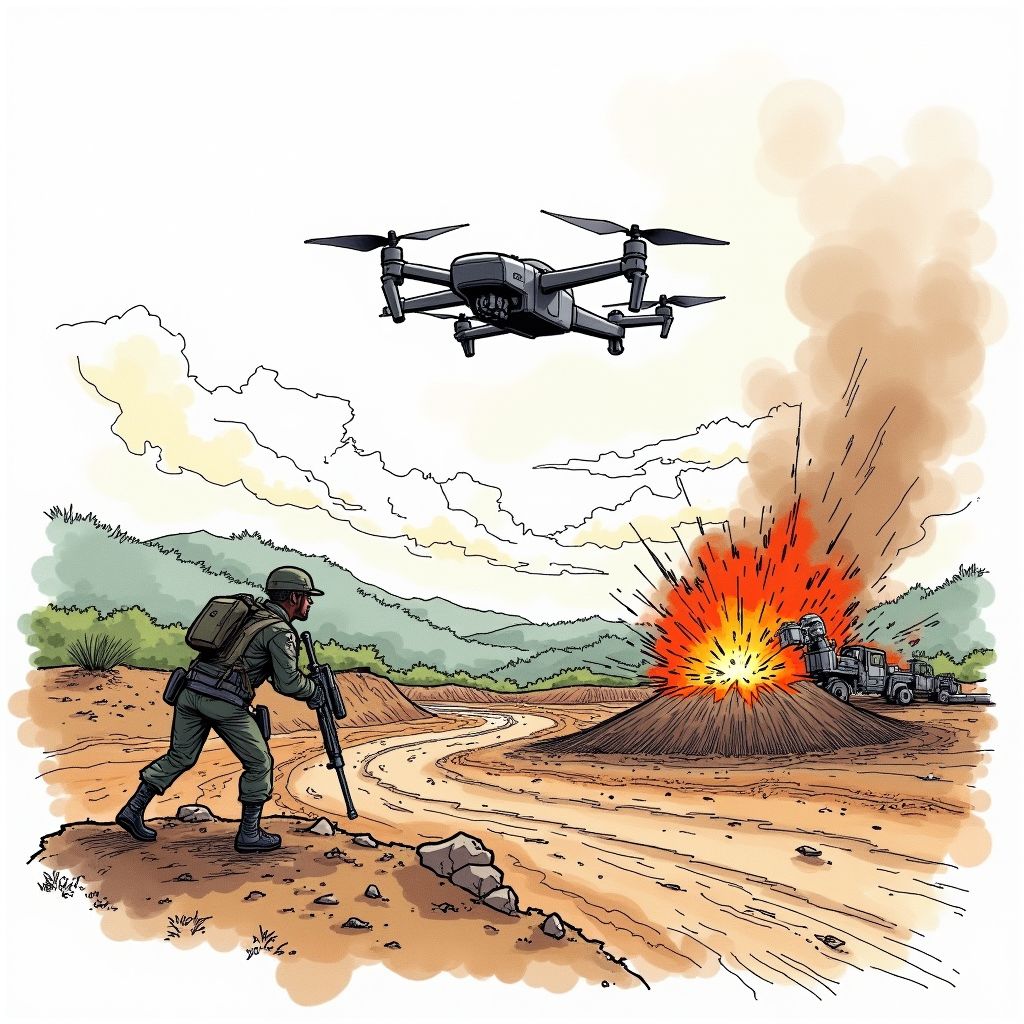
The battle for global technology supply chains has escalated into open warfare in the Democratic Republic of Congo. Government forces recently launched a targeted offensive to retake Rubaya, a strategic town responsible for up to 30% of the world’s coltan supply, shortly after diplomatic reports suggested the site was offered to American investors. The operation, bolstered by advanced drone warfare, successfully eliminated senior M23 commander Willy Ngoma on February 24, 2026, marking a significant tactical shift. However, the situation remains volatile; rebel factions have already launched fierce counter-attacks to reclaim surrounding villages, fueled by a lucrative war economy that reportedly exports millions in looted minerals to Rwanda annually. This conflict illustrates the increasingly violent intersection of sovereign security and the international race to secure critical minerals for the smartphone and laptop industries.
Strategic Assets and High-Tech Warfare
The catalyst for this intensified military campaign appears to be a pivot in Kinshasa’s economic strategy. In early February 2026, the town of Rubaya was reportedly added to a list of strategic assets designated for preferred access by United States investors, a move facilitated under a U.S.-brokered peace framework [1]. This is not merely a territorial dispute; Rubaya contains one of the world’s most significant deposits of coltan, accounting for an estimated 15% to 30% of the global supply essential for electronic manufacturing [3]. The Congolese army (FARDC) has leveraged advanced technology to assert control, utilizing long-range Chinese and Turkish drones [3] and reportedly receiving assistance from private security forces led by Erik Prince, along with Israeli specialists [1]. This technological escalation culminated on Tuesday, February 24, 2026, when a precision drone strike on Kasuku Farm in the Masisi district killed Lieutenant Colonel Willy Ngoma, the M23’s military spokesperson and a senior commander [2][7].
The Economics of Insurgency
The fierce resistance from the M23 rebel group is underpinned by the substantial financial stakes of the occupation. Since capturing Rubaya in 2024, the militia has generated approximately $800,000 monthly from the town’s coltan trade alone [1]. The Congolese government accuses the group of looting up to 125 tonnes of coltan every month and trafficking it into neighboring Rwanda [1]. This illicit flow of resources has had a measurable impact on regional trade statistics; over the last year, Rwanda’s coltan exports have reportedly surged by more than 200%, a correlation Kinshasa cites as evidence of a “war economy” [1]. Parallel to these military developments, the United States has moved to formalize its economic interests in the region. On February 17, 2026, the U.S. Development Finance Corporation reached a preliminary agreement with Glencore to acquire a multibillion-dollar stake in Congolese copper and cobalt assets [6], further raising the geopolitical stakes of the conflict.
Tactical Instability and Regional Fallout
Despite the high-profile elimination of Ngoma, the security situation on the ground remains highly fluid and dangerous. Following the drone strike, the M23/AFC coalition launched immediate counter-offensives, and by February 26, 2026, they had reportedly recaptured the villages of Kasenyi and Luke, as well as positions around Kazinga, approximately 32 kilometers west of Masisi town [2][7]. The conflict has drawn in wider regional actors, with French media reporting on February 25 that 5,000 troops from the Burundian army are fighting alongside Congolese forces [2]. Meanwhile, the precision of the strike that killed Ngoma has triggered internal paranoia within the rebel leadership; the M23 is currently investigating high-ranking members for potential betrayal and infiltration by government intelligence [7]. As of today, February 28, 2026, the region remains a volatile flashpoint where sovereign resource rights and multinational investment interests collide with entrenched insurgency.
Sources
- www.theglobeandmail.com
- www.criticalthreats.org
- www.dailysabah.com
- observer.ug
- www.theafricareport.com
- www.cfr.org
- nilepost.co.ug