Federal Court Strikes Down 39-Country Visa and Asylum Freeze
Providence, Friday, 5 June 2026.
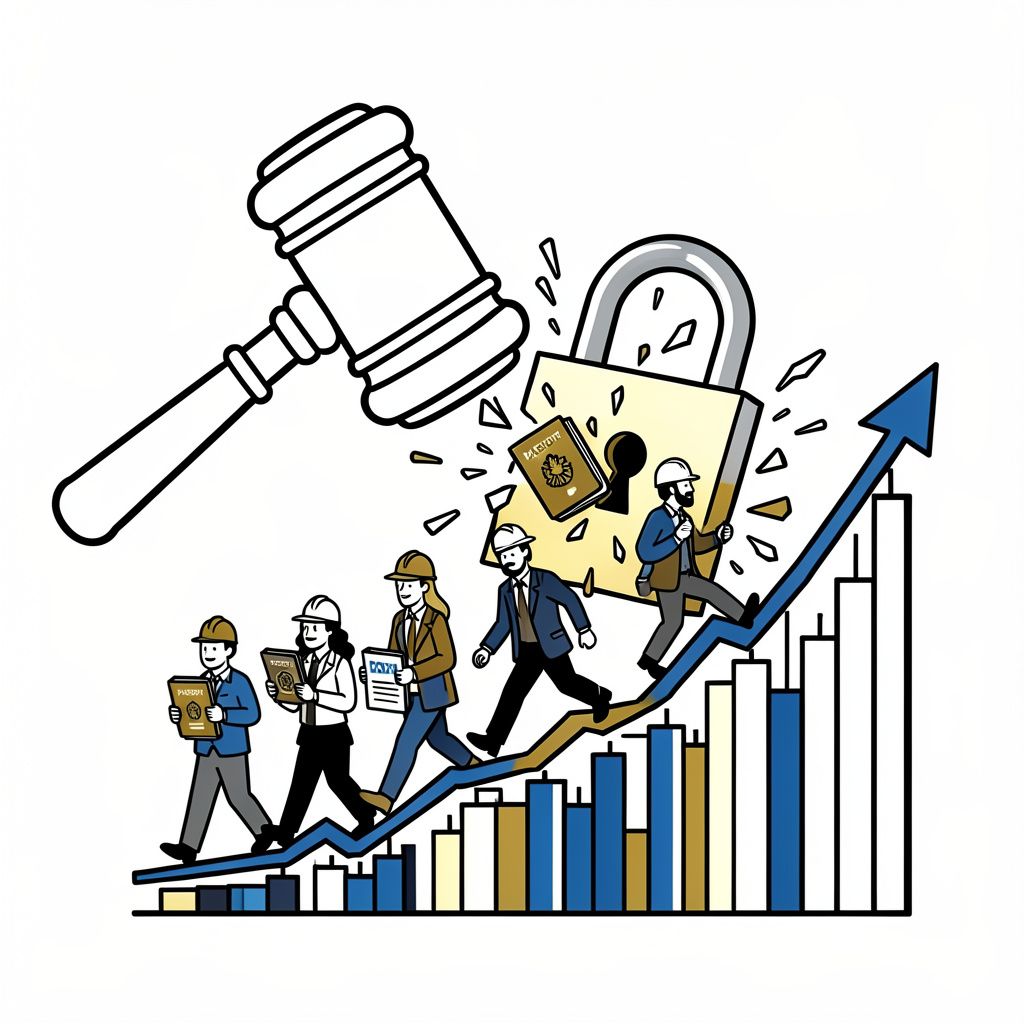
A federal judge invalidated a policy freezing immigration from 39 nations. This mandated immediate restart of visa and asylum processing will directly impact U.S. workforce planning and labor markets.
Judicial Reversal of a Blanket Freeze
On June 5, 2026, Chief U.S. District Judge John J. McConnell Jr. of Rhode Island delivered a 135-page ruling striking down a Trump administration policy that froze immigration benefits for applicants from 39 nations [1][2][3]. The policy, implemented by U.S. Citizenship and Immigration Services (USCIS) in November 2025, halted final decisions on asylum, green cards, work permits, and citizenship for individuals from various African, Asian, Latin American, and Middle Eastern countries [1][2]. Judge McConnell noted that the freeze placed immigrants into an “indeterminate legal limbo” based solely on the happenstance of their birth, rather than any individual wrongdoing [1][2][3].
Labor Market Implications and Concurrent DHS Proposals
The immediate resumption of processing carries profound implications for the U.S. labor market, which added 172,000 jobs in May 2026—a decrease of -3.911% from a revised 179,000 jobs in April 2026—while maintaining a 4.3% unemployment rate [2]. For the past six months, many immigrants were left unable to legally work or plan their futures, exacerbating delays at venues like the Annandale Immigration Court in Virginia [3].
The Broader Political and Economic Landscape
As these legal and administrative battles unfold, the political landscape remains highly active ahead of the upcoming election cycles [GPT]. On June 5, 2026, President Trump traveled to Chippewa Falls, Wisconsin, for a farmer-focused roundtable alongside Republican Representative Derrick Van Orden [2]. This event followed a May 31, 2026, tour of a dairy farm in the same district by Health and Human Services Secretary Robert Kennedy Jr. [2]. Democratic U.S. Senator Tammy Baldwin seized on the administration’s rural outreach, suggesting that the Republican party knows “they’re in trouble” across the country [2].