How Inflation Psychology Drives Public Outrage Over Everyday Prices
New York, Wednesday, 19 August 2026.
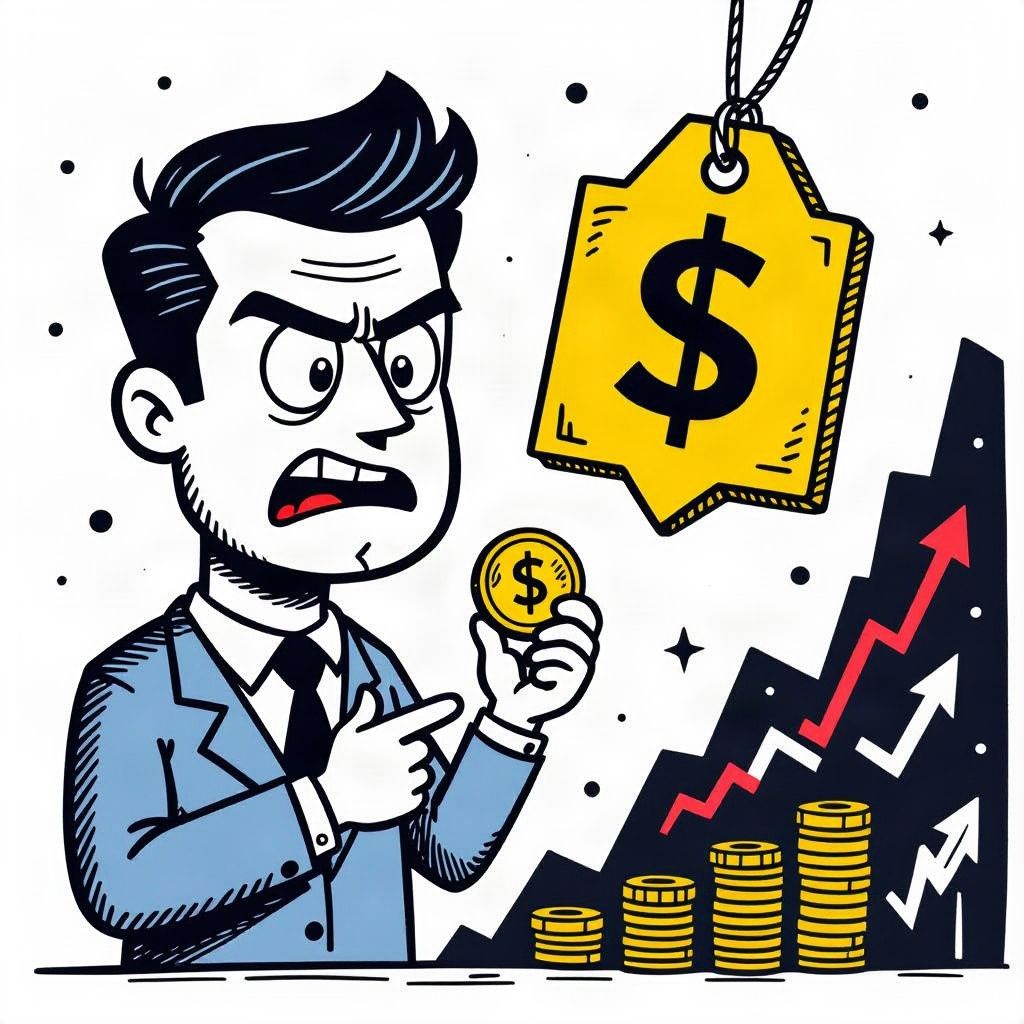
Despite wage gains, 95% of Americans perceive an affordability crisis. Cognitive psychology reveals that consumers view cost-of-living pay raises as earned rewards, but rising prices as theft.
Consumer Sentiment and the Affordability Crisis
In August 2026, consumer outrage over rising everyday food prices highlights the persistent psychological impact of inflation on the United States economy [1]. Despite macroeconomic data indicating that inflation-adjusted wages have generally increased compared to previous years, 95% of Americans perceive an ongoing affordability crisis [1]. This disconnect was sparked in early August 2026 by a viral incident involving a college student complaining about the cost of a fast-casual food item reaching twenty dollars [1]. For corporate leaders and policymakers, this persistent price sensitivity complicates pricing strategies and efforts to anchor long-term consumer inflation expectations [1].
The Psychology of Price
Economist Justin Wolfers, Professor of Economics and Public Policy at the University of Michigan, argues that consumer perception of economic hardship is driven by inflation psychology rather than purely objective data [1]. Wolfers characterizes the psychological experience of inflation as feeling like theft when price increases negate cost-of-living salary adjustments [1]. This view is supported by observations that using statistics to explain away these feelings rarely works, as cognitive psychology often trumps classical economics in public perception [2]. Consumers experience inflation in two psychological phases: first, the positive reinforcement of receiving a raise, followed by the negative emotional impact of rising prices eroding that specific gain [1].
Supply Shocks and Policy Impacts
Specific supply-side shocks have impacted food prices, including heat waves affecting lettuce production and cold snaps affecting tomato crops [3]. US food inflation is currently running at 3.1% year-over-year, significantly higher than the 1.7% average recorded between 2010 and 2019 [3]. This represents a substantial increase over the historical norm 82.353 [3]. Specific policy impacts include a 17.1% duty on Mexican tomato imports implemented last year and a 50% levy on Brazilian products causing coffee price spikes [3]. Additionally, an immigration crackdown in Washington state contributed to a 10% jump in apple prices over the past year [3].
Political Ramifications and Future Outlook
The cost of living is identified as the primary concern for a plurality of US adults, positioning it as a central issue for the upcoming November 2026 midterm elections [3]. Economic frustration among Americans is driven by persistent food costs, which are elevated by both high ingredient prices and increased restaurant labor costs [3]. Some economic commentators attribute the rising cost of food to Federal Reserve policies, indicating a divergence in blame assignment among voters and experts [4]. As the midterm elections approach in November 2026, this persistent price sensitivity remains a critical variable for political outcomes [3].