How a Former Military Base Became One of America's Largest Film Studios
Atlanta, Sunday, 18 October 2026.
Purchased for $30 million in 2015, Tyler Perry’s 134-hectare Atlanta studio complex now surpasses major Hollywood lots in size, hosting over 200 film and television productions.
Historical Transformation and Infrastructure
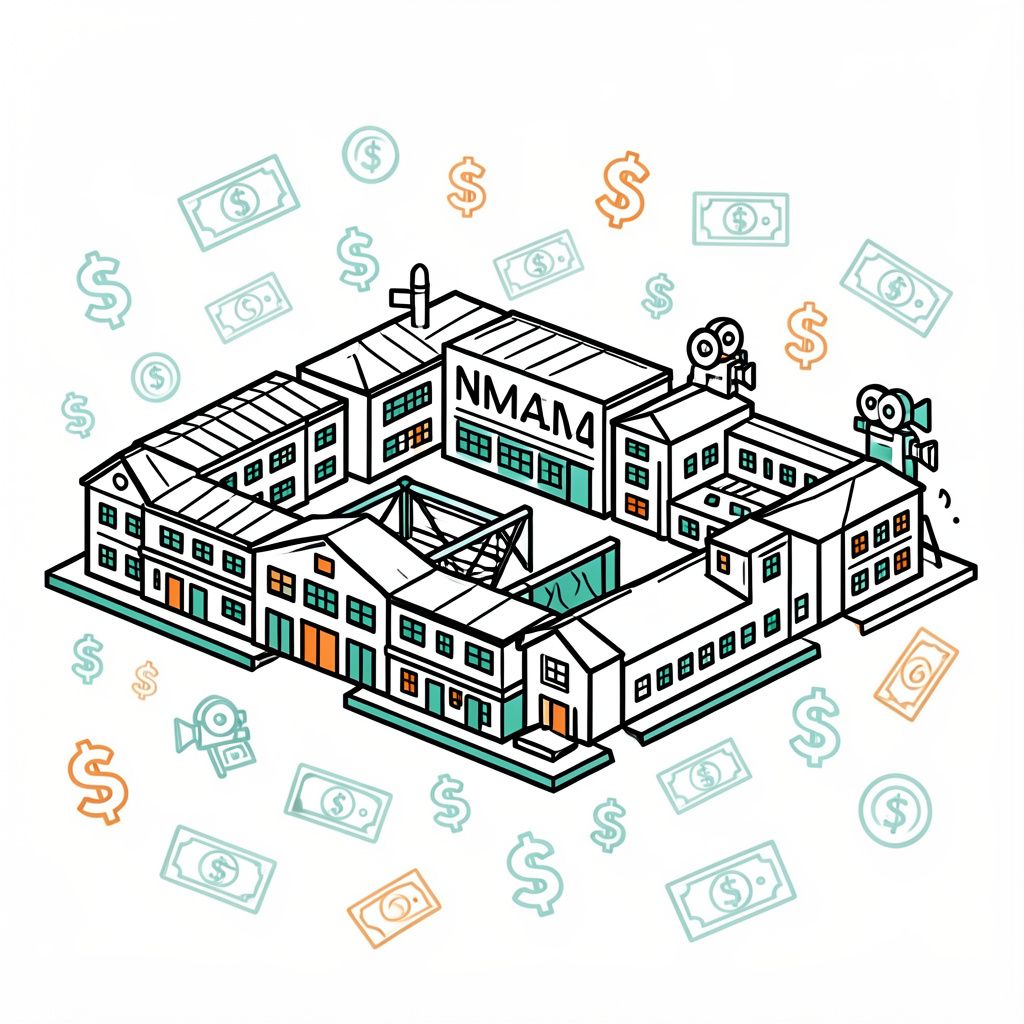
The transformation of Fort McPherson from a decommissioned military installation to a premier production facility represents a significant 11 year evolution in real estate utilization [1][2]. Originally established in 1885, the base ceased operations following a 2005 federal commission recommendation, which initially endangered approximately 2,950 civilian jobs [1][7]. In June 2015, Tyler Perry acquired 330 acres of the site for $30 million, marking the first step in converting the property into Tyler Perry Studios [2][3]. The facility officially launched studio operations in 2019, though production activities commenced earlier with the 2016 film Boo! A Madea Halloween [1]. Today, the complex exceeds the combined lot sizes of major Hollywood studios such as Warner Bros., Sony, and Paramount, featuring 12 sound stages named after influential Black filmmakers and actors [3][7].
Technical Specifications and Capacity
The studio’s infrastructure includes specialized technical facilities designed to accommodate large-scale productions, including a 75,000-square-foot water tank and various standing sets [3][7]. Notable sets include a full-scale replica of the White House, a luxury hotel, a diner, and residential suburban streets [3][7]. The property balances modern production needs with historical preservation, as 40 buildings dating back to the 19th century remain on-site under national heritage guidelines [3]. Additionally, the studio grounds encompass 200 acres of preserved green space, maintaining a portion of the original landscape alongside the developed areas [3][7]. As of October 2026, more than 200 productions have been filmed at the TPS facility, attracting both independent and large-scale studio projects [1][7].
Economic Impact and Future Expansion
The redevelopment has served as a catalyst for job creation and community development in South Atlanta, fulfilling early projections made by former Atlanta Mayor Kasim Reed [1][7]. Building on this success, Perry submitted a proposal in July 2025 to Georgia’s Development of Regional Impact program for a 38-acre entertainment district adjacent to the studio [2]. This proposed development could include 1.3 million square feet of space for retail, offices, and a theater, with a projected completion date of January 2028 [2]. However, the viability of this entertainment district remains unverified, as current documents lack specific data regarding projected job creation numbers or total economic impact [2]. This expansion aims to shift focus from exclusive film production to a public-facing development featuring shops and offices [2].
Strategic Shifts and Industry Context
Despite the expansion plans, Perry previously placed an $800 million studio expansion on hold due to concerns that artificial intelligence could reduce the demand for traditional filmmaking [2]. This caution contrasts with Perry’s broader financial success; as of October 2026, he holds a net worth of $1.4 billion, having achieved billionaire status in 2020 [5]. His income is derived from his film and TV library, investments, and the studio itself, with his Madea franchise grossing over $660 million across 13 core films [5]. In September 2026, Perry announced preparations to relocate to Puerto Rico, indicating potential shifts in his personal and business operational base [5][alert! ‘Status of relocation completion not confirmed in source’]. The studio remains a key asset, valued at $280 million by Forbes, anchoring his diverse portfolio [5].
Sources
- people.com
- m.economictimes.com
- www.zoomtventertainment.com
- www.yahoo.com
- timesofindia.indiatimes.com