Stellantis Issues Critical 'Do Not Drive' Order for 225,000 Older US Vehicles
Detroit, Thursday, 12 February 2026.
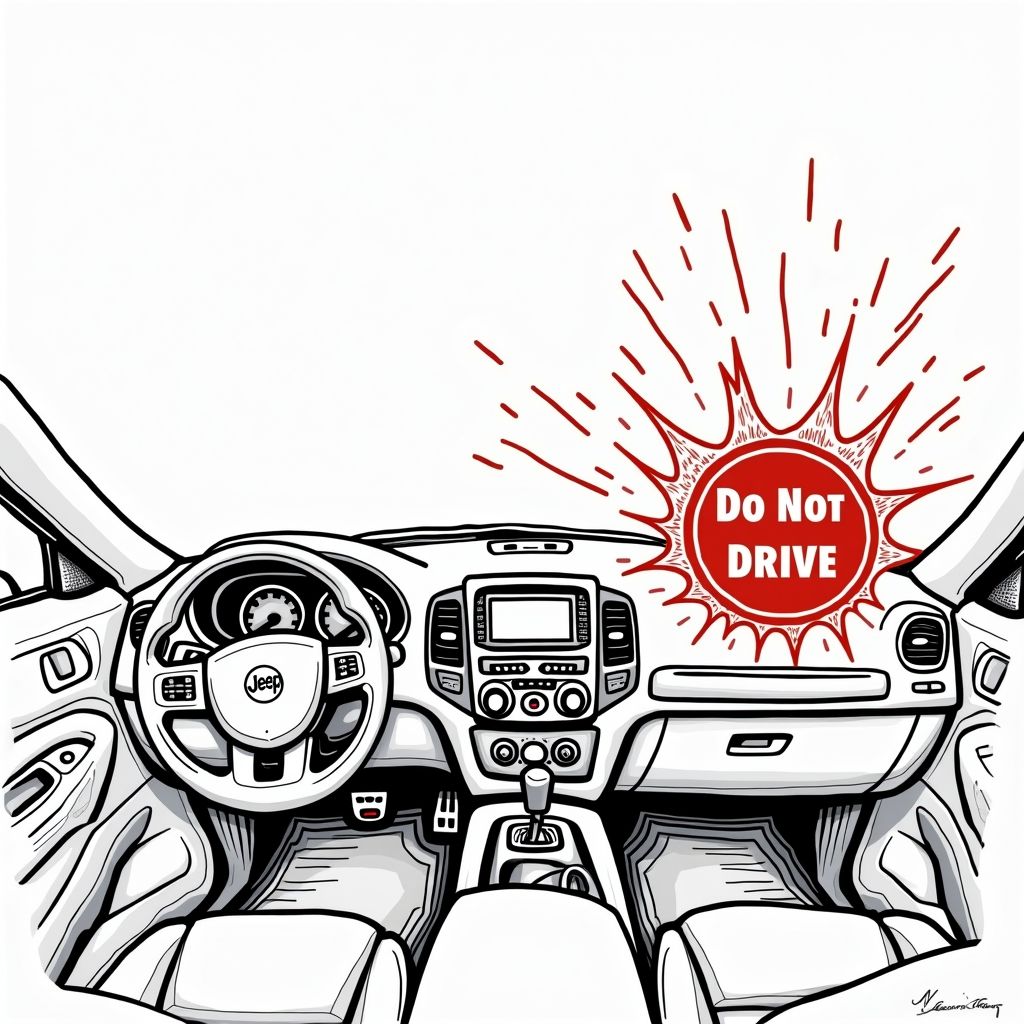
On February 11, 2026, Stellantis issued a severe “Do Not Drive” warning for approximately 225,000 older Dodge, Chrysler, Jeep, and Ram vehicles across the United States. This directive addresses the critical danger posed by defective Takata airbag inflators, which risk exploding and projecting metal shrapnel upon deployment—a defect already linked to 28 deaths nationally. Despite the automaker having successfully repaired 95% of the affected fleet over the last decade, this urgent move underscores the persistent operational and safety liabilities associated with the massive Takata recall. Owners of specific 2003–2016 models are advised to cease vehicle operation immediately, as the chemical propellant in these aging inflators degrades dangerously over time, significantly increasing the risk of fatal rupture.
The Mechanics of Failure
The urgency of this mandate stems from the chemical instability of the propellant used in the Takata airbag inflators. Over time, the ammonium nitrate-based propellant can degrade, a process significantly accelerated by prolonged exposure to high heat and humidity [4][6]. When the airbag is triggered during a crash, this degraded propellant causes the inflator to rupture with excessive force, potentially spraying metal shrapnel into the vehicle cabin rather than simply inflating the safety cushion [3][6]. The National Highway Traffic Safety Administration (NHTSA) has classified this defect as a lethal threat, noting that even minor collisions can result in explosions capable of inflicting life-altering injuries or death [4]. This structural failure mode has made the Takata saga the largest and most complex safety recall in U.S. history [4][5].
Scope of Affected Models
The “Do Not Drive” directive specifically targets a range of older models manufactured between 2003 and 2016, encompassing approximately 225,000 vehicles that remain unrepaired [3][7]. The affected inventory includes the Chrysler 300 (2005–2015), Chrysler Aspen (2007–2009), and Chrysler Crossfire (2007–2008) [5][7]. The Dodge brand sees extensive impact, with the order covering the Charger (2006–2015), Challenger (2008–2014), Durango (2004–2009), Magnum (2005–2008), and Dakota (2005–2011) [5][7]. Notably, the Dodge Ram pickup series is affected across model years 2003 through 2010, while the Jeep Wrangler (2007–2016) and Mitsubishi Raider (2006–2009) also require immediate attention [6][7]. Owners can verify their vehicle’s status by entering their Vehicle Identification Number (VIN) on the NHTSA website [1][2].
A Persistent Industry Challenge
While the Takata recall began over a decade ago, the associated liability and safety risks continue to plague the automotive sector. To date, defective Takata inflators have been linked to at least 28 deaths and more than 400 injuries within the United States alone [4][6]. The total recall volume is staggering, involving approximately 67 million airbags domestically and exceeding 100 million units globally [3][5]. Stellantis reports that it has successfully repaired over 6.6 million vehicles, achieving a completion rate of about 95% [5][7]. However, this leaves approximately 5% of the recalled fleet still active and dangerous on public roads. Stellantis has emphasized that the current order is intended to accelerate the repair of this remaining segment to safeguard the public from serious injury [3][5]. Repairs are available free of charge, and the company urges owners to park their vehicles immediately until the service is performed [5][7].
Sources
- www.wtae.com
- www.caranddriver.com
- www.reuters.com
- www.cbsnews.com
- moparinsiders.com
- www.cbtnews.com
- www.newsweek.com