Court Overturns Strict New Time Limits on International Students
Boston, Tuesday, 17 November 2026.
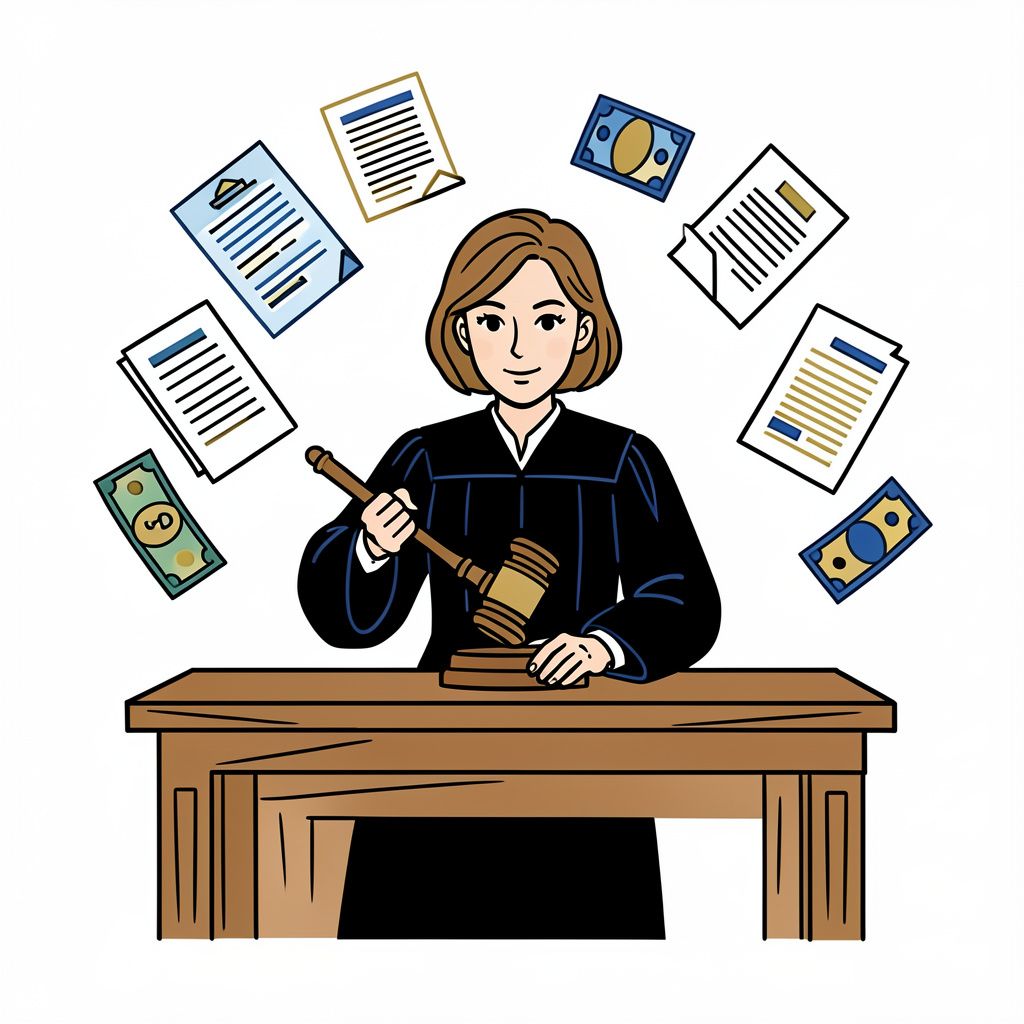
A federal judge decisively struck down administration rules capping student stays at four years, finding officials lacked statutory authority to restrict foreign scholars and harm American higher education.
Federal Judge Rules Against Trump Administration’s Visa Policy
A federal judge in Massachusetts issued a definitive ruling on 16 November 2026, striking down the Trump administration’s attempt to impose strict time limits on visas for international students, researchers, and journalists [1][2][3]. The decision vacated regulations that would have replaced the long-established ‘duration of status’ (D/S) framework with fixed two- or four-year expiration dates for F-1 and J-1 visas [5]. The ruling represents a major legal setback for the administration’s immigration policies, which had sought to fundamentally alter how long foreign nationals could remain in the United States under student and exchange visitor programs [1][2][3][5]. Judge F. Dennis Saylor IV of the U.S. District Court for the District of Massachusetts determined that the Department of Homeland Security (DHS) exceeded its statutory authority and violated the Administrative Procedure Act (APA) in implementing these restrictions [1][2][3][5].
Background: The Challenged Regulations
The Trump administration first announced the proposed restrictions in July 2026 through a rule published in the Federal Register [2][3]. The policy would have limited student visas to a maximum of four years, required extension applications for stays beyond this period, and restricted students’ ability to change educational objectives or transfer institutions [1][5]. For journalists on I visas, the rule proposed even more stringent limits: 240 days (approximately eight months) for most foreign journalists, with Chinese journalists facing an even shorter 90-day limit [2][3]. The administration justified these changes as necessary to prevent fraud and enhance national security, though these claims were heavily scrutinized in court proceedings [1][2][3][5]. On 14 September 2026, Judge Saylor had already issued a preliminary injunction blocking the rule from taking effect while legal challenges proceeded [1][2][3][5].
Legal Rationale: Why the Judge Struck Down the Rule
In his 16 November ruling, Judge Saylor found that the DHS failed to comply with fundamental administrative law requirements under the APA [1][2][3][5]. The court identified four critical deficiencies in the administration’s rulemaking process: first, the DHS did not adequately assess the costs and benefits of the policy; second, the justifications provided for national security and fraud prevention were insufficient; third, the agency failed to consider less restrictive alternatives; and fourth, the DHS did not properly respond to significant public comments received during the rulemaking process [1][2][3][5]. The judge emphasized that the existing SEVIS (Student and Exchange Visitor Information System) already provides robust tracking of international students, with certified universities reporting addresses, enrollment status, and academic progress [1][5]. ‘Put bluntly, DHS is seeking to prevent or discourage the very activity—providing educational opportunities for foreign students in the United States—that Congress sought to permit and encourage,’ Judge Saylor wrote in his decision [1][5][8].
Impact on Higher Education and Immigration Policy
The ruling delivers a significant victory to the coalition of universities, academic organizations, labor unions, and media groups that filed the legal challenge [4][5]. Miriam Feldblum, President and CEO of the Presidents’ Alliance on Higher Education and Immigration, characterized the decision as ‘a clear and important victory for international students and scholars and the colleges and universities that welcome them’ [4]. Fanta Aw, Executive Director of NAFSA: Association of International Educators, noted that the ruling ‘sends an unequivocal and resounding message: the longstanding Duration of Status policy is retained’ [4]. The decision comes at a time when U.S. higher education institutions are grappling with declining international student enrollment, which had dropped substantially in recent years due to pandemic-related disruptions and increasingly restrictive immigration policies [2][GPT]. The Trump administration now faces a critical decision: it may choose to appeal the ruling to the U.S. Court of Appeals for the First Circuit, though such an appeal would represent a continuation of a legal battle that has already faced multiple setbacks [1][5][6].
Broader Context: International Student Trends in the U.S.
The controversy over visa restrictions occurs against the backdrop of significant shifts in international student mobility to the United States. During the 2023-2024 academic year, the U.S. hosted more than 1.1 million international students, making it the top destination globally for foreign learners [2]. However, this number represents a decline from previous years, attributed in part to the cumulative effect of restrictive immigration policies and the global impact of the COVID-19 pandemic [2][GPT]. The D/S policy, which had been in place for decades, allowed students to remain in the country for the duration of their academic programs without needing to reapply for extensions, provided they maintained their student status [1][5]. This flexibility had been a cornerstone of U.S. higher education’s appeal to international talent, enabling students to pursue extended research projects, joint degrees, and additional academic programs without bureaucratic hurdles [1][5]. The vacated rule would have fundamentally altered this system, imposing arbitrary time constraints that the judge found inconsistent with the purpose of the F-1 visa program [1][5].
What Happens Next?
While the immediate effect of the ruling is to reinstate the D/S policy for international students, exchange visitors, and journalists, the legal and political battle over immigration policy is far from over [1][5][6]. The Trump administration has the option to appeal the decision to the First Circuit Court of Appeals, though legal experts note that the strength of Judge Saylor’s reasoning makes an appeal less likely to succeed [1][5][6]. Meanwhile, higher education institutions are expected to continue advocating for policies that support international collaboration and academic mobility. The Presidents’ Alliance, which played a leading role in the legal challenge, represents nearly 600 college and university presidents across 42 states, Washington D.C., and Puerto Rico, collectively enrolling over 5 million students [4]. The organization has emphasized that the ruling preserves ‘greater certainty’ for students pursuing their education while removing ‘arbitrary hurdles and unnecessary barriers’ that had been introduced by the administration’s policy [4]. For international journalists, many of whom had faced uncertainty under the proposed 240-day limit, the ruling provides immediate relief, though their long-term status remains subject to broader immigration policy debates [2][3][5].
Sources
- www.univision.com
- www.eltiempo.com
- es-us.noticias.yahoo.com
- www.presidentsalliance.org
- www.insidehighered.com
- www.eltiempo.com
- www.facebook.com
- www.instagram.com
- www.facebook.com