Trump Announces Plan for Steep Tariffs on Imported Generic Drugs
Washington, Thursday, 23 July 2026.
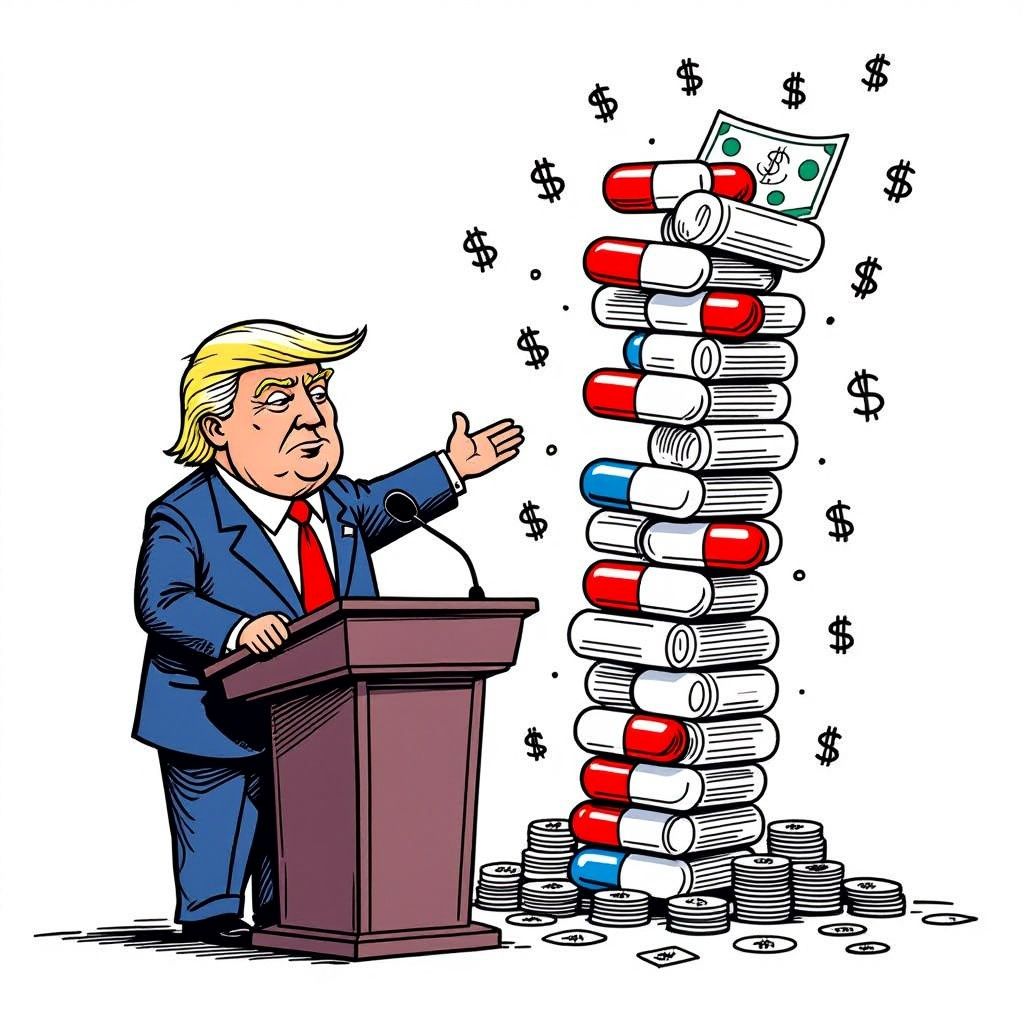
The Trump administration’s planned 200% tariff on imported generic drugs by 2029 targets medications that currently make up about 90% of US prescriptions, risking severe supply disruptions.
A Phased Timeline for Trade Policy Realignment
On July 21, 2026, Republican President Donald J. Trump announced via Truth Social a major trade policy shift targeting the pharmaceutical supply chain [1][GPT]. The administration plans to eliminate the previous tariff exemption for imported generic drugs under its Section 232 trade framework [1]. Under this newly announced administrative schedule, a two-year transition window featuring 0% tariffs will commence on August 1, 2026, allowing manufacturers a temporary runway to adjust [1]. Following this grace period, the administration intends to implement a 100% tariff on imported generic medications starting in 2028, which is scheduled to escalate to 200% in 2029 [1]. While the policy represents an official administrative plan rather than a mere campaign proposal, its long-term execution will require ongoing regulatory implementation before the first tariffs take effect in 2028 [1][GPT]. President Trump framed the aggressive tariff schedule as a necessary “penalty” designed to force pharmaceutical companies to “reshore” their production capabilities back to the United States [1]. This policy shift specifically targets generic medications, which currently account for approximately 90% of all prescriptions dispensed to American patients, while leaving the existing tariff structure for patented, branded drugs unchanged at rates up to 100% [1].
Supply Chain Vulnerabilities and Domestic Constraints
The targeted nature of these tariffs highlights the deep reliance of the United States healthcare system on foreign manufacturing [GPT]. Currently, about 80% of the active pharmaceutical ingredients (APIs) utilized in the United States are sourced from China and India [1]. This means only a minor fraction, calculated as 20%, of these critical chemical components are sourced from domestic factories or other global trade partners [1][GPT]. India, in particular, stands as the single largest foreign supplier of finished generic medicines to the United States market, making it the primary target of the administration’s trade penalties [1]. Industry representatives have expressed immediate concern regarding the rapid timeline of the planned tariffs [GPT]. The Association for Accessible Medicines (AAM), which represents generic drug manufacturers, stated that it is actively seeking additional details about the administration’s proposal [1]. While the AAM urges the administration to address the underlying structural barriers that currently hinder the expansion of domestic pharmaceutical manufacturing, the group remains cautious about the potential for severe market disruptions during the transition [1].
Market Risks and Potential Drug Shortages
Financial and healthcare analysts warn that the steep tariffs could trigger unintended consequences for public health programs and consumer costs [GPT]. Because generic manufacturers operate on razor-thin margins, their capacity to absorb a 100% or 200% tariff is highly constrained [GPT]. Furthermore, regulatory mechanisms such as Medicaid inflation rebates and the 340B drug pricing program legally restrict the ability of drugmakers to raise prices to offset these new tariff costs [1]. This rigid pricing environment could force several manufacturers to exit the U.S. market entirely rather than operate at a loss [1]. A widespread exit of generic manufacturers could lead to critical shortages of essential medications, including sterile injectables used in hospital emergency rooms and cancer treatments [1]. While the administration’s two-year transition period is designed to give companies a runway to rebuild supply chains domestically, experts note that establishing FDA-compliant manufacturing facilities typically takes several years [GPT]. Consequently, the gap between the tariff implementation in 2028 and the reality of domestic production capacity remains a major point of economic and clinical uncertainty [GPT].