Air Traffic Staff Shortages and Storms Ground Major New York Flights
New York City, Saturday, 11 July 2026.
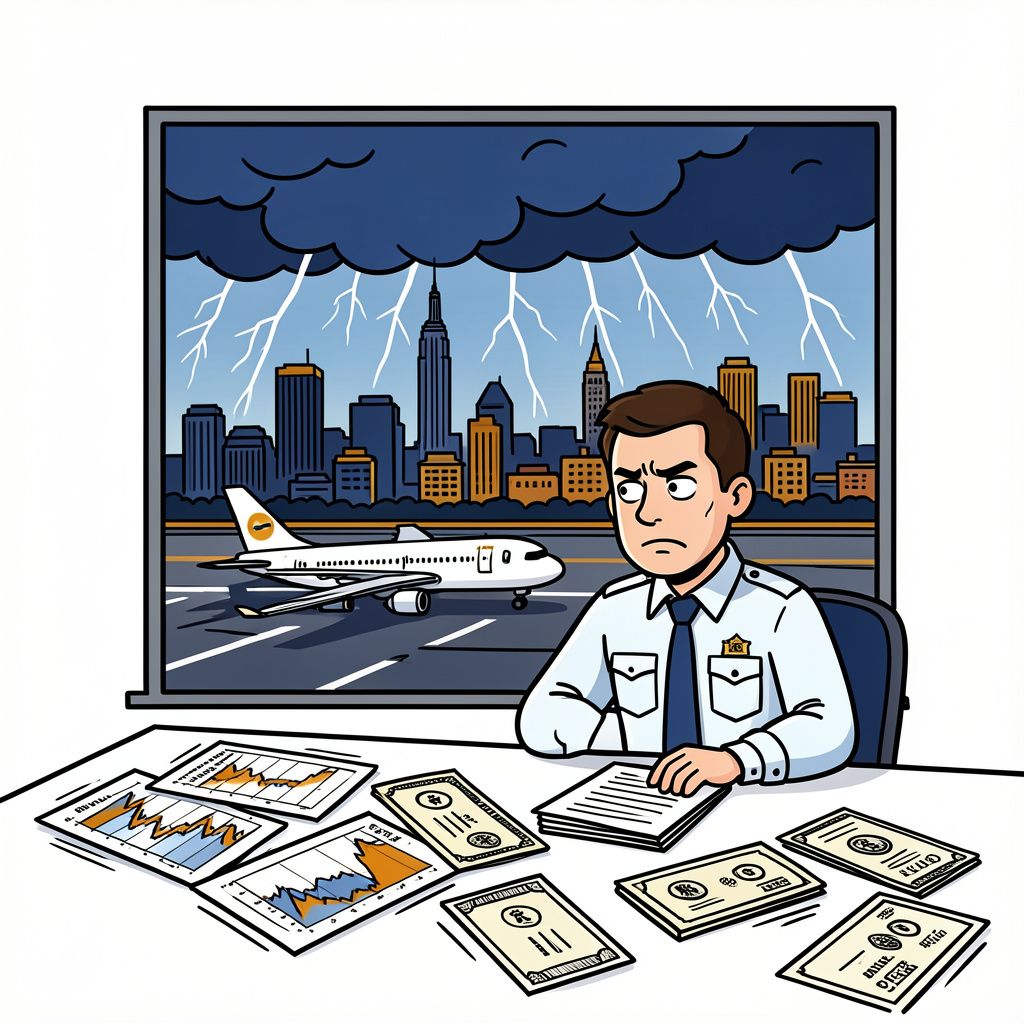
Severe storms and air traffic control staffing shortages delayed thousands of New York flights on July 10, 2026, disrupting major transit hubs and even delaying professional sports teams.
The Economic Toll of Aviation Gridlock
The severe aviation disruptions that struck the Northeast corridor on Friday, July 10, 2026, highlight the profound economic vulnerability of the United States’ transportation infrastructure [1][2]. When major hubs like John F. Kennedy International (JFK), LaGuardia (LGA), and Newark Liberty International (EWR) grind to a halt, the consequences ripple far beyond stranded passengers [1][2]. For corporate enterprises, real-time commerce, and supply chains, these delays translate directly into lost productivity, missed business opportunities, and inflated operational costs [GPT]. To mitigate safety risks during such crises, the Federal Aviation Administration (FAA) employs tactical traffic management tools, such as ground stops and ground delays [1]. A ground stop holds departing aircraft at their airports of origin, while a ground delay permits departures but assigns specific, spaced-out takeoff times to prevent airborne congestion and unsafe circling near congested hubs [1].
Quantifying the Friday Fallout
The scale of Friday’s disruptions escalated rapidly as the day progressed [1][2]. By 5:30 p.m. EDT on July 10, 2026, the FAA’s tracking systems reported a preliminary total of 110 flight cancellations and 43 delays across Newark, JFK, and LaGuardia [2]. However, as severe weather systems merged with acute staffing shortages throughout the evening, those figures surged, culminating in more than 500 total cancellations and over 4,000 flight delays across the broader New York metropolitan area [1]. The disparity between the afternoon snapshot and the final tally represents an increase of 390 cancellations as the transit system buckled under compounding operational pressures [1][2].
Anatomy of Airport Delays
A granular look at individual airport performance on July 10, 2026, reveals the varying intensity of the disruption across the tri-state area [2]. Newark Liberty International Airport, which was placed under a strict ground stop due to severe thunderstorms, saw departing flights delayed by an average of 60 minutes, while arriving flights faced average delays of 104 minutes [1][2]. Meanwhile, JFK International experienced even more severe bottlenecking, with incoming flights enduring an average delay of 145 minutes compared to departure delays of roughly 30 minutes [2]. Travelers arriving at JFK faced an average of 82 more minutes of delay than those landing at LaGuardia, where arrival delays averaged 63 minutes and departures averaged 75 minutes [2].
The Intersection of Weather and Staffing Shortages
The gridlock was not merely an act of nature; it was exacerbated by chronic structural deficits within the FAA’s air traffic control network [1][2]. These issues built upon initial flight groundings that had already begun on Thursday, July 9, 2026 [4]. On Friday, July 10, 2026, the FAA’s active Operations Plan Advisory explicitly cited staffing shortages at several critical air traffic control nodes, including the New York Air Route Traffic Control Center’s Traffic Management Unit (ZNY TMU), the Indianapolis Center (ZID Area 3), the Washington Center (ZDC Area 1), and the Phoenix TRACON (P50) [3]. These personnel shortages left the system highly vulnerable when severe summer thunderstorms swept through the N90 terminal radar approach control area, Philadelphia, and the Potomac region [3]. The resulting constraints delayed high-profile travelers and commercial passengers alike, including the charter flight carrying the Boston Red Sox from Chicago to LaGuardia for their scheduled game against the New York Mets [2].
Ongoing Disruptions and Systemic Vulnerabilities
As of Saturday, July 11, 2026, the pressure on the U.S. aviation network shows little sign of immediate relief [3]. The FAA’s current operational forecasts indicate that extensive ground stops and ground delay programs remain highly probable throughout today, July 11, 2026, for major airports including Boston (BOS), JFK, LaGuardia, Newark, Philadelphia (PHL), and Atlanta (ATL) [3]. This ongoing strain is further intensified by high event volumes, such as the Parade of Sail in Boston and UFC 329 in Las Vegas, which are scheduled to draw heavy air traffic through July 12, 2026 [3]. Some travel networks reported that nationwide ground stops have previously rippled through the broader U.S. air network, triggering thousands of delays and more than 1,000 cancellations in a single day [5]. For economists and policymakers, these back-to-back disruptions underscore the urgent need for systemic modernization, enhanced air traffic controller recruitment, and robust infrastructure funding to protect long-term economic productivity from the recurring costs of aviation gridlock [GPT].