Gold Surges Past $5,300 as Dollar Concerns Spark Safe-Haven Rush
New York, Thursday, 29 January 2026.
Gold shattered records above $5,300 this week. Analysts attribute the rally to President Trump’s rhetoric weakening the dollar, sparking fears of a “relative U.S. decline” among global investors.
Gold Surges Past $5,300 as Dollar Concerns Spark Safe-Haven Rush
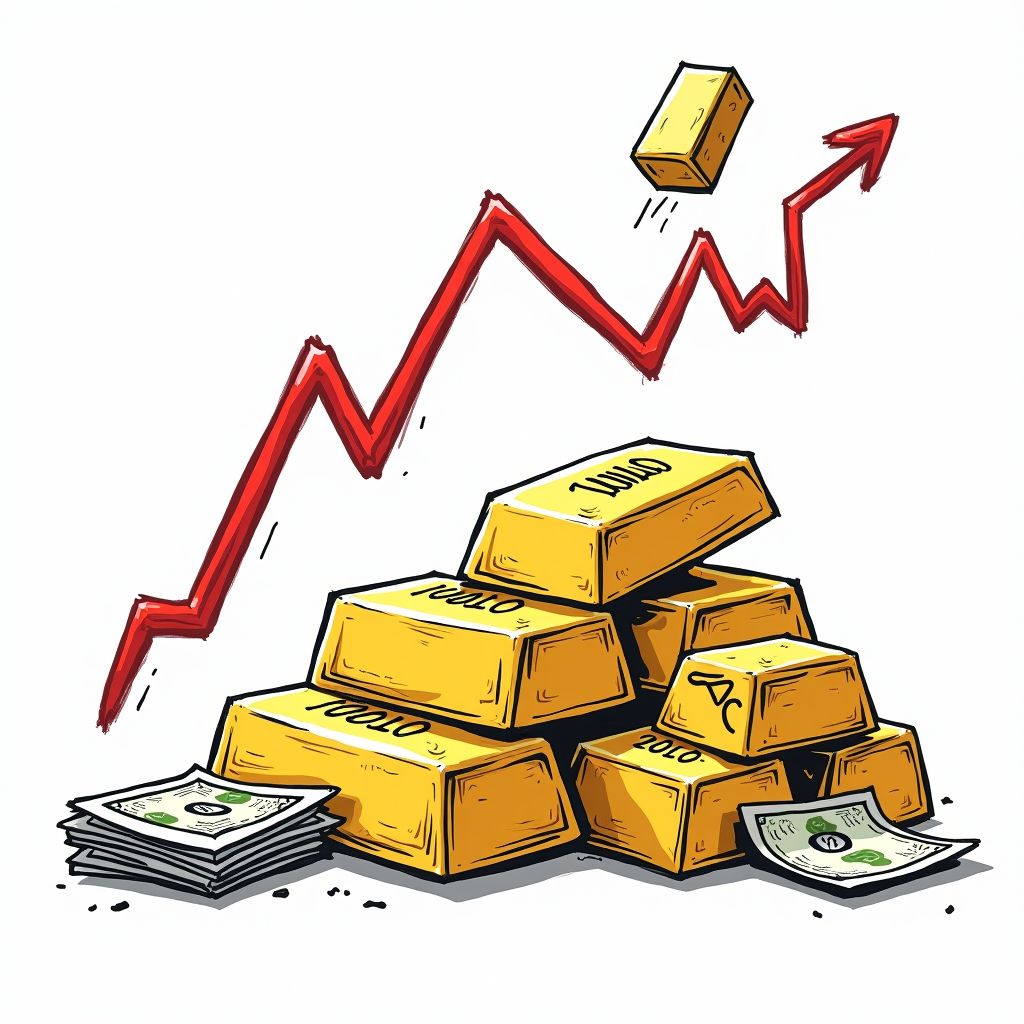
Gold prices have shattered the $5,300 ceiling, marking a dramatic escalation in the precious metal’s rally as investors scramble for safety. This development follows our previous report, Gold Surges to Record Highs After Trump Downplays Dollar’s Slide, where we detailed the initial breach of the $5,190 level. Since then, the momentum has intensified, with gold hitting a new record above $5,300 earlier this week [1]. The primary catalyst remains the market’s reaction to President Donald Trump’s rhetoric regarding the U.S. dollar, which has fueled a 22.31% year-to-date increase in bullion prices [1].
The “Relative Decline” Narrative
Analysts are increasingly concerned that the administration’s stance is fostering a damaging economic narrative. Paul Donovan of UBS warns that the risk of a weaker dollar is now fueling a “narrative of relative U.S. decline,” which has profound implications for capital flows [1]. This sentiment was exacerbated on Monday, January 26, when the dollar fell 1.3%, leaving it down over 2% for the year [1]. Currency markets have reacted sharply, with the euro strengthening to $1.20 and the British pound reaching $1.38 [1]. While Donovan notes that international investors are unlikely to exit dollar assets overnight, there is a growing reluctance to accumulate additional holdings [1].
Geopolitical Flashpoints and Fed Anxiety
Beyond currency devaluation, a confluence of geopolitical tensions is accelerating the flight to hard assets. Gold’s ascent to $5,300 [2] has been accompanied by a surge in silver prices, which reached $114.90 as of Wednesday morning [2]. These moves are underpinned by escalating international friction, including the U.S. capture of Nicolas Maduro, protests in Iran, and President Trump’s controversial push to annex Greenland [2]. Furthermore, trade tensions escalated over the weekend when President Trump threatened a 100% tariff on Canada if it proceeds with a trade deal with China [3][4], a move analysts believe is directly contributing to the spike in precious metal prices [2].
Outlook: The Path to $6,000
Looking ahead, financial institutions are revising their price targets upward in response to this environment. Deutsche Bank has indicated that gold could surpass $6,000 this year, while Societe Generale also anticipates the metal reaching that milestone by year-end [2][3]. Goldman Sachs raised its year-end prediction to $5,400 on January 20, citing the geopolitical hotspots [2]. With UBS maintaining that commodities are set to play a more prominent role in portfolios in 2026 due to supply-demand imbalances and geopolitical risks [7], the floor for gold prices appears to be rising structurally.
Sources
- fortune.com
- www.forbes.com
- www.reuters.com
- abcnews.go.com
- www.nytimes.com
- www.cbsnews.com
- www.ubs.com