Indian Leader Urges Russia to End War as American Tariff Threat Escalates
New Delhi, Tuesday, 1 September 2026.
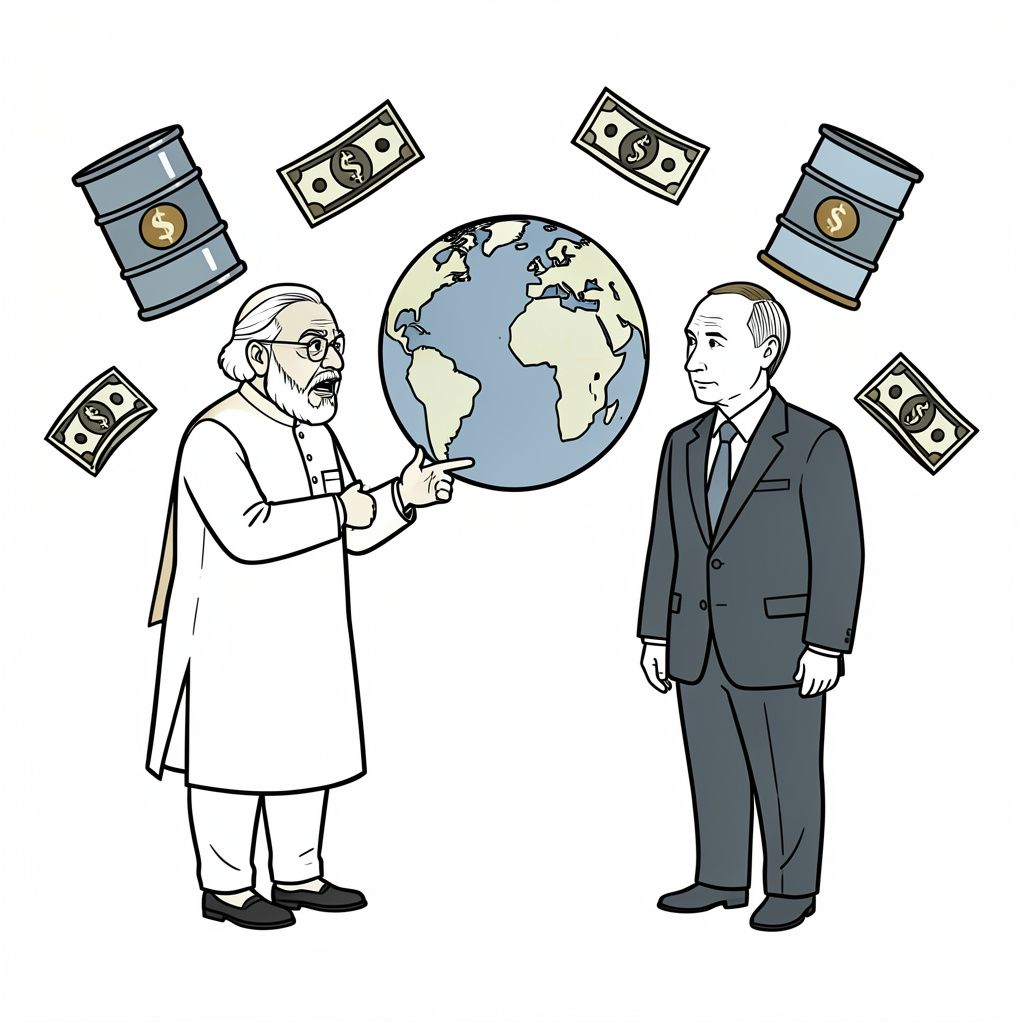
Prime Minister Modi warned President Putin to move from endless war to peace, amid US threats of 100% tariffs on Russian crude buyers like India, which imports over 40% from Moscow.
Diplomatic Appeals at the SCO Summit
On 31 August 2026, Indian Prime Minister Narendra Modi and Russian President Vladimir Putin met on the sidelines of the 26th Shanghai Cooperation Organisation (SCO) Summit in Bishkek, Kyrgyzstan, marking their first bilateral engagement of the year [1][5]. During this meeting, Prime Minister Modi publicly urged President Putin to end the conflict in Ukraine, stating that every day spent in war pushes humanity back [1][3]. The Indian Prime Minister emphasized the need to transition from endless war to peace, noting that the land of Gandhi and Buddha shares a single message regarding the path of peace [3][5]. President Putin acknowledged the statement, responding that Russia is moving forward along the path of dialogue, though he previously noted to United Russia members that the special military operation continues [3][5].
Economic Stakes and Tariff Threats
This diplomatic appeal occurs amidst heightened economic pressure from Washington, which has threatened secondary tariffs of up to 100% on nations continuing to import discounted Russian crude oil [2]. India remains one of the largest buyers of Russian seaborne oil, with Russia accounting for more than 50% of the country’s oil imports in June and July 2026 [2]. Between April and July, Russian exports to India rose to over $34 billion, representing a significant increase from the previous year [2]. Based on the reported 60% growth, the previous year’s export value can be estimated using the calculation 21.25, indicating a substantial escalation in energy trade dependence [2].
Strategic Outlook and BRICS
Looking ahead, President Putin is scheduled to visit India for the 18th BRICS Summit in New Delhi on 12–13 September 2026, where further discussions on bilateral trade and global governance are expected [5][7]. The bilateral economic relationship is shifting from a buyer-seller model toward joint production and technology cooperation, with a target to reach US$100 billion in annual trade by 2030 [6][7]. Recent data indicates bilateral trade reached approximately US$68.7 billion in FY2024–25, with imports from Russia constituting the majority share, calculated as 92.868 percent of the total turnover [6]. Both leaders reaffirmed their commitment to strengthening the Special and Privileged Strategic Partnership, focusing on energy, innovation, space, and the safety of Indian seafarers in conflict-affected regions [5][7].
Sources
- www.bbc.com
- www.cnbc.com
- metro.co.uk
- www.mea.gov.in
- www.thehindu.com
- scientiaeducare.com
- www.fortuneindia.com
- www.hindustantimes.com