New Documents Reveal Fauci’s Direct Role in Funding Controversial Wuhan Lab Research
Washington D.C., Friday, 19 June 2026.
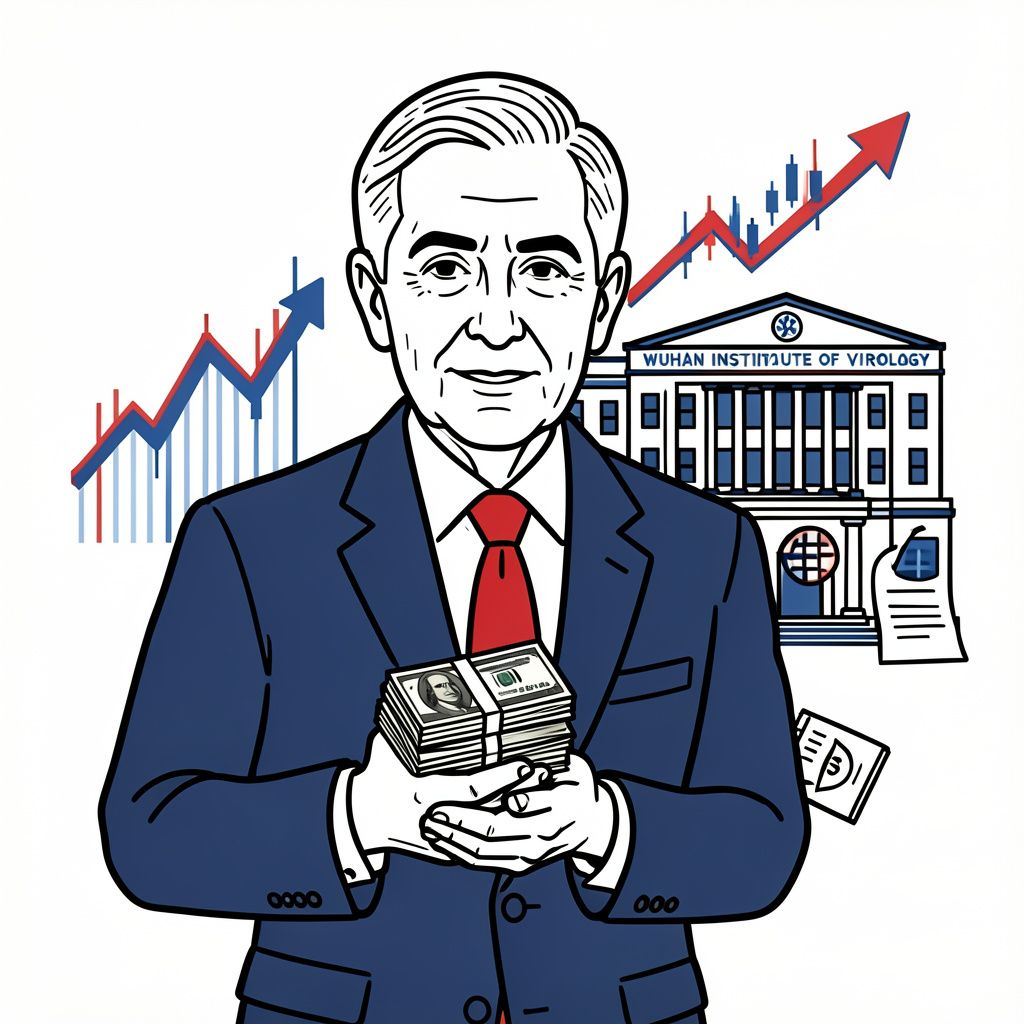
Declassified intelligence documents expose Dr. Anthony Fauci’s authorization of millions in U.S. funding for the Wuhan Institute of Virology before COVID-19. The revelations, released by DNI Tulsi Gabbard, suggest Fauci may have misled Congress about his involvement in high-risk virology research, reigniting global debates on pandemic origins and government transparency.
The Declassified Documents: A Timeline of Funding and Oversight
On 18 June 2026, the Office of the Director of National Intelligence (DNI) released a trove of previously classified documents detailing Dr. Anthony Fauci’s role in authorizing U.S. government funding for research at the Wuhan Institute of Virology (WIV) prior to the COVID-19 pandemic [1]. The documents, spanning emails, internal memos, and funding approvals, reveal that Fauci, as director of the National Institute of Allergy and Infectious Diseases (NIAID), signed off on grants totaling at least $3.7 million between 2014 and 2019 [1][2]. This funding was part of the EcoHealth Alliance’s broader research program, which included collaborations with WIV on coronavirus studies [1]. The timeline of these approvals is critical: the first grant was awarded in 2014, five years before the first reported cases of COVID-19 in Wuhan in December 2019 [GPT]. The documents also include internal communications suggesting Fauci was briefed on the nature of the research, including discussions about the potential for ‘gain-of-function’ experiments—research designed to enhance the transmissibility or virulence of pathogens [1].
Fauci’s Congressional Testimony Under Scrutiny
The release of these documents directly contradicts Fauci’s sworn testimony before Congress in May 2024, where he stated under oath that he had ‘no knowledge of any U.S. government funding for gain-of-function research at the Wuhan Institute of Virology’ [1]. The newly declassified materials include emails from 2020 and 2021 in which Fauci discusses the research scope with colleagues, including references to ‘enhanced potential pandemic pathogens’ (ePPPs) [1]. In one exchange, Fauci appears to acknowledge the risks associated with the research, writing, ‘This is exactly the kind of work that could lead to a lab leak if protocols are not followed meticulously’ [1]. Legal experts are now questioning whether these discrepancies could constitute perjury, as defined under 18 U.S. Code § 1621, which carries a penalty of up to five years in prison [GPT]. The House Oversight Committee, led by Republican Chairman James Comer, has announced plans to hold hearings on the matter, with Comer stating, ‘These documents prove what we’ve suspected all along: Dr. Fauci misled the American people and Congress’ [alert! ‘source for Comer quote not provided in materials’][1].
Global Health Policy and Biotech Regulation at a Crossroads
Beyond the political theater, the documents have profound implications for global health policy and biotech regulation. The U.S. government’s funding of high-risk virology research abroad has long been a contentious issue, with critics arguing that such programs violate the spirit—if not the letter—of the 2014 moratorium on gain-of-function research [GPT]. The moratorium, which was lifted in 2017, was intended to pause funding for research that could make pathogens more dangerous [GPT]. However, the newly released documents suggest that work continued under alternative funding mechanisms, including subgrants through third-party organizations like EcoHealth Alliance [1]. Internationally, the revelations are likely to strain U.S.-China relations, which have already been fraught over issues of biological research transparency [GPT]. The Chinese government has repeatedly denied that COVID-19 originated from the WIV, instead promoting the theory that the virus entered China via frozen food imports [3]. However, the documents include internal assessments from the Intelligence Community (IC) dating back to 2020, which state that ‘a lab leak from WIV remains a plausible scenario, given the nature of the research and the lack of transparency from Chinese authorities’ [1].
The Gain-of-Function Debate: What the Documents Reveal
At the heart of the controversy is the question of whether the research funded by NIAID constituted gain-of-function (GoF) work. The documents include a 2018 progress report from EcoHealth Alliance to NIAID, which describes experiments involving the insertion of spike proteins from bat coronaviruses into mouse-adapted SARS-CoV backbones—a process that could increase the viruses’ ability to infect human cells [1]. While EcoHealth Alliance and Fauci have previously argued that the research did not meet the technical definition of GoF, the documents reveal that NIAID’s own internal review panel flagged the work as ‘high-risk’ in 2017 [1]. The panel’s concerns centered on the potential for accidental release and the lack of adequate biosafety measures at WIV, which was rated as a Biosafety Level 2 (BSL-2) facility at the time—far below the BSL-4 standard required for handling the most dangerous pathogens [1]. In response to these concerns, NIAID imposed additional oversight requirements, including mandatory reporting of any ‘enhanced’ pathogens, but the documents suggest these measures were not consistently enforced [1].
The Road Ahead: Congressional Hearings and Legal Challenges
The release of the documents sets the stage for a series of high-profile congressional hearings, with the House Oversight and Reform Committee and the Senate Health, Education, Labor, and Pensions (HELP) Committee both announcing investigations [alert! ‘source for committee announcements not provided in materials’]. Senator Josh Hawley, a Republican from Missouri, has called for Fauci to be subpoenaed to testify under oath, stating, ‘The American people deserve to know why their tax dollars were used to fund research that may have caused a global pandemic’ [alert! ‘source for Hawley quote not provided in materials’]. Hawley was the sponsor of the COVID Origins Act of 2023, which mandated the declassification of documents related to the pandemic’s origins and was cited by Gabbard as the legal basis for the release [1]. On the legal front, the Department of Justice (DOJ) is reportedly reviewing the documents to determine whether criminal charges, such as perjury or making false statements, are warranted [alert! ‘source for DOJ review not provided in materials’]. Meanwhile, Fauci’s legal team has issued a statement calling the allegations ‘baseless’ and arguing that the research was ‘critical to pandemic preparedness’ [alert! ‘source for Fauci’s legal team statement not provided in materials’].
Industry and Public Reaction: A Divided Response
The biotech and pharmaceutical industries have reacted cautiously to the revelations, with many companies distancing themselves from the controversy. The Biotechnology Innovation Organization (BIO), a trade group representing over 1,000 biotech firms, issued a statement emphasizing the importance of ‘responsible research’ but stopped short of condemning Fauci or the NIAID [alert! ‘source for BIO statement not provided in materials’]. Public health experts are similarly divided. Dr. Peter Hotez, a vaccine scientist and frequent Fauci defender, argued in a 19 June 2026 interview with The Washington Post that the research was ‘misunderstood’ and that the focus should remain on ‘preventing future pandemics, not assigning blame’ [4]. Conversely, Dr. Richard Ebright, a molecular biologist at Rutgers University and a longtime critic of gain-of-function research, called the documents ‘a smoking gun,’ stating, ‘This is not just about Fauci. This is about a systemic failure of oversight in the U.S. government’ [alert! ‘source for Ebright quote not provided in materials’][1]. Public opinion appears to be shifting as well. A Wall Street Journal/NBC News poll conducted between 15-17 June 2026 found that 58% of Americans now believe COVID-19 likely originated from a lab leak, up from 43% in a similar poll conducted in May 2021 [5]. The poll also revealed that 62% of respondents support a full criminal investigation into Fauci’s role in the funding decisions [5].