Carney Targets $51 Billion Trade Boost in Strategic India Reset
Mumbai, Saturday, 28 February 2026.
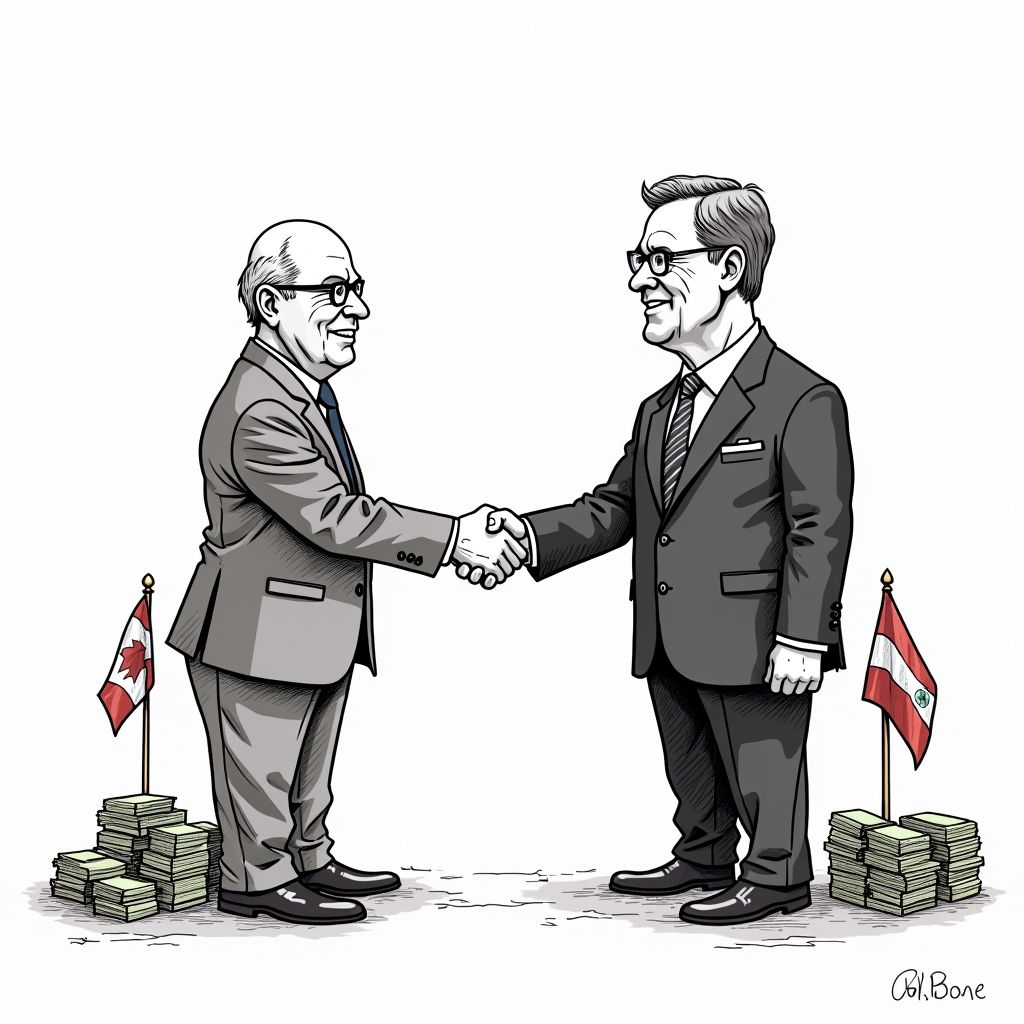
Prime Minister Carney aims to double annual trade by 2030, capitalizing on India’s declaration that it is willing to purchase every energy product Canada can export.
A High-Stakes Economic Pivot
Prime Minister Mark Carney arrived in Mumbai on Friday, February 27, 2026, marking a decisive shift in Canadian foreign policy designed to revitalize a relationship that had effectively collapsed just three years prior [4][6]. With a clear objective to more than double two-way trade to $51 billion annually by 2030, the Prime Minister’s itinerary is strictly business-focused, prioritizing meetings with financial leaders in Mumbai before travelling to New Delhi on Sunday, March 1 [4][6]. The visit comes as Canada seeks to reduce its heavy trade reliance on the United States, a strategic necessity highlighted by Carney’s assertion that the “rules-based international order is no longer a certainty” and that middle powers must find ways to sustain one another [3].
Energy Appetite: The Uranium and LNG Catalyst
The cornerstone of this renewed partnership is India’s voracious demand for energy, which officials describe as virtually limitless. Dinesh Patnaik, India’s High Commissioner to Canada, stated explicitly that India possesses an appetite “which even Canada cannot fulfill” and is prepared to purchase “whatever Canada is offering” regarding crude oil, LPG, and LNG [2]. This demand is driven by India’s aggressive energy transition goals; the nation aims to increase its nuclear capacity from 8.7 gigawatts to 100 gigawatts by 2047, representing a massive expansion of 1049.425 percent in generation potential [2]. Consequently, a 10-year uranium supply agreement valued at $3 billion USD is currently under consideration, with Saskatchewan Premier Scott Moe meeting directly with India’s Department of Atomic Energy on February 27 to advocate for the deal [2].
Navigating Diplomatic Friction
This diplomatic mission represents a significant thaw following the severe deterioration of relations in 2023, when the previous administration accused Indian agents of involvement in the killing of Sikh separatist Hardeep Singh Nijjar [3][4]. The restoration of ties began quietly in June 2025, when Carney invited Prime Minister Narendra Modi to the G7 summit in Kananaskis, Alberta, facilitating the reinstatement of high-level diplomatic posts [2][6]. In a move that analysts suggest prioritizes national economic interests over diaspora politics, Carney’s current itinerary notably excludes a visit to Punjab, a region traditionally visited by Canadian Prime Ministers including Justin Trudeau, Stephen Harper, and Jean Chrétien [6]. Vina Nadjibulla of the Asia Pacific Foundation of Canada notes that this schedule signals a foreign policy “more focused on national interest” [6].
Strategic Diversification
Beyond immediate energy deals, the visit aims to finalize a comprehensive economic agreement, with Carney and Modi scheduled to review cooperation during delegation-level talks in New Delhi on Monday, March 2 [2][6]. The urgency for diversification is underscored by the current geopolitical climate; Senator Peter Boehm has warned that with 98 percent of Canada’s energy exports going to the United States, continuity is “uncertain,” making market expansion essential [2]. Following the conclusion of the India mission, Carney is scheduled to travel to Australia to address parliament and discuss military and trade links, further solidifying an Indo-Pacific strategy anchored in diversifying partnerships [4].