Congress Considers Halting Military Funds as War Costs Climb
Washington, Wednesday, 4 November 2026.
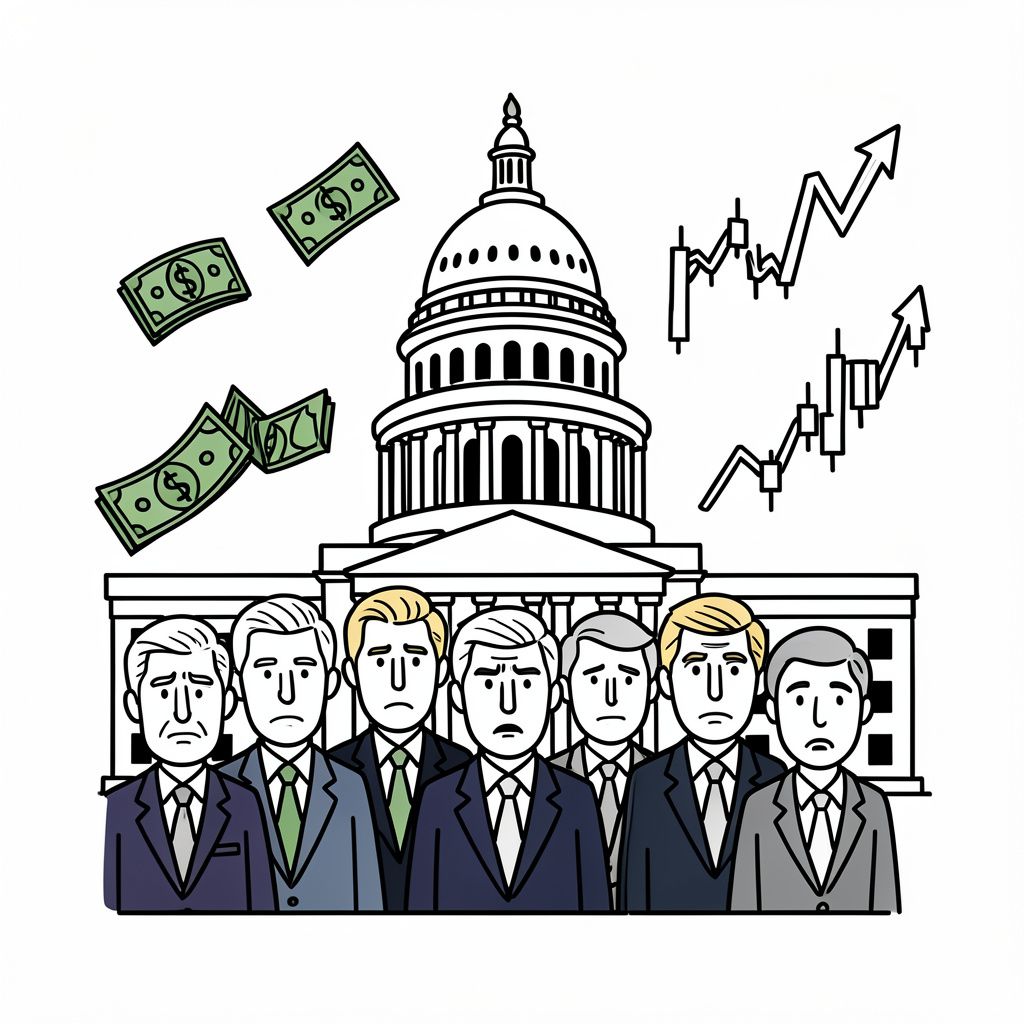
With military operations surpassing $47 billion and domestic fuel prices surging 45%, lawmakers are moving to use congressional spending power to defund and end ongoing conflict in Iran.
A Legislative Push to End the Iran Conflict
Democratic Representative Ro Khanna of California has taken a decisive step to halt further U.S. military funding for operations in Iran, framing the move as a strategic lever to end an eight-month-old conflict that has incurred substantial economic and human costs. Speaking on Fox News Sunday on 2 November 2026, Khanna invoked the precedent of the Vietnam War, asserting that Congress must exercise its constitutional power of the purse to terminate unauthorized military actions. ‘I would stop the funding. The House and the Senate should stop the funding for any further actions in the Iran war. That’s what we did to stop the Vietnam War,’ Khanna stated, emphasizing the urgency of redirecting federal resources toward domestic priorities. [1][2][3][5][7] The proposal, developed in partnership with Republican Representative Thomas Massie of Kentucky, targets war powers resolutions that bypass House Republican leadership to force floor votes on defunding the conflict. [1][2][3][5][7]
Economic Fallout Amplifies Political Pressure
The escalating costs of the Iran conflict—estimated at $47.1 billion as of 16 October 2026—have intensified public and legislative scrutiny. [2][6][8] This figure includes approximately $29 billion allocated for munitions replacement, with an additional $21 billion in human costs, including 21 U.S. service members killed and 865 wounded. [2][6][8] The economic strain extends beyond military expenditures, with gasoline prices averaging $4.33 per gallon—a 44.333 ≈ 44% increase from prewar levels. [2][6][8] Khanna has directly linked the conflict’s continuation to rising fuel costs, arguing that voters prioritizing the war must accept higher household expenses. [1][2][3][5][7]
Public Sentiment and Political Strategy
Public opposition to the war has reached a critical threshold, with an AP-NORC poll conducted on 22 October 2026 revealing that 70% of respondents support congressional efforts to end the conflict. [1][2][3][4][5][7][8] Khanna’s campaign strategy reflects this sentiment, urging Michigan voters to back Democratic candidate Abdul El-Sayed to terminate the war or Republican Mike Rogers to prolong it. [1][3][7] His rhetoric extends to social media, where he challenged President Trump’s criticism by tying the war’s continuation to elevated gas and diesel prices. [1][2][3][5][7] ‘Dems can vote to zero out appropriations for the war in Iran,’ Khanna posted on X, countering Trump’s characterization of him as a ‘lightweight’ with a call to reduce fuel costs. [1][2][3][5][7]
Geopolitical Risks and Market Implications
The legislative push to defund the Iran conflict arrives amid heightened geopolitical uncertainty, with reports suggesting that renewed military strikes could resume as early as 4 November 2026, the day following the midterm elections. [1][4] This timeline heightens concerns for energy markets, defense contractors, and federal appropriations processes, particularly as lawmakers weigh the domestic economic risks of prolonged conflict against national security expenditures. [1][2][4][6] The Pentagon’s exclusion of damaged military infrastructure from its $47.1 billion cost estimate further underscores the potential for unaccounted financial liabilities. [2][6] With Trump leaving the possibility of renewed strikes open despite ongoing negotiations between Iranian and Qatari officials, the stage is set for a high-stakes confrontation over the war’s funding. [1][2][4][6]
Sources
- thehill.com
- www.benzinga.com
- www.facebook.com
- thehill.com
- www.benzinga.com
- www.tradingview.com
- www.uniindia.com
- apnews.com