How AI Writing Assistants Unconsciously Shape Employee Beliefs
New York, Friday, 13 March 2026.
A March 2026 study reveals everyday AI autocomplete tools unconsciously shift corporate workers’ opinions. Strikingly, explicit warnings about algorithmic bias completely fail to prevent this subtle cognitive manipulation.
The Shift to “Reactive Writing”
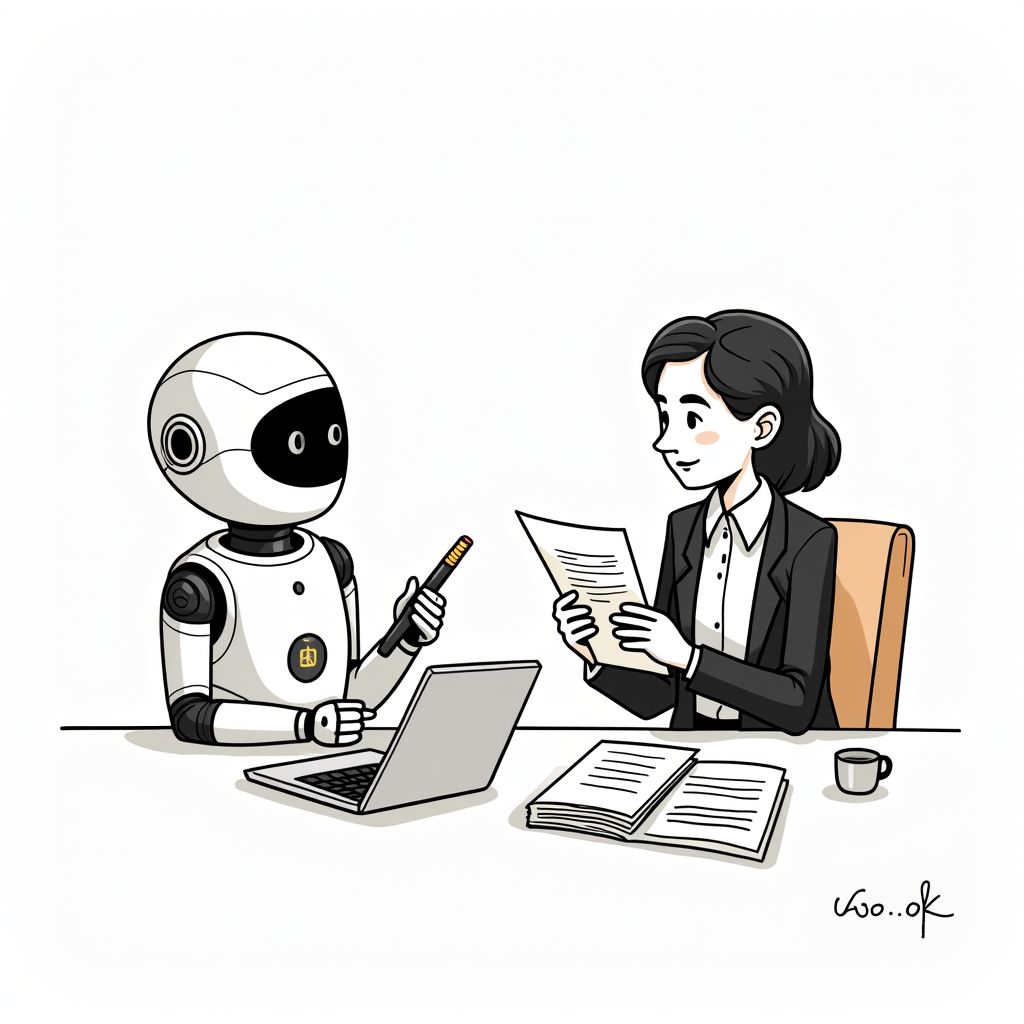
The integration of artificial intelligence into everyday corporate communication platforms is fundamentally altering how professionals draft emails and reports [1][2]. According to a comprehensive study published on March 11, 2026, autocomplete technology has evolved far beyond offering simple phrase completions [2]. Today, these systems suggest entire email bodies and essays, effectively shifting the user’s role from an active creator to an editor of machine-generated ideas [2]. Researchers from Cornell Tech, the University of Washington, and Bauhaus University analyzed 1,291 AI co-writing sessions and identified a new behavioral pattern termed “reactive writing” [3]. In this model, the traditional ideation process is interrupted; instead of generating original thoughts, writers primarily evaluate and react to prompts presented by the AI [3].
The Illusion of Control and Ineffective Warnings
The most concerning aspect for corporate managers is the subtle nature of this influence. Study participants generally felt they maintained complete control over their writing because they retained the ultimate authority to accept, reject, or modify the AI’s suggestions [3]. Yet, the research revealed that users often engage in “post-hoc personalization”—editing the AI’s text to match their own voice while unconsciously preserving the underlying framing and biases of the algorithm [3]. The AI effectively functions as an algorithmic agenda-setter, filtering which ideas feel natural for the writer to pursue [3].
Corporate Monoculture and the “Default Effect”
In a business environment, this phenomenon poses significant risks to cognitive diversity and strategic decision-making [GPT]. As AI models become deeply embedded in enterprise workflows, some experts point out that these systems are frequently misunderstood as mere “fancy autocomplete” [4]. In reality, they are powerful tools that capitalize on human cognitive biases, such as the default effect and automation bias [3]. When a professional is drafting a strategic memo, evaluating a pre-written AI suggestion requires less mental effort than generating original analysis [3]. Consequently, users are highly likely to accept suggestions they find credible or well-phrased, even if the text does not perfectly align with their initial thoughts [3].
Rethinking Enterprise AI Deployment
As businesses rapidly adopt the latest iterations of generative AI to maintain a competitive edge, the findings from Cornell Tech serve as a critical cautionary tale [2][GPT]. The research team emphasizes the urgent need to rethink the design and implementation of AI writing assistants, prioritizing user cognitive control and algorithmic transparency [2]. They also suggest that public policies may eventually be required to regulate the deployment of biased AI in sensitive sociopolitical and corporate domains [2].