Pete Rose Cleared by Presidential Pardon Following Decades of Controversy
Washington, Thursday, 19 November 2026.
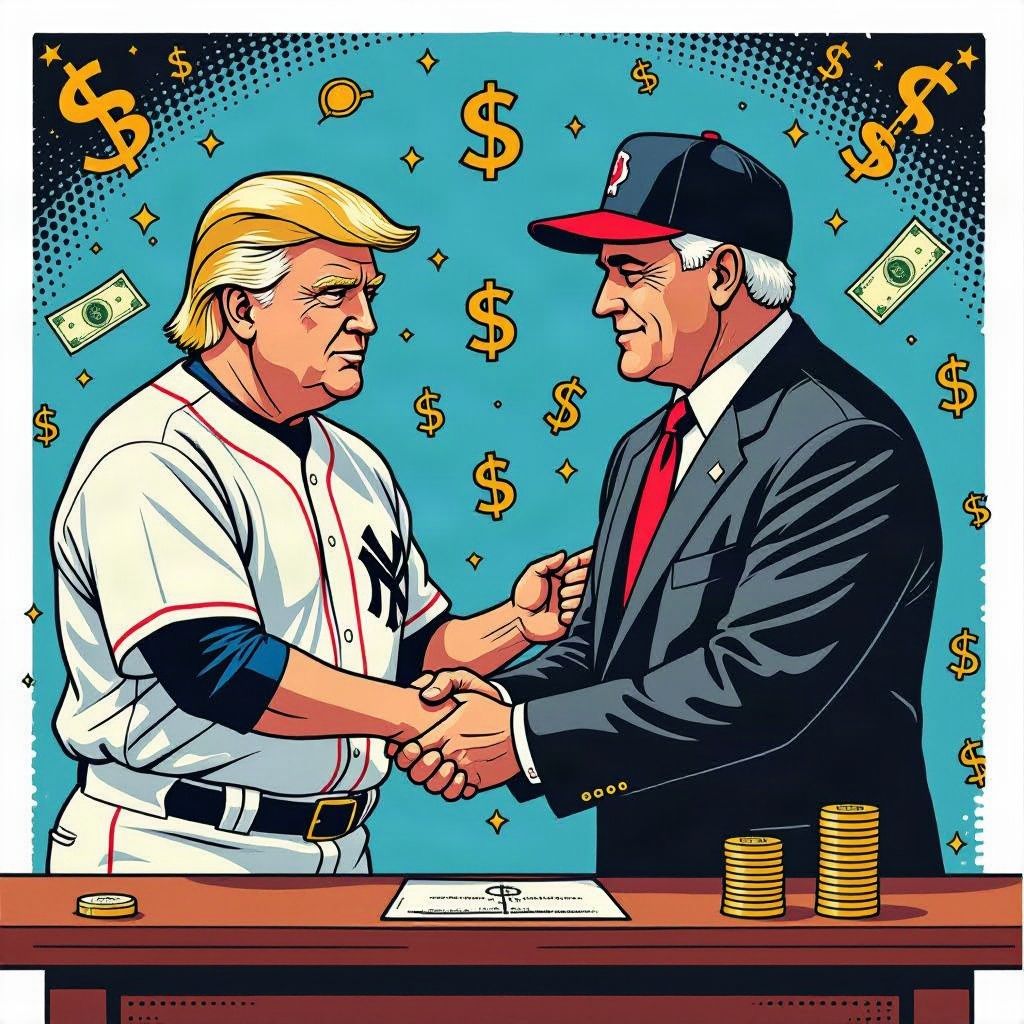
President Donald Trump has posthumously pardoned Pete Rose, resolving his federal tax fraud conviction after Major League Baseball quietly lifted its lifetime gambling ban ahead of potential 2028 Hall of Fame eligibility.
A Presidential Gesture Ends Decades of Scandal
On 19 November 2026, President Donald Trump of the Republican Party issued a posthumous full pardon to Pete Rose, formally absolving the baseball legend of his 1990 federal tax-fraud conviction and closing a legal chapter that began in April 1990 when Rose pleaded guilty to two counts of filing false tax returns [1][2][4]. The pardon retroactively forgives the $366,042 restitution Rose repaid to the Internal Revenue Service, the $50,000 fine imposed by U.S. District Judge S. Arthur Spiegel, and the five-month federal prison term served at the U.S. Penitentiary Marion from August 1990 to January 1991 [2][4].
Baseball’s Lifetime Ban Lifted Ahead of Hall-of-Fame Clock
The presidential clemency follows Major League Baseball Commissioner Rob Manfred’s May 2025 decision to remove Rose and 16 other deceased players from the permanently ineligible list, a move that clears the path for Hall-of-Fame eligibility as early as the 2028 class [2][5]. Manfred’s rationale rested on the premise that a deceased individual cannot threaten the integrity of the game: ‘Obviously, a person no longer with us cannot represent a threat to the integrity of the game’ [2]. Rose, whose 4,256 career hits remain MLB’s all-time record, had sought reinstatement repeatedly since his 1989 lifetime ban for alleged sports-betting on Cincinnati Reds games during the 1985–1987 seasons [1][2][5].
From Dowd Report to Downturn to Dow Jones Headlines
The betting allegations were first detailed in the 1989 Dowd Report, compiled by attorney John M. Dowd, which concluded Rose wagered on Reds games; Rose initially denied the claims before admitting them in his 2004 autobiography, “My Prison Without Bars” [2][5]. The episode also intersected with broader debates on sports integrity: in the 1990 sentencing memo, Judge Spiegel underscored rehabilitation, stating that once a penalty is served, society should accept reintegration—language that foreshadowed Manfred’s 2025 reinstatement logic [2][4].
Symbolic Pardon Amid Broader Presidential Powers Discussion
The posthumous pardon arrives one day after the American University Washington College of Law published a primer on presidential pardon authority, noting that the Constitution’s clemency power is among the broadest granted to the executive branch [6]. Legal experts contrasted the symbolic Thanksgiving turkey pardon tradition—established by Republican President George H.W. Bush in 1989—with the substantive clemency exercised by Trump, whose statement on Truth Social declared, ‘I have just given a Complete and Total Pardon to the Late, Great Pete Rose, a true Baseball SUPERSTAR & LEGEND’ [3][6].