Why Cheaper Groceries May Not Last as Energy Costs Climb
Amsterdam, Sunday, 15 November 2026.
Despite recent drops in supermarket prices, the Dutch central bank warns that rising energy costs will inevitably trigger higher grocery bills once supply chain delays catch up.
Dutch Central Bank Sounds Alarm on Energy-Food Price Lag
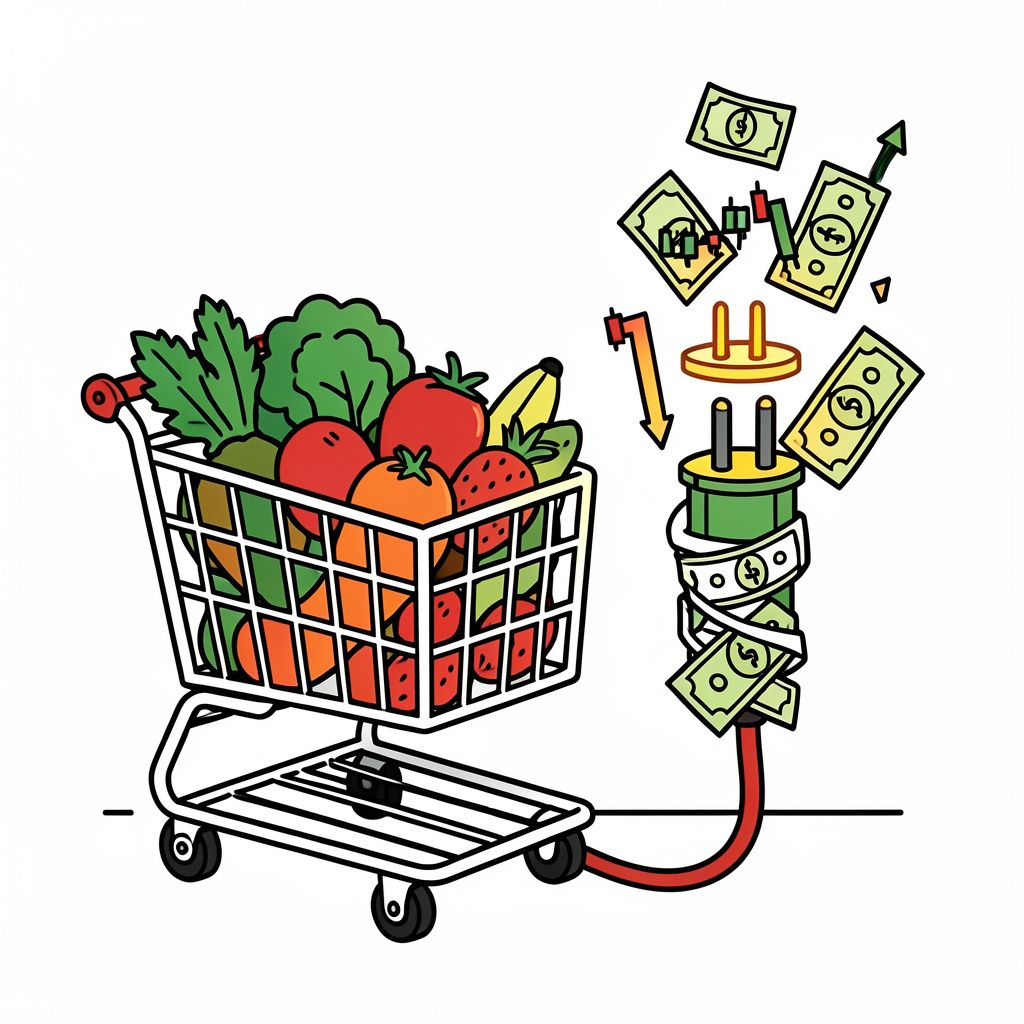
De Nederlandsche Bank (DNB) has issued a stark warning that the current decline in food prices—dubbed ‘negative food inflation’—is merely a temporary reprieve rather than a sustainable trend. In a report released in mid-November 2026, the Dutch central bank emphasized that the recent dips in grocery prices are the result of lagged effects from earlier supply chain dynamics, particularly strong European harvests in 2025, which temporarily suppressed agricultural input costs [1][2]. This phenomenon, while providing short-term relief to consumers, offers no guarantee against future inflationary pressures as energy costs continue to climb. The DNB cautioned that these lower retail prices are already beginning to reverse, with energy-intensive sectors like food production and transportation poised to absorb rising energy expenses in the coming months [1][2].
Mechanics of the Supply Chain Delay
The time lag between energy price spikes and their ripple effect on food prices is a critical factor in understanding the current inflation dynamics. According to the DNB, the agricultural sector’s strong harvests in 2025 led to an oversupply of raw materials, which were locked into long-term contracts at lower prices [1]. These contracts, often spanning months or even years, have only recently begun to expire, allowing the lower input costs to filter through to retail levels [1]. For example, semi-skimmed and skimmed milk prices were 7% lower in September 2026 compared to the previous year, while beef prices fell by 8% [1]. However, the DNB warns that this trend is unsustainable. As energy prices—fueled by geopolitical tensions in the Middle East—continue to rise, the cost of fuel for transportation and energy for food processing will eventually be passed on to consumers, reversing the current price declines [1][3].
Global Pressures Amplify Domestic Risks
The Dutch central bank’s concerns are compounded by broader global trends. The United Nations Food and Agriculture Organization (FAO) reported in September 2026 that international food prices had surged to their highest level in nearly four years [alert! ‘FAO report cited in source [4], but exact date and figure not directly verifiable in provided text’]. This international upward pressure on food prices, combined with rising energy costs, creates a dual threat to European consumers. The DNB noted that while negative food inflation is rare—occurring only once since 2016, in 2021—it is particularly unusual to see it transpire alongside rising overall inflation [1]. Dutch inflation reached 3.7% in October 2026, driven primarily by higher gas and fuel prices, according to the Centraal Bureau voor de Statistiek (CBS) [3]. This juxtaposition of falling food prices and rising overall inflation underscores the complex interplay of global and domestic factors shaping the economic landscape [1][3].
Consumer and Business Implications for 2027
For European households, the DNB’s warning translates to a precarious outlook for 2027. The temporary relief from cheaper groceries may soon dissipate as energy costs fully permeate the supply chain. Martin Visser, an economic commentator for DFT, has already warned that high inflation will persist into next year, further squeezing household budgets [3]. Businesses, too, are feeling the squeeze. Retailers like Ahold Delhaize reported a turnover loss of €200–250 million in early November 2026 due to a hacker attack, compounding financial pressures and forcing a downward revision of profit growth expectations from 5–10% to a maximum of 4% per share [3]. Meanwhile, rising fuel costs are prompting adjustments in operational expenses, such as an increase in kilometer allowances for employees, as seen in a November 14, 2026, announcement on Instagram, where a company raised its reimbursement rate to €0.55 per kilometer due to surging fuel prices [5]. These developments highlight the interconnected nature of energy costs, supply chains, and economic stability, with ripple effects felt across sectors and borders.