Deadly Drone Strike Hits Passenger Platform at Dnipro Railway Station
Dnipro, Thursday, 29 October 2026.
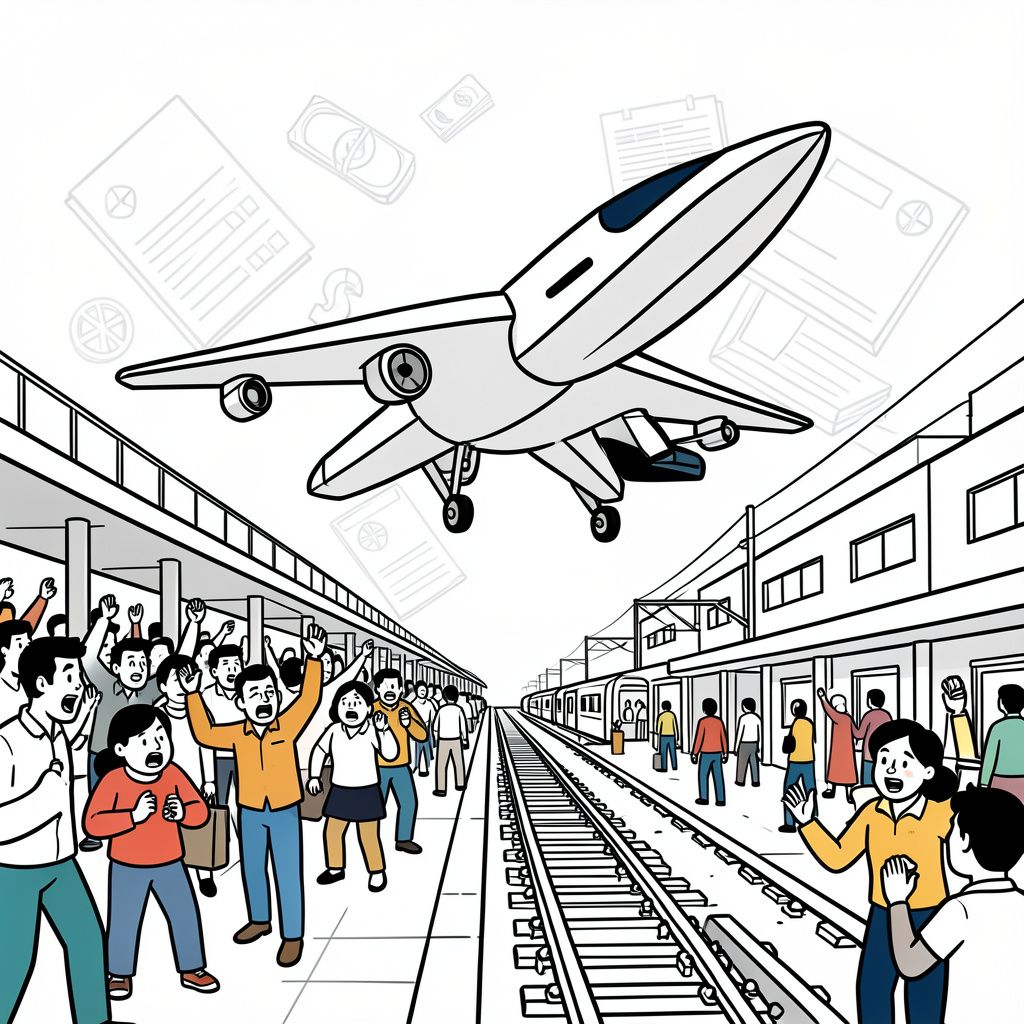
A Russian jet-powered drone struck a crowded passenger platform at Dnipro’s central railway station on Thursday, killing at least 13 people and highlighting the growing risks to critical transport corridors.
Targets and Timing of the Attack
The strike occurred just before noon local time on 29 October 2026, when four jet-powered drones were launched toward the Dnipro region [1][2]. Three were intercepted by Ukrainian air defenses, but one penetrated to the central station, striking Platform 3 where an outbound passenger train to Zaporizhzhia (Train No. 866) was boarding [1][2][3]. Ukrainian Railways said the alert level had been raised but people nonetheless remained on the platform [2][5].
Casualties and Emergency Response
At least 13 people were killed and 14 others injured, with six in critical condition, including an 11-year-old boy who suffered multiple shrapnel wounds and bilateral leg amputations [2][3][5]. Emergency services reported that 40- and 53-year-old men and a 26-year-old woman were also in severe condition [3][5]. All casualties were transported to area hospitals for treatment [1][2].
Regional Escalation and Geopolitical Context
The attack followed coordinated strikes in Chernihiv and Kremenchuk, where Banderol cruise missiles killed two 15-year-old girls and injured at least 23 others [1]. President Volodymyr Zelenskyy condemned the strikes, noting that Russia intensified its campaign despite recent Western sanctions relief, and called for stronger European and U.S. measures against Moscow’s war machine [1][X]. ‘Sanctions against Moscow and its military apparatus must not weaken while this Russian war continues,’ he stated [1][X].
Implications for Transport and Market Stability
Ukrainian Railways confirmed the immediate suspension of departures from Dnipro station while damage assessments and repairs proceeded [2][5]. Analysts warned that repeated attacks on rail and logistics nodes threaten to delay reconstruction timelines and freight continuity across Central Europe, adding pressure on Western governments to accelerate air-defense deliveries and restore full cross-border transit corridors [GPT].
Sources
- kyivindependent.com
- www.ukrinform.ua
- www.pravda.com.ua
- zaxid.net
- www.facebook.com
- www.instagram.com
- x.com
- www.instagram.com