Rubio Sets Conditional Terms for Renewed Transatlantic Alliance
Munich, Saturday, 14 February 2026.
Secretary Rubio characterized America as a “child of Europe” but conditioned future partnership on adopting President Trump’s anti-globalist agenda. Underscoring this transactional shift, Rubio withdrew from a critical high-level Ukraine meeting, signaling that the transatlantic alliance now requires significant structural adjustments.
A Transactional Pivot
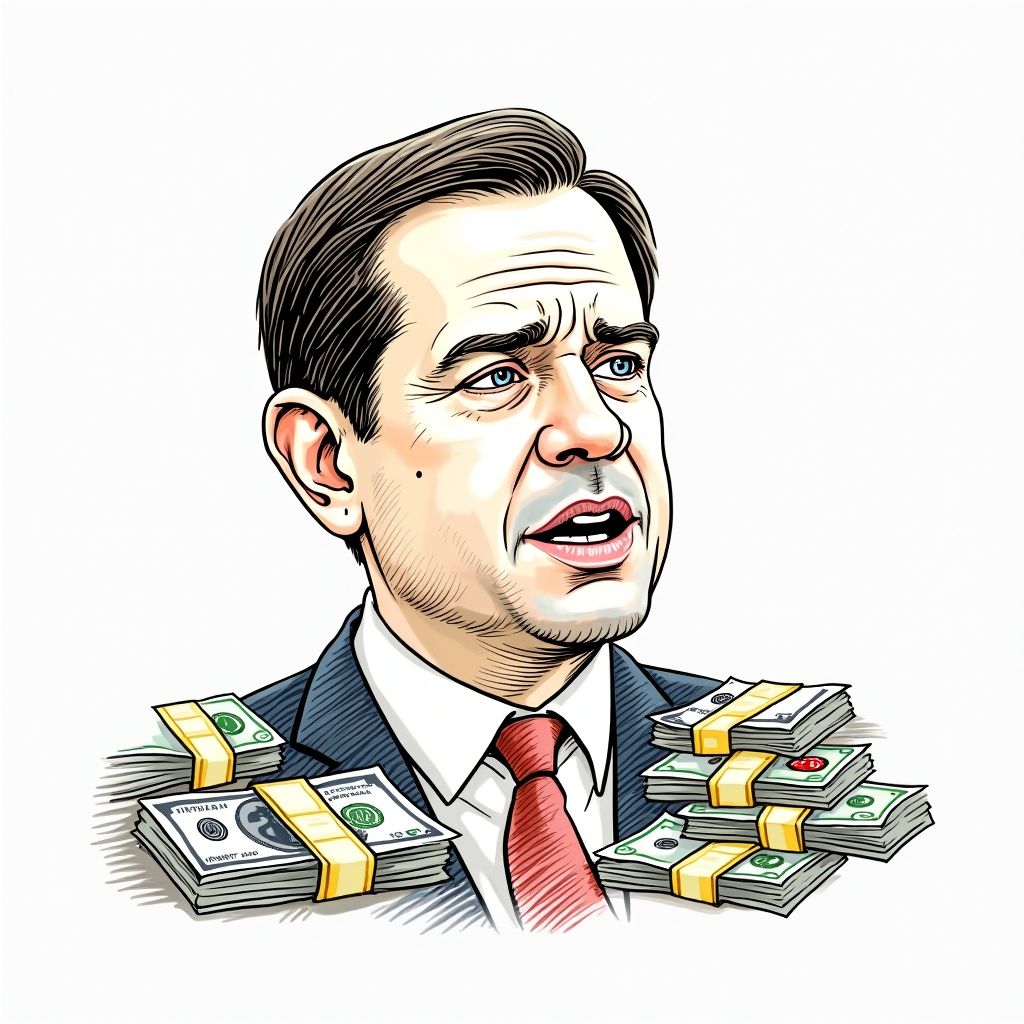
Addressing the Munich Security Conference (MSC) this weekend, Secretary of State Marco Rubio outlined a foreign policy doctrine that seeks to redefine the transatlantic relationship through the lens of President Trump’s ideology. While Rubio utilized the emotive metaphor of America as a “child of Europe,” the substance of his message was strictly conditional: the United States desires a “revitalized alliance,” but only if European partners abandon what he termed a “climate cult” and the embrace of globalization [1]. Rubio argued that both the U.S. and Europe have weakened their national defenses by expanding welfare states and ignoring border control, which he framed as a “fundamental act of national sovereignty” [1]. He made it clear that while Washington prefers to build a new world order alongside its European allies, it is “prepared, if necessary, to do this alone” [1].
Diplomatic Friction Over Ukraine
The shift from unconditional support to transactional cooperation was immediately felt in the conference’s diplomatic maneuvering. In a move that underscored the administration’s divergence from previous norms, Secretary Rubio withdrew from a scheduled high-level meeting regarding Ukraine [2]. This cancellation occurred as Ukrainian President Volodymyr Zelenskyy, also in attendance on Saturday, acknowledged feeling a “little bit” of pressure from the United States regarding potential compromises [3]. Despite this pressure, Zelenskyy remained firm in his public remarks, stating that it is an “illusion” to believe that dividing Ukraine would prevent further war, and noting that Russian forces are currently suffering significant casualties [3].
Europe’s Strategic Recalibration
European leaders responded to the shifting American stance with a mix of criticism and accelerated contingency planning. German Chancellor Friedrich Merz, who spoke earlier in the conference, suggested that under the Trump administration, the U.S. claim to global leadership has been “challenged, and possibly squandered” [4]. Consequently, Germany has initiated talks with France regarding the establishment of a European nuclear deterrent to reduce security dependence on Washington [4]. French President Emmanuel Macron echoed this sentiment, arguing that Europe must “become a unified major power” and increase its strategic autonomy, asserting, “No peace without Europeans” [4].
Shadows of the Past
The conference also served as a grim reminder of the stakes involved in opposing authoritarianism. On Saturday, the United Kingdom, alongside France, Germany, Sweden, and the Netherlands, formally confirmed that Russian opposition leader Alexei Navalny was poisoned with the neurotoxin epibatidine [3]. Navalny’s widow, Yulia Navalnaya, addressed the conference two years after news of his death broke at the same venue, stating, “Now there is proof: Putin killed Alexei with chemical weapon” [3]. Despite the somber context and the friction over Ukraine, some European officials, including EU Commission President Ursula von der Leyen, reportedly welcomed Rubio’s speech as “reassuring,” likely interpreting his engagement—however conditional—as preferable to total isolationism [3].