Why Blue States Are Skipping Trump’s National Celebration
Washington D.C., Sunday, 14 June 2026.
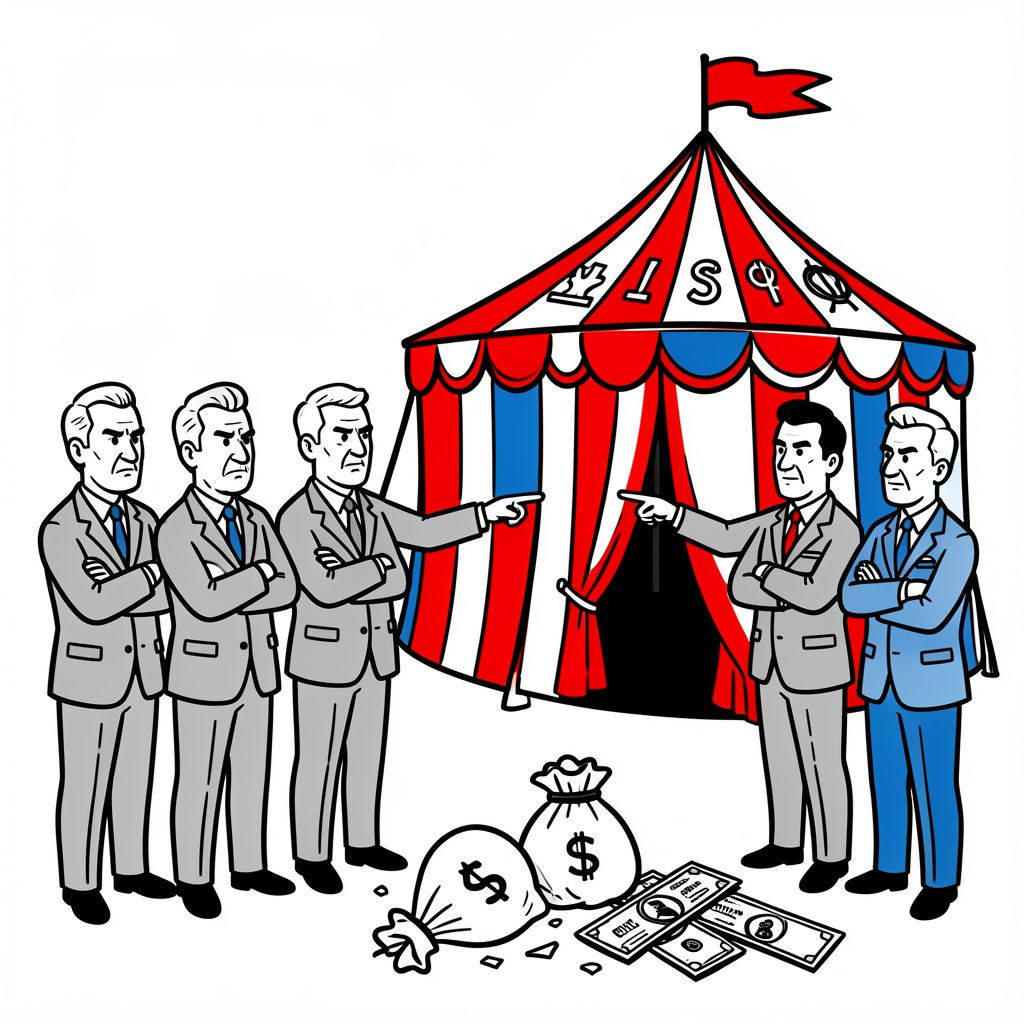
Eight Democratic-leaning states are boycotting Trump’s ‘Great American State Fair,’ calling it a partisan stunt ahead of the 2026 midterms. Governors cite costs and political bias, with Massachusetts’ leader slamming it as a ‘ridiculous’ misuse of taxpayer money. The fallout threatens the event’s economic impact, as sponsors and vendors brace for lower turnout.
The Partisan Divide Over America’s 250th Birthday Celebration
The ‘Great American State Fair,’ scheduled to run from June 25 to July 10, 2026, on the National Mall in Washington, D.C., was envisioned as a centerpiece of the nation’s semiquincentennial celebrations. Organized by former President Donald Trump’s Freedom 250 task force, the 16-day event was intended to showcase American culture, innovation, and economic achievements ahead of the 250th anniversary of the Declaration of Independence on July 4, 2026. However, the fair has become a flashpoint in the nation’s political divide, with eight Democratic-leaning states—Connecticut, Illinois, Massachusetts, Maine, North Carolina, Oregon, Pennsylvania, and Washington—announcing their withdrawal from the event [1][2]. The boycott underscores the deepening partisan rifts as the 2026 midterm elections approach, with governors citing both financial concerns and allegations of political bias in the fair’s organization [1][3].
Governors Reject Event as ‘Ridiculous’ and Partisan
Massachusetts Governor Maura Healey (Democrat) has been among the most vocal critics of the fair, calling it a ‘ridiculous’ misuse of taxpayer money. In a statement on June 12, 2026, Healey lambasted the Trump administration’s approach to the semiquincentennial celebrations, particularly the requirement for states to pay for their own participation. ‘He invited all the states to participate and wants to charge us—charge us!—to put something on his exhibit, whatever he’s creating for Freedom 250. It’s just ridiculous. This is taxpayer money,’ Healey said [1]. Oregon Governor Tina Kotek (Democrat) echoed these concerns, stating that the event had become ‘a more partisan affair than originally presented’ and citing the financial burden as a key factor in Oregon’s decision to withdraw [1]. North Carolina and Connecticut also cited budget constraints, with North Carolina’s spokesperson noting that the state’s ‘limited resources are focused on America 250 events across North Carolina, including one at the State Capitol in Raleigh on July 4, 2026’ [4].
A Fractured Celebration: Freedom 250 vs. America250
The controversy surrounding the Great American State Fair is part of a broader dispute over how America’s 250th anniversary should be celebrated. The bipartisan America250 commission, established by Congress in 2016, was originally tasked with organizing the semiquincentennial festivities. However, Trump’s administration created a parallel effort, Freedom 250, which has drawn criticism for its perceived partisan leanings and financial mismanagement [5]. According to reports, the Department of the Interior transferred only $25 million of the $50 million in federal funds promised to America250 by February 1, 2026, leaving the commission scrambling to adjust its plans [5]. Meanwhile, Freedom 250, which operates under Task Force 250, has secured additional funding from private donors, including corporate sponsors like Northrop Grumman and John Deere, who receive VIP access and speaking opportunities in exchange for their contributions [7].
The Economic Fallout: Sponsors and Vendors on Edge
The boycott by eight states threatens to undermine the economic impact of the Great American State Fair, which was projected to generate significant revenue for local vendors, hospitality sectors, and national brands. The event was expected to feature over 150 exhibits from all 56 states and territories, along with a concert series, athletic competitions, and cultural performances [1][4]. However, the withdrawal of high-profile acts and states has already led to cancellations, including the live-music series, which was scrapped after seven music acts pulled out upon learning that Freedom 250 was organizing the event [6]. Business leaders and political analysts are closely monitoring the fallout, as the fair’s success hinges on broad participation and corporate sponsorship. With states like Massachusetts and Oregon redirecting their resources to in-state celebrations, the National Mall event risks becoming a shadow of its original vision [1][4].
Counter-Programming: States Plan Their Own Celebrations
In response to the boycott, several states are planning their own semiquincentennial celebrations to coincide with the July 4, 2026, anniversary. Oregon’s Governor Kotek announced that the state would ‘proudly [celebrate] America’s semiquincentennial here in Oregon,’ with events organized by the America 250 Oregon Commission throughout the summer [1]. Similarly, North Carolina has committed to hosting a major event at its State Capitol in Raleigh, while Connecticut is focusing on local initiatives rather than participating in the Washington, D.C., fair [4]. These counter-programming efforts reflect a broader trend of states seeking to distance themselves from the Trump administration’s handling of the 250th anniversary while still honoring the historic milestone. Freedom 250 has sought to downplay the boycott, claiming that ‘every state will be represented in some form’ at the Great American State Fair, though it remains unclear how this will be achieved without the direct participation of the eight opting-out states [1].
The Future of America’s 250th: A Nation Divided?
As the July 4, 2026, anniversary approaches, the dispute over the Great American State Fair highlights the challenges of celebrating a unifying national milestone amid deep political polarization. The Trump administration’s decision to create a parallel organization in Freedom 250, rather than working within the bipartisan America250 framework, has exacerbated tensions and led to accusations of partisan exploitation [5][7]. Meanwhile, the financial and logistical fallout from the boycott raises questions about the viability of the fair itself. With corporate sponsors and vendors already reassessing their involvement, the event’s economic impact—originally projected to be substantial—could be significantly diminished [1][4]. As states and private entities navigate this fractured landscape, the semiquincentennial celebrations risk becoming a microcosm of the broader divisions within the country, rather than a moment of national unity.
Sources
- time.com
- www.opb.org
- www.usnews.com
- www.usatoday.com
- www.theatlantic.com
- www.theatlantic.com
- www.theatlantic.com