EU Court Advisor Backs Italy's Offshore Migrant Processing Strategy
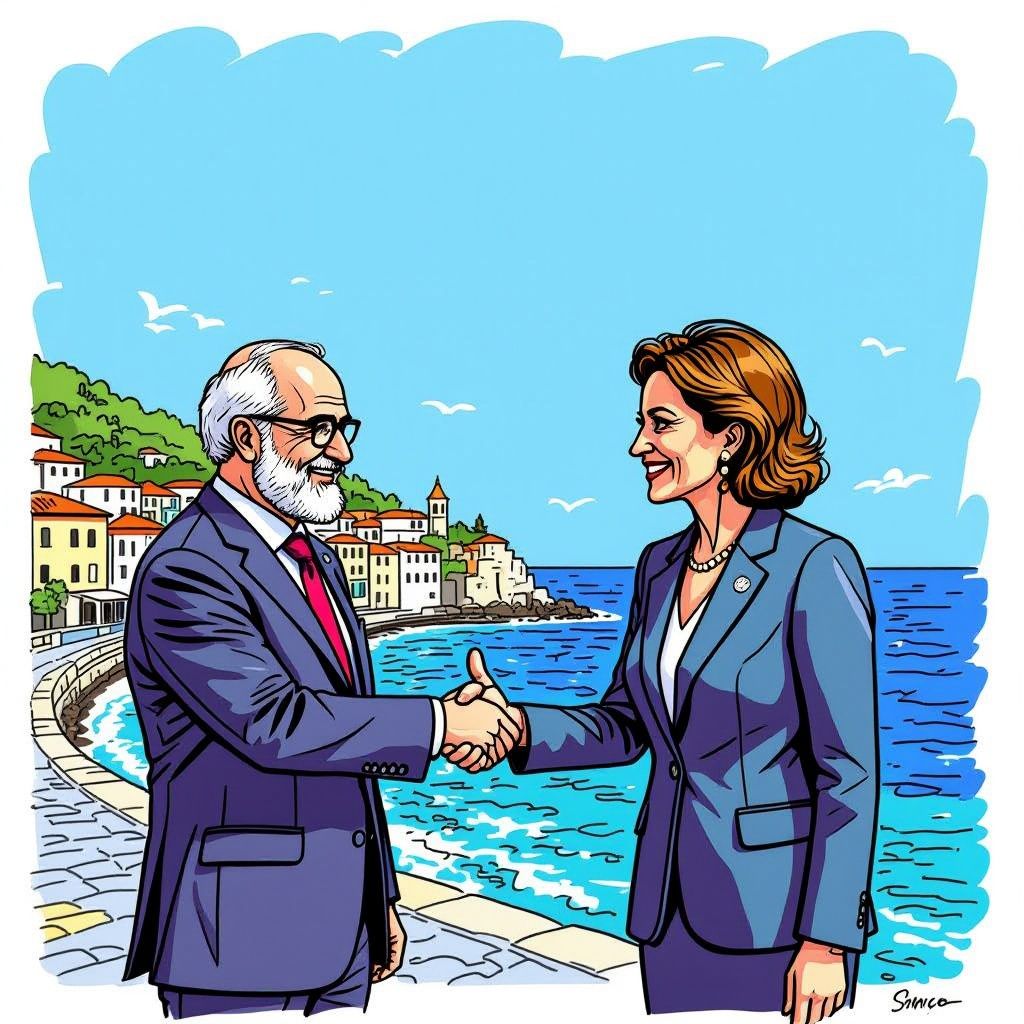
Luxembourg City, Saturday, 25 April 2026.
A top EU legal advisor backed Italy’s offshore migrant processing in Albania. This preliminary opinion sets a powerful precedent, potentially reshaping European border management and labor policies.
The Legal Foundations of Extraterritorial Processing
On April 23, 2026, Advocate General Nicholas Emiliou of the European Court of Justice (ECJ) released a pivotal legal opinion regarding Italy’s strategy of outsourcing migrant processing [1][6]. Emiliou concluded that European Union law does not inherently prohibit a member state from establishing detention facilities for return procedures outside its sovereign territory [1][5]. This preliminary, non-binding assessment specifically scrutinized the migration protocol signed between Italian Prime Minister Giorgia Meloni and Albanian Prime Minister Edi Rama in November 2023 [3]. The bilateral agreement allows Italy to finance, establish, and operate repatriation and detention centers on Albanian soil, with the facilities remaining strictly under Italian jurisdiction [3][5].
Italy’s Rocky Road to Implementation
The practical application of this offshore policy has been fraught with legal and logistical hurdles since its inception [4][5]. Italy officially launched two “return hubs” in Albania in 2024, designed to fast-track adult male asylum seekers intercepted in the Mediterranean who originate from “safe” countries and are therefore deemed unlikely to qualify for international protection [1][3][5]. Despite initial transfers beginning in October 2024, the facilities have remained largely vacant [3][5]. This underutilization stems from immediate interventions by Italian judges, who ruled that the initial transfers did not meet the stringent legal criteria for extraterritorial detention, promptly ordering the migrants to be returned to Italy [3][5].
A Blueprint for European Border Management
The geopolitical ramifications of this legal opinion extend far beyond the Adriatic Sea [GPT]. Emiliou carefully delineated that his assessment was heavily influenced by Albania’s specific geopolitical context—namely, its geographic proximity to Italy and its formal status as an EU candidate country bound by rigorous human rights commitments [1][5]. The Advocate General cautioned that a similar legal conclusion might not be reached if a member state attempted to outsource processing to a non-EU nation that was significantly further away or politically unstable [5]. This caveat establishes a crucial legal boundary for policymakers attempting to replicate the Italian model [GPT].
Sources
- www.infomigrants.net
- www.threads.com
- europeanconservative.com
- www.globalbankingandfinance.com
- borneobulletin.com.bn
- www.nampa.org