Strong Consumer Demand Fuels Fastest US Economic Expansion in Two Years
Washington, Thursday, 22 January 2026.
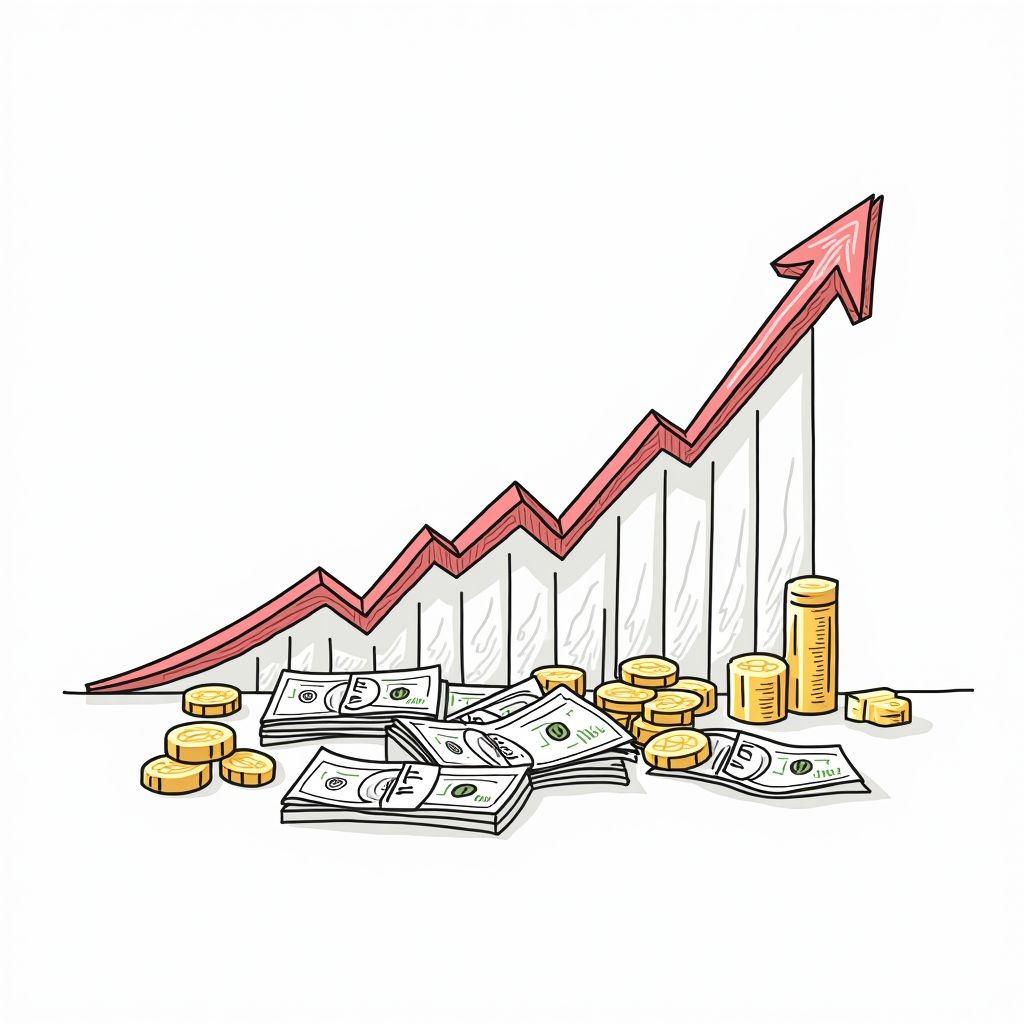
Revised government data confirms the U.S. economy grew at an annualized rate of 4.4% in the third quarter of 2025, outperforming expectations. While resilient household spending and AI investments drove this two-year high, the emergence of a “jobless boom” highlights a complex divergence between robust output and a stagnant labor market.
Final Q3 Data Confirms Resilience
The Bureau of Economic Analysis (BEA) released its final reading for the third quarter of 2025 today, January 22, 2026, confirming that the U.S. gross domestic product (GDP) expanded at an annualized rate of 4.4% [1][2]. This figure represents an upward revision of 0.1 percentage points from the government’s initial estimate, marking the fastest pace of economic growth since the third quarter of 2023 [1][5]. The release of this finalized data was significantly delayed due to a 43-day government shutdown that began on October 1, 2025, which forced the BEA to forgo its usual second estimate schedule [2].
Consumer Spending and AI Investment Lead the Way
The economic acceleration was primarily powered by the American consumer. Personal consumption expenditures, which constitute 70% of the nation’s economic activity, grew at a rate of 3.5% during the quarter [1][3]. This spending was skewed heavily toward services, which saw a 3.6% increase, with healthcare services alone contributing 0.75 percentage points to the overall GDP growth [1][4]. Business investment also showed strength, rising at a 3.2% clip (excluding homebuilding), a trend partially attributed to significant capital expenditures in artificial intelligence and data centers [1][2]. Additionally, net exports provided a substantial boost of 1.62 percentage points to the headline number, as exports surged 9.6% while imports declined by 4.4% [4][5].
The Paradox of a “Jobless Boom”
Despite the robust output figures, the labor market depicts a starkly different reality, creating what economists are terming a “jobless boom” [1]. While the economy is expanding, hiring has stalled significantly. Since March 2025, employers have added an average of just 28,000 jobs per month [1]. This is a dramatic deceleration from the post-pandemic recovery period of 2021-2023, when the economy generated approximately 400,000 jobs monthly [1]. The unemployment rate holds steady at a low 4.4%, suggesting a “no-hire, no-fire” environment where businesses are hesitant to onboard new talent but are equally reluctant to lay off existing employees [1].
Uneven Gains and Inflation Pressures
The divergence between spending and hiring highlights a “K-shaped economy,” where the benefits of growth are distributed unevenly [1]. Wealthier households, buoyed by market gains and investment income, are driving consumption, while lower-income families continue to struggle with the cost of living [1]. Inflation remains a factor; the GDP price index for the quarter came in at 3.8%, and the core Personal Consumption Expenditures (PCE) index—the Federal Reserve’s preferred inflation gauge—rose 2.9% [3][4]. Corporate profits, however, remained healthy, with revisions showing a 4.5% increase for the quarter [3].
Outlook for 2026
Looking forward, early indicators suggest the economic momentum may have carried into the final months of 2025. As of yesterday, the Atlanta Fed’s GDPNow tracker estimated growth for the fourth quarter of 2025 at 5.4% [4]. However, experts urge caution regarding the sustainability of this pace. Gregory Daco, chief economist at EY-Parthenon, notes that the economy is “neither overheating nor stalling” but is instead “adjusting” to an intense set of economic crosscurrents as 2026 unfolds [2].