President Trump Alleges Gross Incompetence in Federal Reserve’s $4 Billion Renovation
Washington D.C., Wednesday, 4 February 2026.
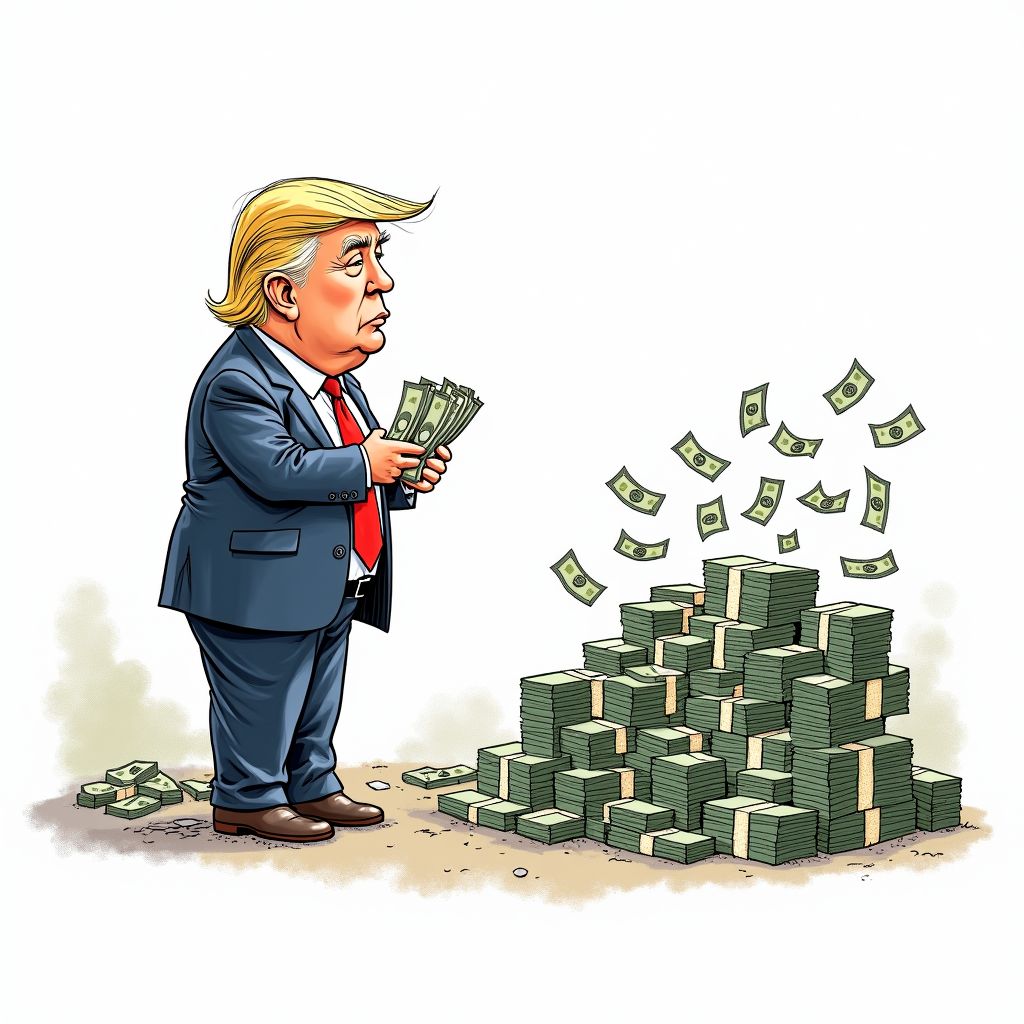
Alleging “gross incompetence or theft,” President Trump criticized the Federal Reserve’s $4 billion headquarters renovation, contrasting the massive cost against his own $200 million hotel refurbishment project.
Allegations of Financial Mismanagement
On Monday, February 2, 2026, President Donald Trump sharply escalated his criticism of the Federal Reserve, explicitly targeting the central bank’s expenditure on its headquarters renovation in Washington, D.C. [3][8]. Speaking to reporters in the Oval Office, the President characterized the project’s reported $4 billion cost as evidence of “gross incompetence or theft of some kind, or kickbacks,” demanding to know why the refurbishment carried such a high price tag [1][8]. To illustrate his point, President Trump drew a direct comparison to his private sector experience, noting that his rehabilitation of the Waldorf Astoria Hotel in New York City cost significantly less. He stated that while the Federal Reserve building is smaller than the hotel, the central bank’s project has already cost $4 billion, whereas his renovation was completed for $200 million [8]. This represents a cost disparity where the public project is 20 times more expensive than the private benchmark cited by the President.
Justice Department Investigation
The President’s comments follow the opening of a criminal investigation by the Justice Department in January 2026 regarding the renovation overspending [2]. The probe, led by U.S. Attorney for Washington Jeanine Pirro, is examining whether Federal Reserve Chairman Jerome Powell lied to Congress regarding the scope of the multibillion-dollar project [2][8]. Despite the potential political fallout, President Trump insisted on Monday that the investigation “should be taken to the end” to uncover exactly what transpired [3][8]. Chairman Powell, whose term is set to expire in May 2026, has denied any wrongdoing [4][8]. He contends that the investigation is politically motivated, stemming from the Federal Reserve Board’s refusal to cut interest rates as aggressively as the executive branch has demanded [8].
Senate Standoff and Succession Complications
The ongoing criminal probe has created immediate hurdles for the President’s plan to reshape the central bank’s leadership. On February 1, 2026, President Trump nominated former Fed governor Kevin Warsh to replace Powell [4]. However, key Republican lawmakers have indicated that the investigation into the current chair must take precedence over the confirmation of a new one. Senator Thom Tillis of North Carolina has threatened to block any nominee until the criminal probe into Powell is fully resolved, a stance echoed by Senator Lisa Murkowski of Alaska [8]. This opposition from within the President’s own party sets the stage for a potential stalemate in the Senate Banking, Housing, and Urban Affairs Committee [8]. President Trump acknowledged this difficulty on Monday, stating that the Justice Department should not drop the probe even if it results in a harder path to confirmation for Warsh [8].
Monetary Policy at the Center of the Conflict
Underlying the dispute over renovation costs is a profound disagreement regarding monetary policy. The Federal Open Market Committee (FOMC) maintained interest rates at a range of 3.5% to 3.75% following their meeting earlier in January 2026, despite inflation hovering near 3% [4]. While the President has long advocated for aggressive rate cuts, citing stalled job creation in 2025, the central bank has moved cautiously [4]. President Trump has expressed expectations that his nominee, Kevin Warsh, would deliver lower rates, although Warsh has historically established a reputation as an inflation hawk [2][4]. The friction highlights the tension between the Federal Reserve’s mandate for independence—supported by international central bank chiefs—and the executive branch’s desire for economic stimulus [2].
Sources
- www.skynews.com.au
- theconversation.com
- www.reuters.com
- foxbaltimore.com
- www.foxbusiness.com
- www.facebook.com
- wsbt.com
- www.washingtontimes.com