TrellisWare Demonstrates Advanced Radio Networks in Army Modernization Trial
San Diego, Wednesday, 12 August 2026.
TrellisWare successfully networked over 1,100 battlefield radios during U.S. Army field tests, delivering high-speed communications across 800 nodes to advance military command system modernization.
Operational Scale and Technical Performance
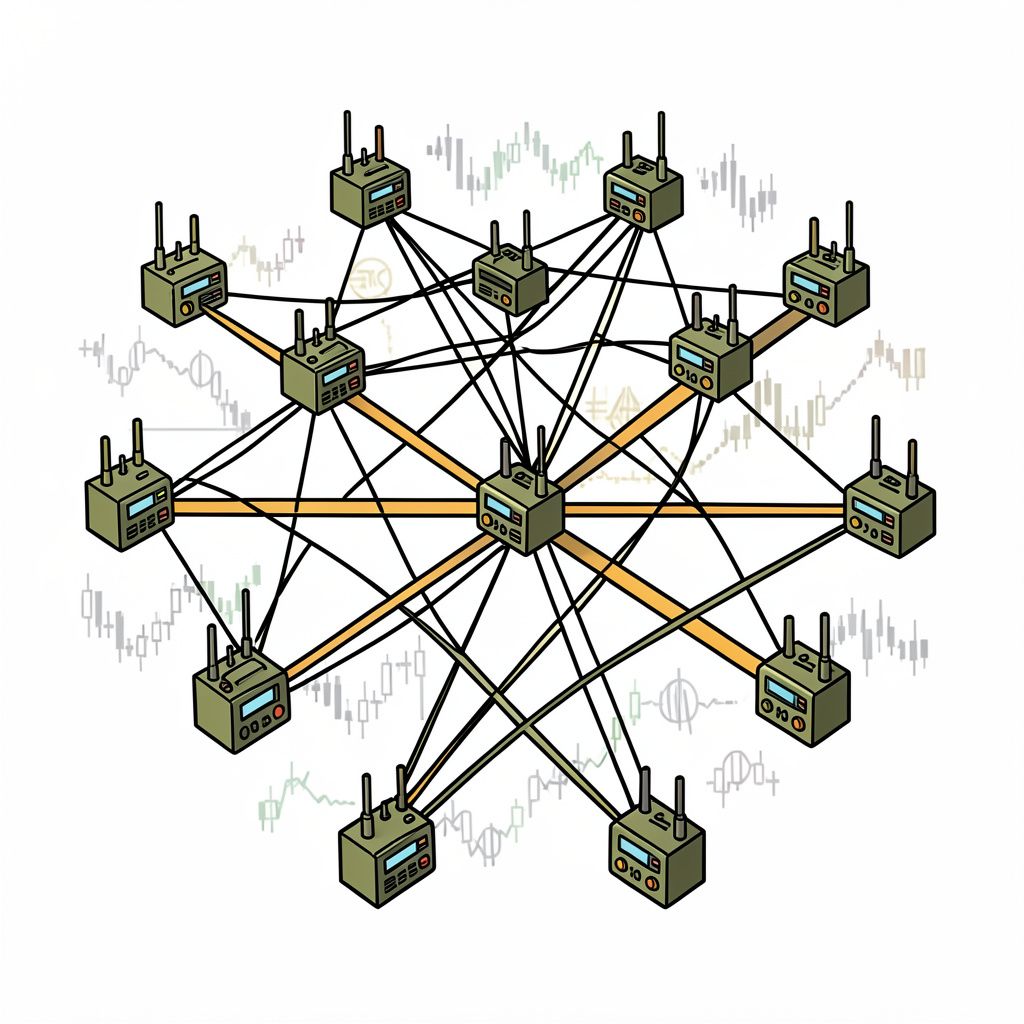
TrellisWare Technologies confirmed the deployment of over 1,100 TSM® waveform-enabled radios across eight distinct form factors during the recent field tests [1]. These systems supported the 2nd Brigade Combat Team, 4th Infantry Division, and multinational partners including forces from New Zealand, Australia, the United Kingdom, and Canada [1]. The technical demonstration highlighted the TSM Mobile Ad Hoc Network (MANET) waveform HDR+, which delivered greater than 50 Mbps throughput for over 800 nodes [1]. This performance was achieved while operating within 1.2 MHz channels, ensuring functionality in spectrum-constrained environments [1].
Strategic Implications for NGC2
The successful trial underscores the U.S. Army’s Next Generation Command and Control (NGC2) initiative, which requires communications technology capable of performing reliably across complex and evolving operational environments [1]. TrellisWare’s Software-Defined Radios (SDRs) utilized a Broad-Spectrum SDR Architecture providing greater than 1.5 GHz of total usable spectrum across UHF, L-band, and S-band frequencies [1]. This architecture facilitates multi-vendor and multi-security-level interoperability between U.S. and multinational forces, a critical requirement for modern joint operations [1]. Matt Fallows, Vice President of Business Development & Customer Support, emphasized the company’s commitment to working alongside the Army as it advances NGC2 and the future of tactical C2 [1].
Industry-Wide Momentum in Tactical Networking
Competing firms in the defense technology sector are showing similar growth trajectories aligned with military modernization efforts. Persistent Systems, LLC, a leader in defense technology specializing in Mobile Ad Hoc Networking (MANET) solutions, announced its second consecutive inclusion on the Inc. 5000 list on 11 August 2026 [2]. The company ranked No. 2,012 overall, representing a climb of over 680 spots from the previous year, which can be contextualized as a rise from approximately rank 2692 [2]. Dr. Herbert R. Rubens, CEO of Persistent Systems, noted that making the Inc. 5000 for a second consecutive year reflects the continued demand for resilient, reliable communications in increasingly complex operational environments [2].
Broader Ecosystem and Future Outlook
The networking tests are part of a larger ecosystem integration effort observed during Project Convergence Capstone 6 (PCC6), where assets like the Rogue 1 attack drone were also evaluated by the 4th Infantry Division at Fort Irwin [3]. The Rogue 1, built by Teledyne FLIR Defense, is part of the NGC2 push to connect battlefield data into one shared digital network so commanders everywhere can act on it in real time [3]. Army Secretary Dan Driscoll highlighted the urgency of this modernization, stating that the biggest risk is not moving fast enough on new tech [3]. As the 4th Infantry Division continues to serve as the Army’s testing ground for NGC2 since 2025, lessons from these field tests are already shaping the rollout to other units, including I Corps in Washington state [3].