Strategic Divergence Over Iran Conflict Tests US-UK Special Relationship
Washington, Friday, 6 March 2026.
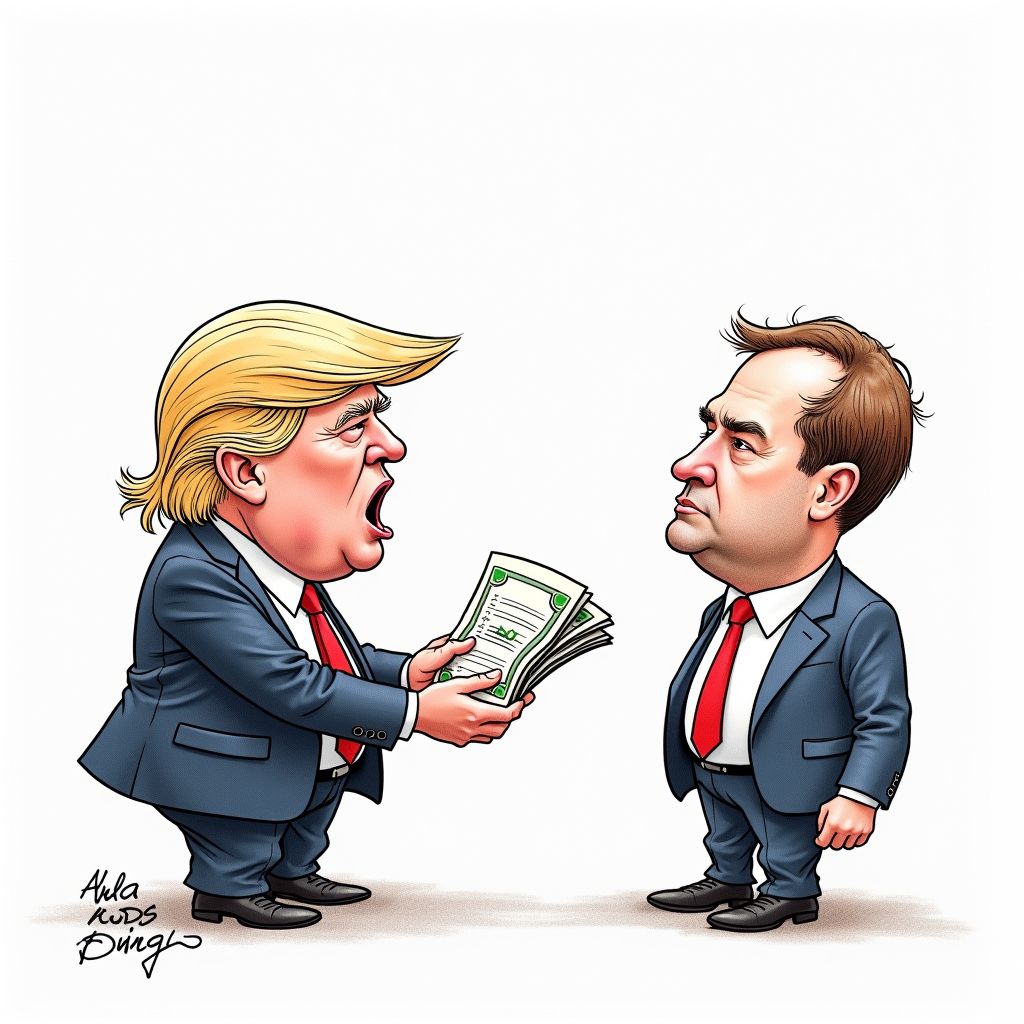
The historic alliance fractures as Prime Minister Starmer rejects ‘regime change from the skies,’ prompting President Trump to publicly label the United Kingdom uncooperative in the escalating war against Iran.
A War of Words and Policy
The diplomatic fissure widened significantly on Tuesday, March 2, 2026, when President Donald Trump explicitly characterized the United Kingdom as “uncooperative” and criticized Prime Minister Keir Starmer for failing to emulate the resolve of wartime leader Winston Churchill [1]. This rhetorical escalation followed Starmer’s initial refusal to authorize the use of British military bases for the U.S.-led offensive against Iran, which commenced on February 28 [2]. In a sharp rebuke delivered on Monday, March 2, the British Prime Minister told legislators that his government does not subscribe to a doctrine of “regime change from the skies,” implicitly criticizing the U.S. strategy [2]. By Wednesday, March 3, opposition politicians in London were openly accusing Starmer of weakening the “special relationship” due to these public disagreements [1].
Operational Constraints and Defensive Postures
Despite the harsh rhetoric, military cooperation between the two nations has not ceased entirely, though it is operating under strictly defined caveats. Following the initial prohibition, Prime Minister Starmer clarified that U.S. aircraft are permitted to utilize bases in England and Diego García, but with a specific operational mandate: they may only target Iranian missile systems that pose a threat to British allies in the Middle East [1]. Broader offensive strikes against other Iranian targets remain prohibited from these launch points [2]. To demonstrate the United Kingdom’s commitment to regional security, Starmer announced on March 3 the deployment of the HMS Dragon and anti-drone helicopters to the region for “defensive operations” [2]. This decision underscores the reality of the threat facing British assets, highlighted by an Iranian-made drone striking the British base in Akrotiri, Cyprus, over the weekend [2].
Historical Echoes in a Modern Crisis
The current strain draws inevitable comparisons to previous fluctuations in the transatlantic alliance. President Trump’s comment that Starmer is “not Winston Churchill” references the very statesman who coined the term “special relationship” in 1946 [1]. Diplomatic historians view the current standoff as reminiscent of Prime Minister Harold Wilson’s resistance to President Lyndon B. Johnson’s pressure to join the Vietnam War, a marked contrast to the lockstep alignment seen in 2003 when Tony Blair committed British troops to the U.S. invasion of Iraq [1]. In an interview published on March 3, President Trump noted that the UK has been “very different” from other allies during this crisis, while on March 4 he directed further harsh words toward both the UK and Spain for their vocal opposition to the escalation [2][6].
Navigating a Volatile Landscape
As the conflict enters its sixth day, the geopolitical stakes continue to rise. On March 5, U.S. Central Command reported that American B-2 jets had bombed ballistic missile launch sites in Iran and that an Iranian drone carrier was on fire [5]. This intensification follows the death of Iran’s Supreme Leader, Ayatollah Ali Khamenei, on February 28 [4]. While former UK National Security Advisor Peter Ricketts has advised the Prime Minister to “keep calm and carry on,” the divergence in strategy suggests a profound recalibration of the alliance [1]. Prime Minister Starmer maintains that current operations from British bases represent the “special relationship in action,” arguing that adherence to the alliance does not require clinging to every word from the White House [1].
Sources
- www.lmtonline.com
- www.nhregister.com
- www.foxnews.com
- www.bbc.com
- news.sky.com
- www.cbc.ca
- www.cnn.com
- www.cnn.com