US Strikes in Strait of Hormuz Spark Iranian Attacks on Military Bases in Jordan
Amman, Monday, 31 August 2026.
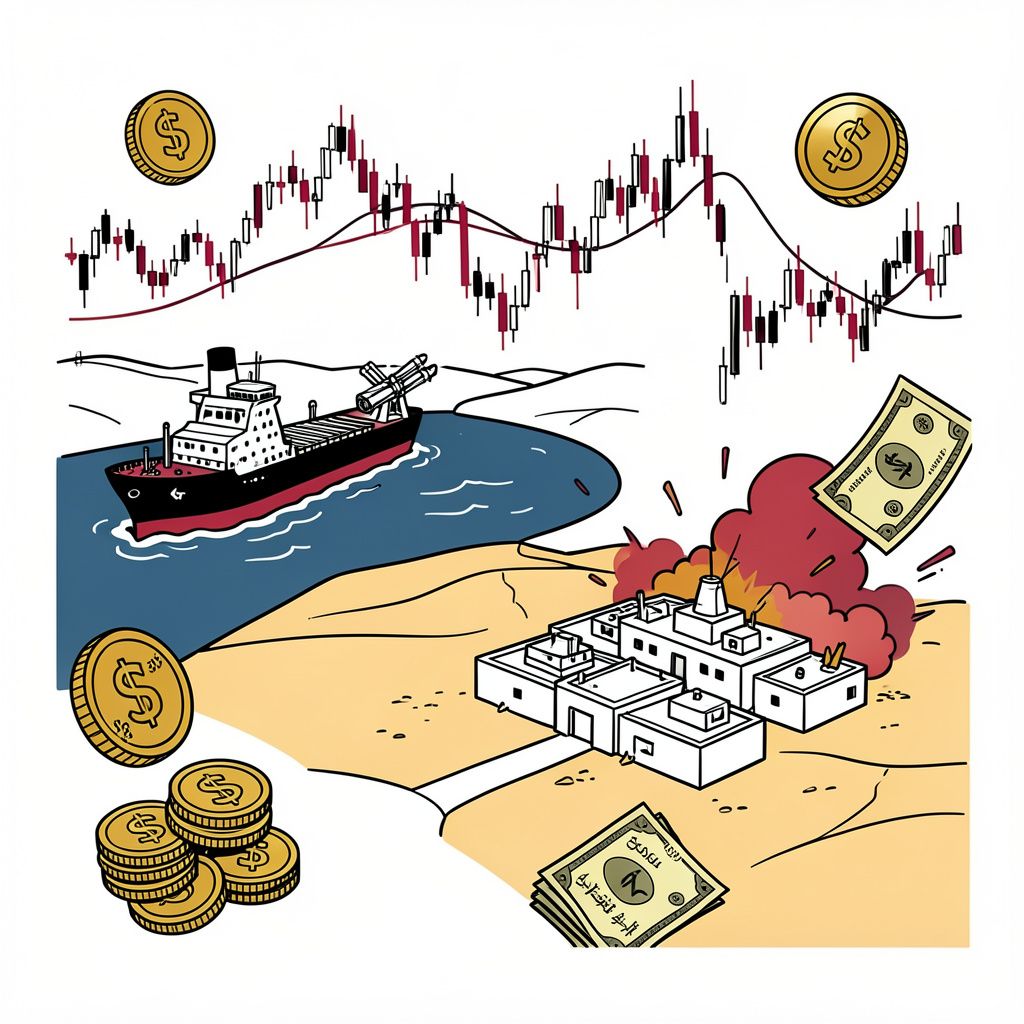
Renewed military conflict in the Strait of Hormuz has sent crude oil prices climbing, following US strikes on Iranian launchers and subsequent missile attacks targeting American bases in Jordan.
Escalation Following Larak Island Strikes
Tensions in the Middle East intensified significantly on August 31, 2026, following a cycle of military strikes that ended a month-long lull in direct engagements [1]. This development updates previous reporting on US forces striking Iranian missile launchers near the strategic energy shipping route [GPT]. On Sunday, August 30, 2026, US Central Command confirmed that its forces bombed two rocket launchers belonging to the Islamic Revolutionary Guard Corps (IRGC) on Larak Island [2]. The US action was described as a limited and precise measure intended to prevent Iranian forces from deploying sea mines into the Strait of Hormuz [3]. Iranian state media reported that the US attack resulted in casualties among Iranian fighters and civilians, though specific figures were not provided [1]. In direct retaliation, the IRGC launched a combined missile and drone operation dubbed Punishment of the Aggressor against US positions in Jordan [3]. The Jordanian military reported that its air defense systems successfully intercepted eight missiles that breached the Kingdom’s airspace at dawn on Monday, August 31, 2026 [3]. The IRGC stated it targeted technical infrastructure and fighter jet positions at the King Hussein and Al Azraq airbases, claiming heavy damage, while US sources indicated incoming missiles were intercepted with no significant impact [4][7].
Market Reaction and Energy Security
The renewed military conflict has immediately impacted global energy markets, with crude oil prices climbing on Monday amid supply disruption concerns [6]. Futures for international benchmark Brent crude for November delivery gained 1.54% to reach $89.46 a barrel [6]. US West Texas Intermediate futures for October advanced 1.44% to $84.60 per barrel [6]. Analysts warn that supply risk will persist and oil inventories will continue to deplete in the coming weeks and months [6]. The Strait of Hormuz remains a critical chokepoint, accounting for the transit of about a fifth of the world’s oil barrels consumed before the conflict began [4]. Since the war began in late February 2026, the average US petrol price has risen from under $3 to over $4 per 3.8 litres (1 gallon) 33.333 [3]. This price increase reflects the broader economic strain as vessel traffic through the Strait has been severely disrupted by the Middle East conflict, which has now entered its sixth month [6].
Economic Warfare and Strategic Outlook
Parallel to military actions, the US administration is intensifying economic pressure through a campaign dubbed Operation Economic Outcast [2]. Treasury Secretary Scott Bessent announced plans to unveil weekly secondary sanctions against banks facilitating Iranian transactions [7]. On August 28, 2026, the US Treasury Department imposed penalties on UAE branches of Egypt’s Banque Misr due to alleged financial ties to Iran [7]. Secretary Bessent stated that foreign governments and companies could lose access to US financial institutions for continued business with Tehran [2]. Iranian Foreign Minister Abbas Araghchi publicly disputed US claims of controlling oil transport, alleging that US government elements are manipulating energy markets to influence prices [3]. Diplomatic efforts spearheaded by mediators including Pakistan and Qatar have tried for months to bring an end to the war to no avail [4]. With 18 US service members killed in the conflict and millions displaced, the geopolitical risks continue to threaten energy market stability and broader supply chain routes vital to the global economy [4][GPT].
Sources
- www.aljazeera.com
- www.politico.com
- www.aljazeera.com
- www.theguardian.com
- www.facebook.com
- www.cnbc.com
- www.abc.net.au
- www.aljazeera.com