Regulators Crack Down on Massive Crypto Scheme Using Counterfeit Filings
Washington, Friday, 30 October 2026.
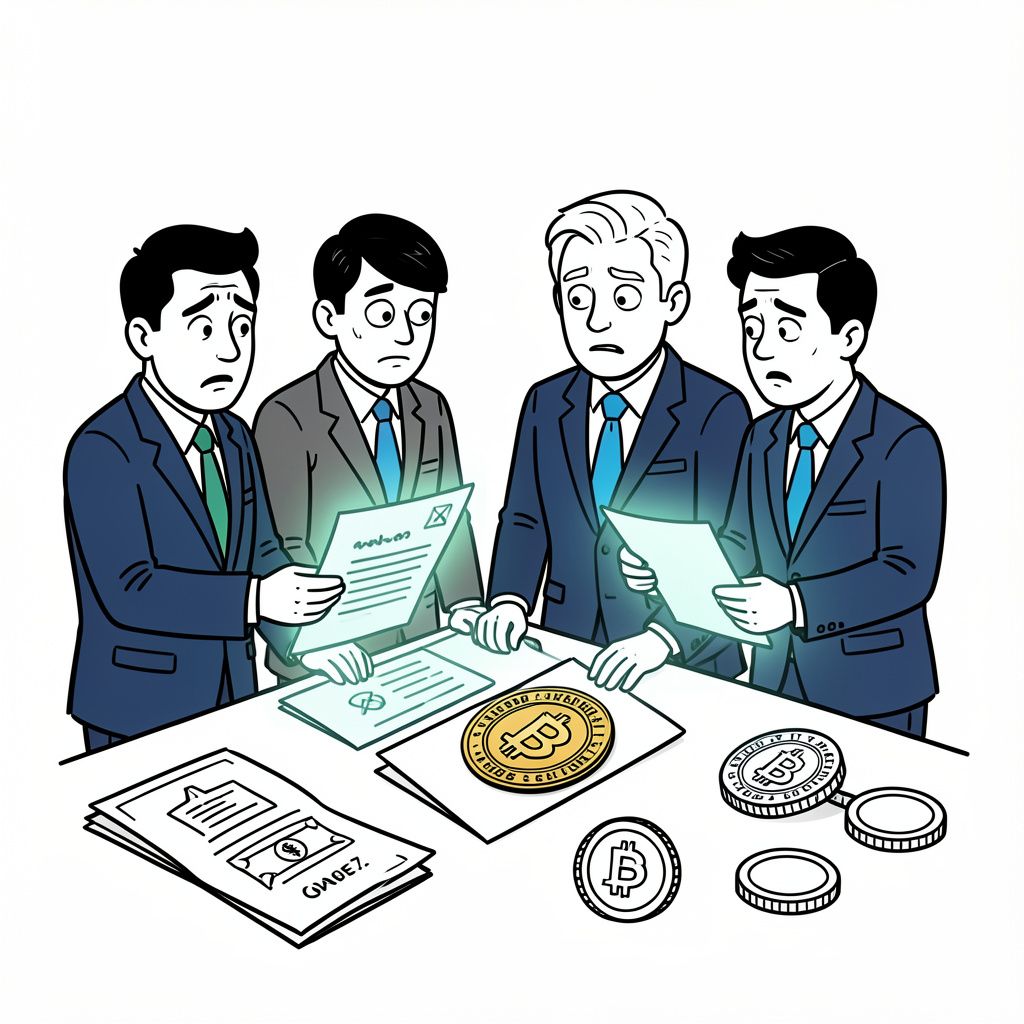
Federal authorities charged two offshore operators for orchestrating a $130 million crypto scheme that deceived thousands of investors by displaying fabricated regulatory filings and counterfeit government seals.
SEC Takes Action Against $130 Million Crypto Fraud Scheme
On October 29, 2026, the U.S. Securities and Exchange Commission (SEC) filed a civil complaint against two offshore entities—BG Wealth Sharing Ltd and DSJ Exchange Pty Ltd—for allegedly orchestrating a $130 million fraudulent investment scheme that spanned multiple U.S. states and territories [1][3][5]. Federal regulators allege the operators deceived tens of thousands of retail investors by fabricating SEC filings, including false Form ADV and Form D submissions, to create an illusion of regulatory legitimacy [1][3][5]. The complaint, filed in the U.S. District Court for the Northern District of California, marks a significant enforcement action targeting fraudulent practices in the crypto and AI-driven trading sectors. Laura D’Allaird, Chief of the SEC Enforcement Division’s Cyber and Emerging Technologies Unit, stated that the scheme was ‘well-planned,’ utilizing social media, encrypted messaging, weekly videoconferences, and a mobile app to sustain investor engagement while displaying counterfeit SEC seals and making periodic payments to selected investors—a tactic reminiscent of Ponzi schemes [1].
Timeline of Deception: How the Fraud Unfolded
The SEC’s investigation reveals that BG Wealth and DSJ Exchange operated their fraudulent wealth-sharing program between October 2025 and June 2026, targeting investors with promises of risk-free returns generated by AI-generated crypto trading signals [1][3][5]. BG Wealth falsely claimed to be the world’s largest SEC-registered hedge fund, while DSJ Exchange was presented as a licensed and secure crypto trading platform [3][5]. These claims were bolstered by fabricated regulatory documents, including false Form ADV filings for BG Wealth and Form D submissions for DSJ Exchange, which were publicly accessible on the SEC’s website until their removal in mid-2026 [1][3][5]. The complaint further alleges that the defendants misappropriated investor funds while making sporadic payments to sustain the illusion of profitability [1][3][5].
Regulatory Response and Cross-Jurisdictional Collaboration
The SEC’s enforcement action underscores the growing scrutiny of fraudulent schemes that exploit regulatory prestige to solicit capital. The agency is seeking permanent injunctions, disgorgement with prejudgment interest, civil penalties, and conduct-based injunctions against BG Wealth [1][3][5]. In a coordinated effort, the SEC received investigative assistance from multiple regulatory bodies, including the Alberta Securities Commission, the Hawaii Department of Commerce and Consumer Affairs, the Texas State Securities Board, the Utah Department of Commerce, Washington’s Department of Financial Institutions, and Wisconsin’s Department of Financial Institutions [3][5]. This collaboration highlights the international scope of the fraud and the need for coordinated regulatory responses. The SEC has also issued investor alerts warning the public about scammers using exempt reporting adviser (ERA) filings to falsely claim SEC registration [2][3].
Broader Implications for Investors and the Crypto Market
The alleged $130 million fraud—with investors losing over $100 million—serves as a stark reminder of the risks associated with unregulated crypto investment schemes [4][5]. The SEC’s actions reflect a broader crackdown on fraudulent entities that leverage counterfeit regulatory credentials to lure investors [1][3][5]. For retail investors, this case underscores the importance of verifying the legitimacy of investment opportunities through official channels such as Investor.gov, where investors can check the background of individuals or entities offering investment services [2]. The removal of BG Wealth’s Form ADV and DSJ Exchange’s Form D from the SEC’s website further signals the agency’s commitment to dismantling fraudulent operations that exploit regulatory trust [1][3][5]. As federal regulators intensify their oversight, this enforcement action may serve as a deterrent to similar schemes, though it also highlights the ongoing challenge of protecting investors in an increasingly complex financial landscape.
Sources
- www.sec.gov
- bankingjournal.aba.com
- www.kucoin.com
- thedefiant.io
- tradersunion.com
- x.com
- cbs.gov.ws
- www.tradingview.com