Ukrainian Drone Robots Break Through Russian Defense Lines
Kyiv, Monday, 28 September 2026.
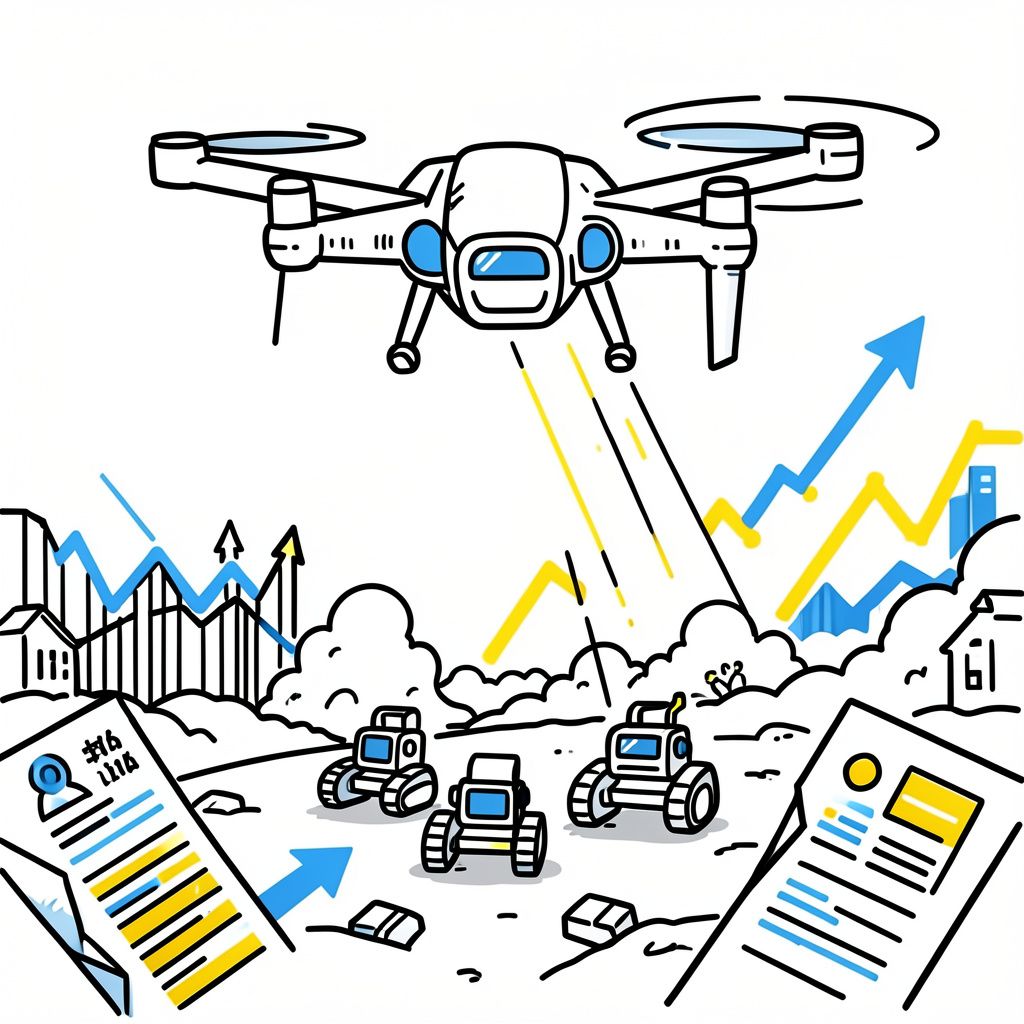
Ukraine deployed bomber drones to air-drop kamikaze ground robots deep behind Russian lines in Donetsk, killing over 3,000 troops and marking a major technological breakthrough on the front line.
Escalating Attrition Rates in Eastern Ukraine
As of September 27, 2026, the General Staff of the Armed Forces of Ukraine reported that total combat losses for Russian forces have reached approximately 1,528,970 personnel since the full-scale invasion began on February 24, 2022 [1][2]. In the 24-hour period leading up to this report, Russian forces incurred an additional 1,690 casualties, indicating a sustained high tempo of combat operations in the eastern regions [1][2]. Over the course of the conflict spanning 1,677 days, the average daily loss rate calculates to 911.729 personnel per day, though recent figures suggest a significant spike above this historical average [2]. The intensity of these engagements was further highlighted by records showing 175 combat engagements on the front line as of September 26, 2026, with particular concentration in the Pokrovsk direction [1].
Equipment Losses and Material Degradation
Beyond personnel casualties, the material toll on Russian military capabilities remains substantial. Reported losses include 12,384 tanks and 25,442 armored combat vehicles, reflecting the heavy mechanized attrition characteristic of the conflict [1][2]. Artillery systems losses stand at 50,428 units, while air defense systems lost total 1,677 units [1]. The destruction of operational-tactical UAVs has reached 535,846 units, underscoring the critical role of unmanned systems in current warfare dynamics [2]. Additionally, 154,245 vehicles and fuel tanks have been destroyed, impacting logistical sustainability for ongoing operations [1]. These figures illustrate the cumulative strain on defense supply chains and industrial production capacities required to replace such equipment.
Technological Shifts in Combat Tactics
In a notable tactical development reported on September 26, 2026, Ukrainian forces utilized heavy bomber drones to air-drop kamikaze ground robots deep behind Russian lines in the Donetsk region [4]. This operation, identified as Operation Vivaldi, reportedly resulted in approximately 3,000 Russian casualties and allowed Ukrainian forces to retake control of 48 square miles of territory [4]. The ground robotic systems, referred to as ‘Griffins’, were deployed up to 13 miles behind enemy lines, targeting areas where traditional infantry engagement would be prohibitively risky [4]. Commanders indicated that this technological breakthrough triggered significant disruption among Russian units, specifically damaging the combat potential of the 20th and 25th Combined Arms Armies [4].
Strategic and Political Implications
On the political front, former President Donald Trump stated on September 27, 2026, that 25,000 people died in the war last month and 32,000 the month prior, highlighting the human cost perceived by international observers [3]. Meanwhile, U.S. Ambassador to NATO Matthew Whitaker suggested on September 27, 2026, that the conflict would not be resolved solely on the battlefield, emphasizing the need for negotiation [6]. Retired Lt. Gen. Keith Kellogg analyzed the situation on September 27, 2026, noting that Russian leadership realizes the current trajectory is a losing effort, though geopolitical tensions remain high [5]. These perspectives underscore the complex interplay between military realities on the ground and diplomatic efforts to stabilize the region.