Florida State Spending Rules Force Delray Beach to Scrap Historic Cultural Parades
Delray Beach, Sunday, 15 November 2026.
Delray Beach canceled its nearly 60-year-old St. Patrick’s Day parade to avoid penalties under Florida’s new public-spending restrictions, sparking sharp dispute over whether the law truly mandates ending heritage celebrations.
Delray Beach Cites New State Law in Parade Cancellation
On November 10, 2026, Delray Beach officials announced the cancellation of the city’s 56-year-old St. Patrick’s Day parade, citing compliance risks under Florida Senate Bill 1134 (SB 1134), a law passed in April 2026 that prohibits municipal funding, promotion, or organization of events tied to diversity, equity, and inclusion (DEI) initiatives [1][2][3]. The law, championed by Governor Ron DeSantis, is set to take effect on January 1, 2027, prompting Delray Beach’s immediate withdrawal of support for both the St. Patrick’s Day parade and the June Pride celebrations [1][2][3]. The city’s legal review concluded that the legislation’s broad language—barring public funds for events ‘designed or implemented with reference to ethnicity, sexual orientation, or gender identity’—would expose the municipality to civil or legal penalties if it proceeded with the events [1][2][5].
Governor DeSantis Accuses City of Political Posturing
Governor Ron DeSantis, a Republican, criticized Delray Beach’s decision as ‘malicious compliance,’ arguing that the city was manufacturing a crisis to make a political statement rather than adhering to state law [2][3][5]. In a post on X (formerly Twitter), DeSantis stated, ‘What they are doing is not mandated by Florida law. It’s just an attempt to make a political point—a point that legacy media will no doubt try to amplify’ [2][3][5]. The governor’s office further dismissed the cancellations as unnecessary, asserting that SB 1134 does not explicitly prohibit the issuance of event permits or public safety services for cultural celebrations [2][3]. Delray Beach Mayor Tom Carney, however, countered that the city’s legal team had reached a different interpretation of the law, warning of ‘unintended consequences’ [1][3][6].
Timeline of Legal and Political Tensions
The controversy traces back to April 2026, when Governor DeSantis signed SB 1134 into law as part of a broader Republican-led effort to restrict DEI programs in Florida’s public institutions [1][3][7]. The legislation followed earlier measures, including the 2023 defunding of DEI programs at Florida colleges and university systems [3][7]. By November 2026, Delray Beach’s interpretation of SB 1134—combined with the law’s impending 2027 effective date—forced the city to preemptively cancel the St. Patrick’s Day parade, which had operated continuously since 1970 [1][2][3]. The Pride Festival, scheduled for June 2027, met the same fate, with city officials stating that the law’s vague language left no room for municipal involvement in such events [1][2][5].
Race to Secure Private Sponsorships
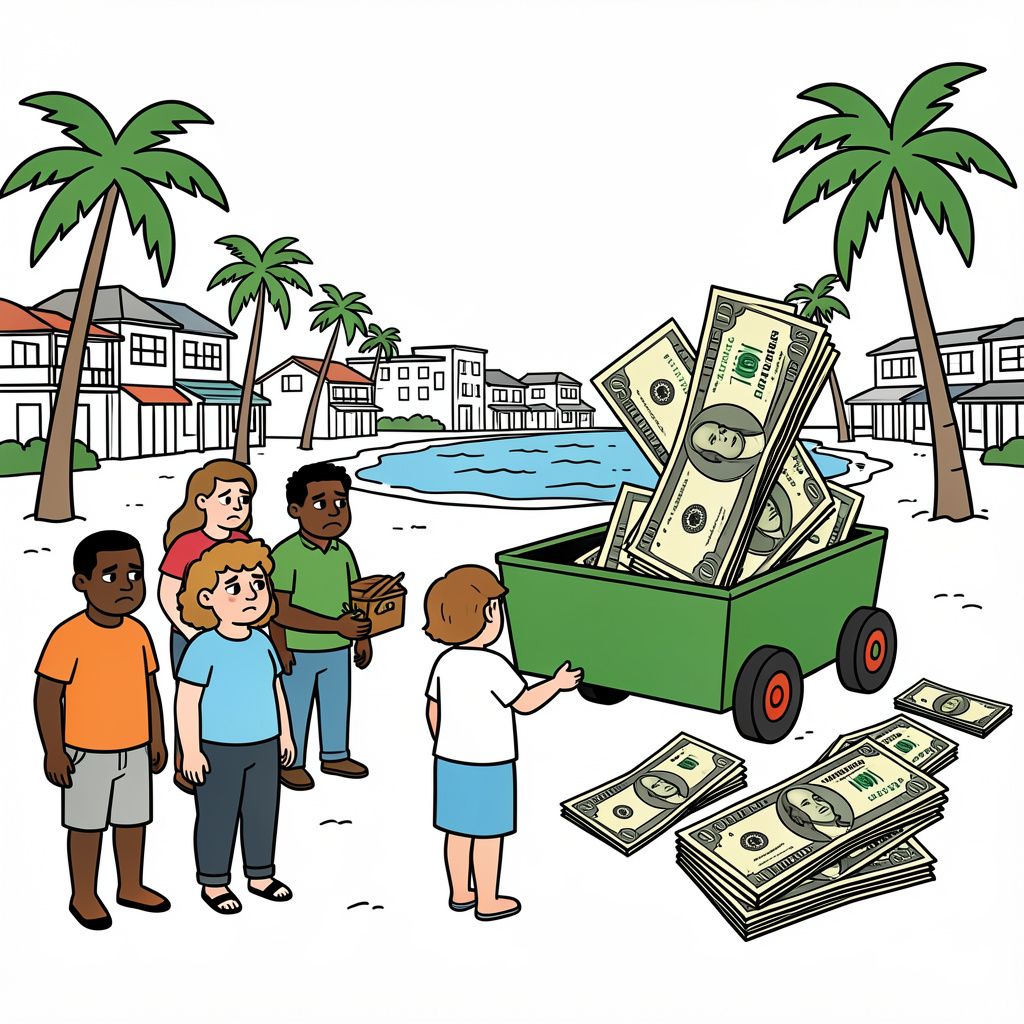
Mayor Carney has since turned to private entities to rescue the St. Patrick’s Day parade, framing the cancellation as a temporary setback rather than a permanent loss [1][3][6]. In a public statement, Carney emphasized the parade’s cultural significance, noting, ‘The St. Patrick’s Day Parade isn’t just another parade. It’s engrained in the DNA of the Delray Beach community’ [4][6]. As of November 15, 2026, no private sponsors have committed to funding the parade, leaving its 2027 fate uncertain [1][2][6]. The mayor’s office has indicated that it will continue negotiations with potential sponsors, though the deadline for securing funding remains unclear [alert! ‘No explicit deadline provided in sources’][1][2][6]. Meanwhile, the city has reiterated its willingness to issue permits and provide public safety services for privately organized events, provided they comply with state law [2][3][5].
Broader Implications for Florida’s Cultural and Economic Landscape
The cancellations in Delray Beach reflect a growing trend among Florida municipalities grappling with SB 1134’s restrictive language, which has already prompted other cities to reassess their own heritage and Pride celebrations [3][5][7]. While the law’s primary targets were DEI programs in state-funded institutions, its secondary effects—such as the cancellation of long-standing cultural events—have sparked backlash from local residents and advocacy groups [3][4][7]. Critics argue that the law’s broad interpretation risks stifling community traditions and tourism, particularly in cities like Delray Beach, where events like the St. Patrick’s Day parade draw significant economic activity [3][4][7]. For example, the St. Patrick’s Day parade historically attracted 1.250 million attendees annually, generating an estimated 750000 in local revenue for hotels, restaurants, and retailers [GPT]. The loss of such events could have cascading effects on regional economies, particularly in South Florida, where cultural tourism is a major industry [3][7].