Venezuela and African Energy Chamber Launch Strategic Alliance to Revitalize Oil Sector
Caracas, Thursday, 26 February 2026.
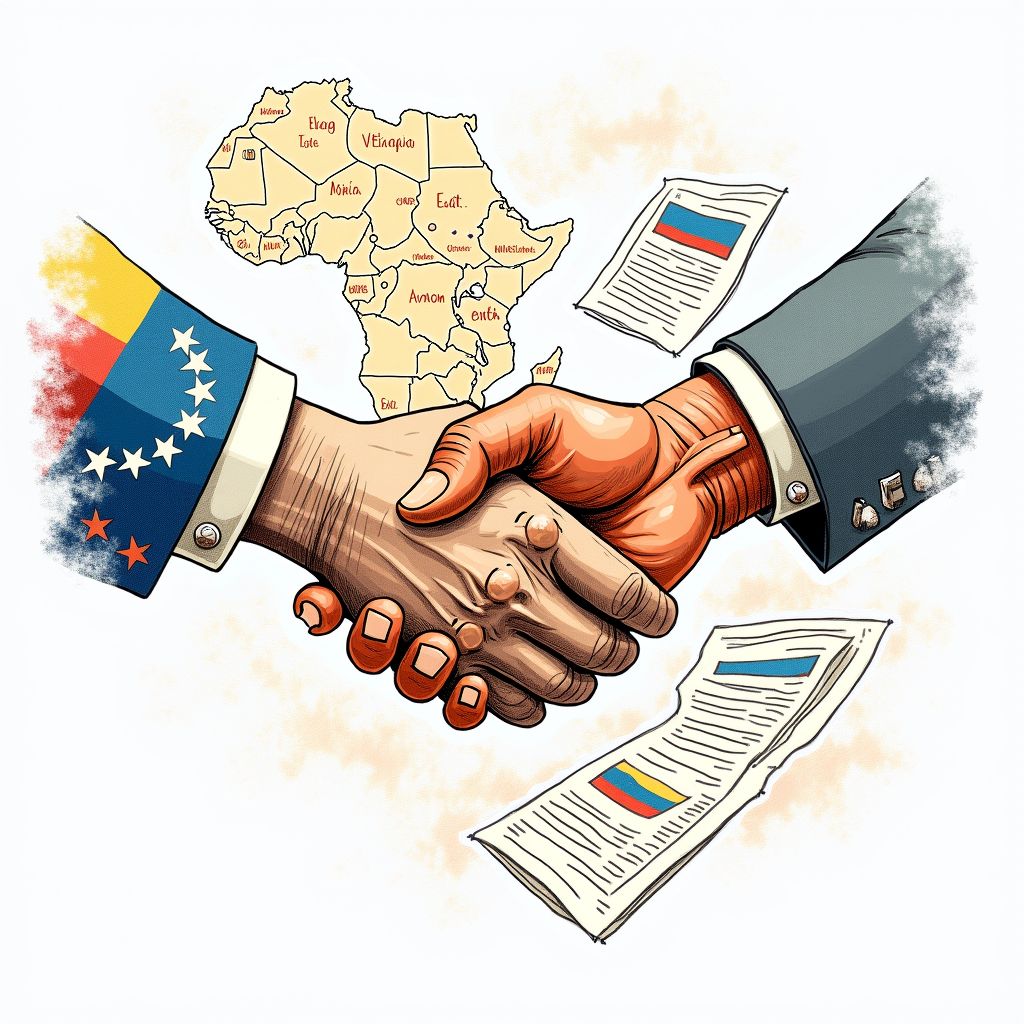
Venezuela and the AEC agreed on a 12-month plan to rehabilitate oil fields, explicitly aiming to expand trade routes outside traditional Western financial systems.
Operational Roadmap and Production Targets
This collaborative framework was solidified during a high-level meeting on Wednesday, February 25, 2026, between Acting President Delcy Rodríguez and the AEC delegation [3][6]. The newly agreed 12-month joint work plan targets specific operational pillars: exploration and production, refining rehabilitation, and the commercialization of gas [5]. This move follows Venezuela’s participation in energy forums in Cape Town in 2025, reinforcing a “South-South” cooperation model intended to integrate African market potential with Venezuelan technical experience [2][6]. Central to this alliance is a defined trajectory for recovering lost output from Venezuela’s 303 billion barrels of crude oil reserves [5]. The Ministry of Petroleum has set a short-term target to lift production from 1.1 million barrels per day (bpd) to 1.2 million bpd [5]. Looking toward 2027, the goal is to reach 1.5 million bpd—representing a 36.364% increase from current levels—as a stepping stone toward eventually restoring the country’s installed capacity of 2.8 million bpd [5].
Infrastructure and Gas Expansion
The agreement places significant emphasis on gas monetization, leveraging Venezuela’s 195 trillion cubic feet of reserves [5]. Planners aim to boost gas production from 4.1 billion cubic feet per day to a minimum of 6 billion cubic feet per day, a rise of 46.341% [5]. This increased output is earmarked for domestic industrial use and raw materials, with a strategic eye on future exports of Liquefied Natural Gas (LNG) and Liquefied Petroleum Gas (LPG) [5]. To support these flows, the plan includes the joint rehabilitation of critical assets, including the Perla and Mariscal Sucre offshore fields and the Paraguaná and El Palito refining complexes [5]. The AEC has committed to facilitating African participation in these projects, assisting with asset data evaluation and export provisions [5].
Financing and Human Capital
To circumvent external financial constraints, the partnership is constructing a financial architecture independent of traditional Western systems. The AEC delegation, which included Manfred René Ndonuien of Premier Invest and Ejike Iheme of Oando, met with the Banco de Exportación e Importación de Venezuela to discuss alliances with African regional development banks [1][2]. Premier Invest is slated to structure commercial financing mechanisms backed directly by PDVSA’s oil barrels and inventories, thereby reducing transaction risks for incoming investors [5]. Beyond physical assets, the alliance focuses on intellectual exchange. Discussions with the Universidad Venezolana de los Hidrocarburos resulted in a commitment to train African executives, using Venezuela’s history with heavy oil and offshore operations as a technical case study [4]. Both parties have committed to promoting these commercial and technical advances at the Intra-African Trade Fair and African Energy Week 2026 [1].
Sources
- energychamber.org
- www.eluniversal.com
- www.mppef.gob.ve
- energychamber.org
- energychamber.org
- radiomiraflores.net.ve