Why Suburban Northeast and Midwest Neighborhoods Are Driving U.S. Housing Demand
New York, Tuesday, 11 August 2026.
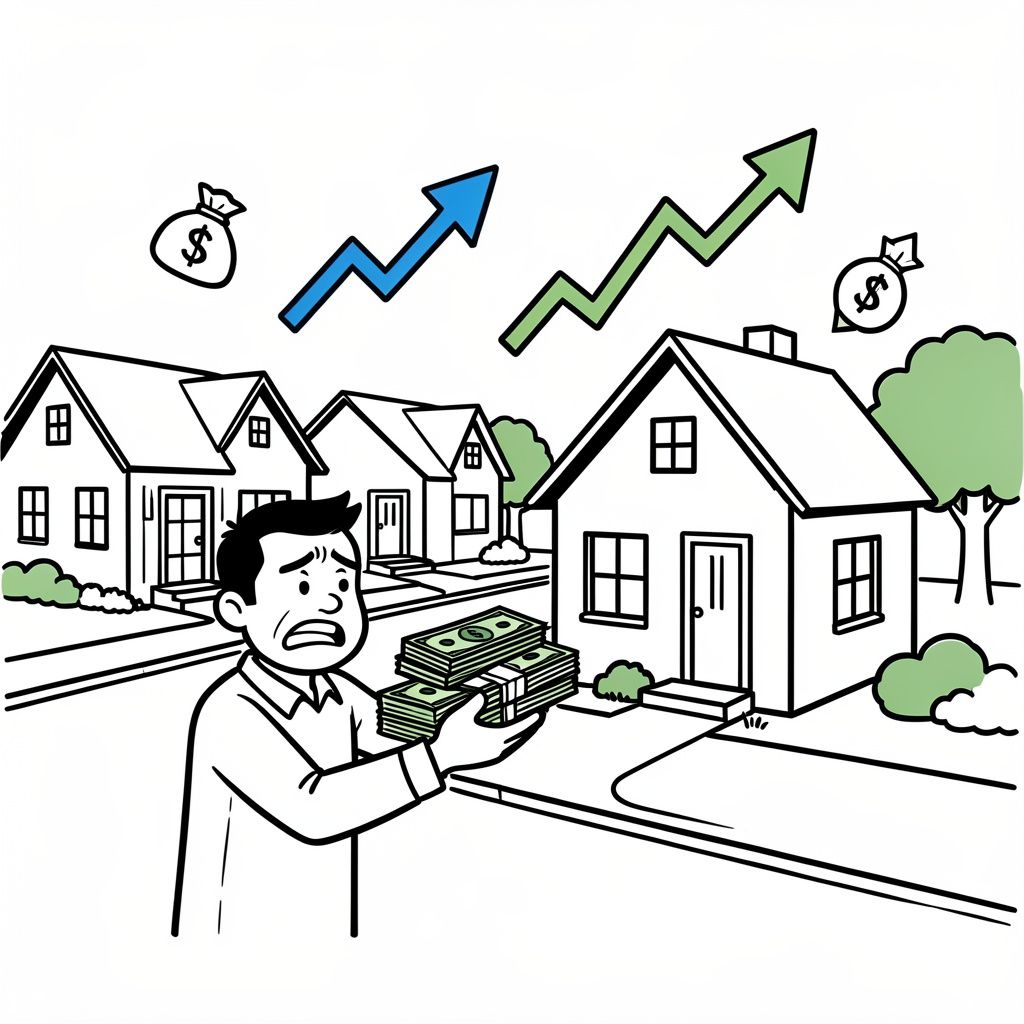
Suburban Northeast and Midwest markets lead U.S. real estate demand, where housing inventory remains 60% below pre-pandemic levels, forcing buyers to offer larger down payments to compete.
Why Suburban Northeast and Midwest Neighborhoods Are Driving U.S. Housing Demand
A new housing market report released on 2026-08-09 reveals significant shifts in regional real estate demand across the United States, pointing to emerging hotspots as buyers adapt to broader macroeconomic pressures [1][3]. The findings from Realtor.com indicate that the top 10 in-demand housing markets are exclusively located in the Northeast and Midwest for the fourth consecutive year, challenging previous trends of Sun Belt migration [1][3]. This concentration suggests a structural change in buyer preference towards established suburban corridors near major economic hubs [4].
Inventory Constraints and Market Velocity
Housing inventory in these top 10 ZIP codes is 60 percent below pre-pandemic levels, significantly tighter than the national inventory which is 11 percent below pre-pandemic levels [1][3]. Homes in nine of the top 10 ZIP codes are selling at or above asking price with an average sale-to-list ratio of 103.8 percent, contrasting with the national average where homes sold for 2.3 percent below list price in the first half of 2026 [1]. During the first six months of 2026, homes in these top 10 ZIPs received three to five times more online traffic than the national average and sold 30 to 42 days faster than the U.S. norm [3][4].
Financial Profiles of Buyers
Buyers in the top 10 ZIP codes utilize larger down payments, averaging 17 percent compared to the 13 percent national average, representing a 4 percentage point difference in upfront capital [1][3]. Median credit scores in these high-demand areas reach 766, compared to 747 nationally, indicating that today’s borrowers have to be more financially equipped to participate in today’s housing market because with mortgage rates in the mid-to-high 6 percent range [3]. This financial robustness allows buyers to compete effectively despite higher borrowing costs, with both down payment figures higher than pre-pandemic levels [1][3].
Peabody Leads the Market
Peabody, Massachusetts (01960) ranked as the No. 1 hottest ZIP code in the first half of 2026 with a $600,000 median list price and views 4.09 times the U.S. average [2][3]. Peabody has approximately 55,000 residents and is situated 20 minutes from downtown Boston, benefiting from limited inventory, structural land scarcity, and zoning constraints typical of the region [4]. As of June 2026, the median asking price was $667,000, which is 20 percent below the Boston metro average of greater than $800,000 [4].
Regional Dynamics and Commuter Value
Many of the most in-demand ZIP codes sit in the suburbs outside major cities like Boston, New York, and Philadelphia, giving buyers a little more space and a quieter lifestyle while keeping the city within commuting distance [4][7]. Hannah Jones, a senior economist at Realtor.com, noted that rather than pulling in outside relocators, Peabody’s popularity appears to reflect existing Boston-area residents shopping for a different town within reach of the same job market [4]. This trend underscores a shift where buyers prioritize established neighborhoods that offer value but tend to be higher price, moving away from purely affordable ZIP-code focus [2][3].
Economic Implications and Outlook
Expert analysis suggests that despite high mortgage rates and gradual inventory recovery, high-performing, value-driven suburban markets will continue to lead real estate activity [4]. As mortgage rates remain high and inventory levels gradually recover, expect these kinds of high-performing, value-driven suburban areas to remain at the forefront of market activity [4]. The data indicates that cross-country migration type of buyer demand is not as prevalent as localized competition within major metro corridors [1][3].