Senate Panel Advances Trillion-Dollar Farm Bill to Support Struggling Agriculture Sector
Washington, Wednesday, 16 September 2026.
The Senate Agriculture Committee advanced a landmark farm bill to support struggling producers, though the partisan legislation faces a steep battle on the Senate floor over food aid disputes.
Senate Committee Advances Landmark Legislation
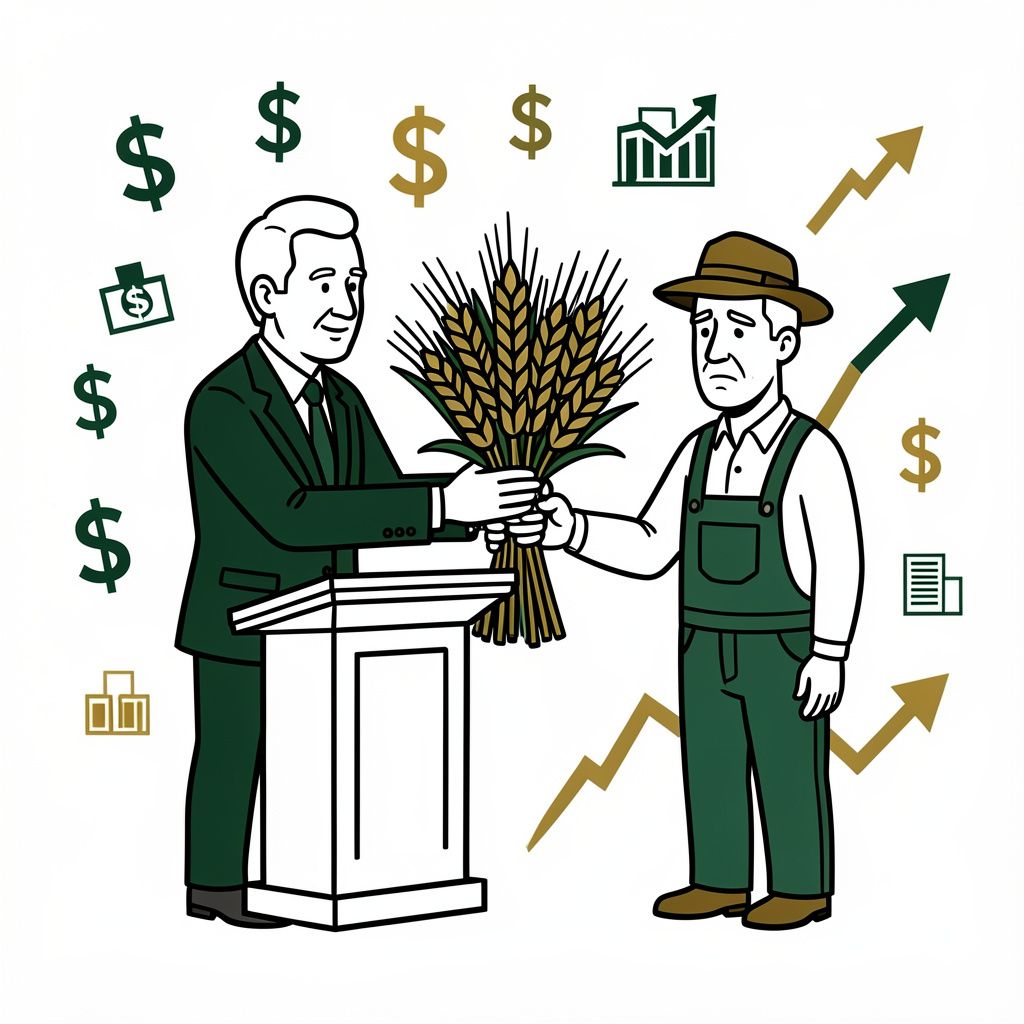
The Senate Agriculture Committee advanced a landmark farm bill to support struggling producers on Wednesday, September 16, 2026, though the partisan legislation faces a steep battle on the Senate floor over food aid disputes [1][5]. Estimated to reach approximately $1.5 trillion over the next decade, this prospective legislation represents the first trillion-dollar agriculture package in U.S. history [1]. Congress has operated on temporary extensions since the bipartisan 2018 Farm Bill expired in 2023, leaving agricultural businesses eager for a comprehensive policy framework to address rising input costs, trade challenges, and land protection measures [1][2]. While Republicans anticipate the legislation will advance during the Wednesday markup without amendments, the bill faces significant hurdles as it requires 60 votes to pass the full Senate floor and currently lacks Democratic support due to disputes over Supplemental Nutrition Assistance Program (SNAP) cost shifts [1][6].
Leadership and Legislative Timeline
Senate Agriculture Committee Chairman John Boozman (R-AR) launched the #FacesOfFarmBill social media campaign in mid-August 2026 to highlight rural perspectives and justify the provisions of the proposed Farm Bill 2.0 [3]. Chairman Boozman announced on September 15, 2026, that the Senate Agriculture Committee intends to advance the Farm Bill 2.0 legislation during the week of September 14, 2026 [3]. The business meeting was held in Room 318 of the Russell Senate Office Building at 3:30 p.m. and was livestreamed for public viewing [5]. A key factor in the committee’s ability to advance the bill was the return of Sen. Mitch McConnell (R-Ky.) to the Senate Agriculture Committee following his recovery from a fall [1][5]. During a previous markup on August 6, all Democrats voted no on the bill and two Republicans, McConnell and Tommy Tuberville of Alabama, were absent, resulting in an 11 to 10 vote that required reconvening [5].
Economic Stakes for American Agriculture
Over the last decade, the U.S. agricultural sector has lost more than 200,000 family farms due to rising costs, shifting markets, and labor instability [2][4]. The current farm bill extension is scheduled to expire on September 30, 2026, creating a紧迫 deadline for lawmakers [2]. Farm Bureau members from 13 states visited Washington, D.C., during the week of September 14 to September 20, 2026, to meet with U.S. senators from both parties to advocate for the passage of the 2026 farm bill [2]. American Farm Bureau Federation President Zippy Duvall noted that in the past 10 years, more than 200,000 family farms have gone out of business as farmers grappled with a pandemic, global unrest, rising expenses and falling prices paid for the food they grow [4]. The proposed legislation includes specific measures for rural infrastructure and industry, such as Farm Service Agency loan limit updates and aquaculture support via ELAP improvements [3].
Partisan Divides and Senate Floor Prospects
Democrats’ frustration and the broader breakdown in the traditional agriculture policy coalition stems directly from both parties advancing their farm bill priorities through the reconciliation process in recent years [1]. Senator Tina Smith (D-MN) released a statement after the Senate Agriculture Committee failed to pass a bipartisan Farm Bill, instead choosing to pass a partisan version drafted by Republicans that will not gain enough support to pass the full Senate [6]. The partisan legislation forces Minnesotans to pay $140 million in administrative costs and fails to address SNAP cuts, according to Senator Smith [6]. Democrats insist the delay on SNAP cost shifts must be longer to win their support, as counties would otherwise be forced to increase property taxes to cover the costs of administering the program [5][6]. While Chairman Boozman sees a possible path even if negotiations extend beyond Election Day, noting that the previous farm bill was approved during a lame-duck congressional session, the immediate path remains uncertain [1][5].
Sources
- www.agriculture.com
- www.fb.org
- www.boozman.senate.gov
- www.fb.org
- www.thefencepost.com
- www.smith.senate.gov