Arctic Ocean Crosses Irreversible Tipping Point Threatening Global Food Chains
Anchorage, Friday, 29 May 2026.
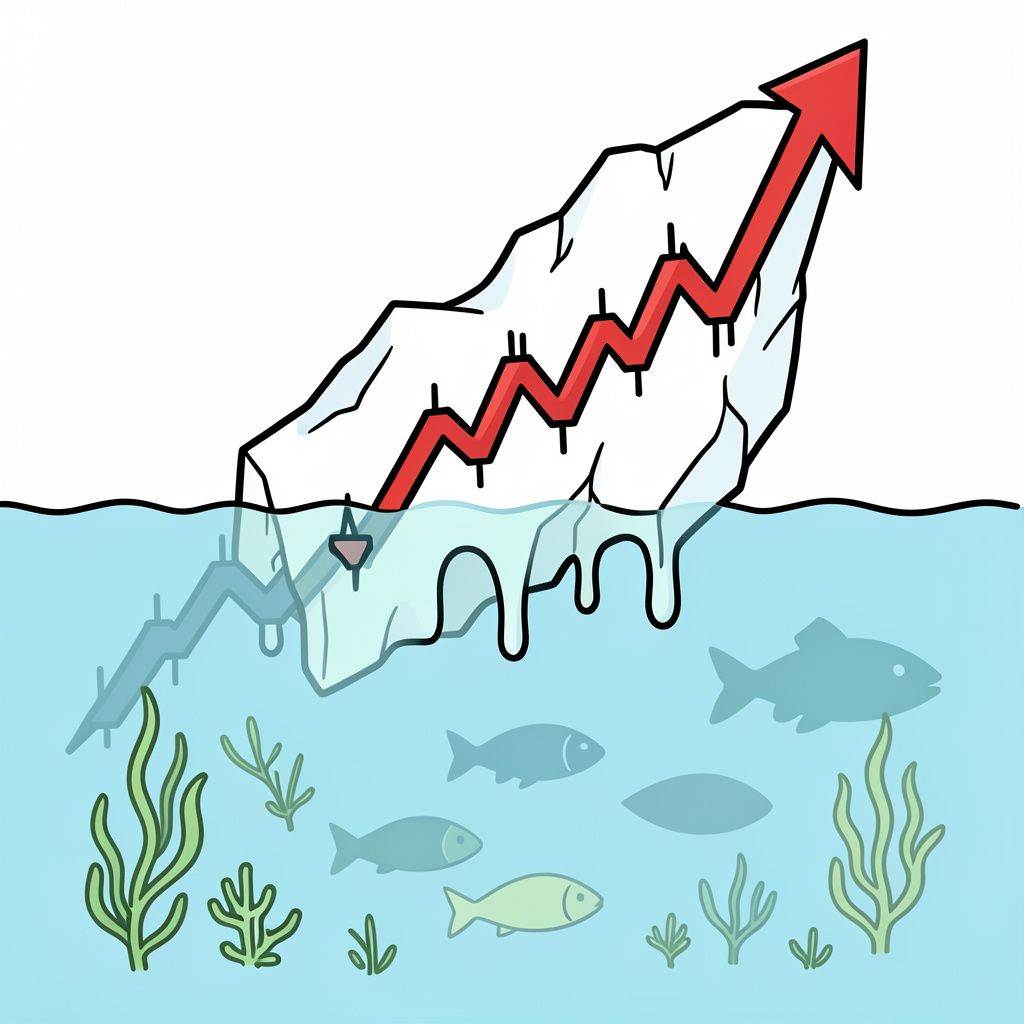
A May 2026 study reveals the Arctic Ocean passed an irreversible tipping point in 2009. Rapid sea ice loss has permanently depleted vital nutrients, threatening global marine food chains.
A Fundamental Chemical Shift
Recent research published in late May 2026 in the journal Communications Earth & Environment presents a sobering reality for marine ecosystems and the global economies that depend on them [1][2]. Analyzing oceanographic data collected over a span of 20 years—specifically from 2006 to 2026—researchers focused their efforts on the Fram Strait, the primary marine gateway connecting the Arctic to the Atlantic Ocean [2]. The findings reveal a steady, continuous decline in essential nitrate levels in the water leaving the Arctic region [1][2]. This extensive dataset, supported by the Natural Environment Research Council’s (NERC) Changing Arctic Ocean project, definitively establishes that an irreversible ecological tipping point was crossed around 2009 [2][3].
From Light-Limited to Nutrient-Starved
Historically, climate models and marine biologists suggested that retreating sea ice might actually boost phytoplankton growth, operating on the logical assumption that more sunlight reaching surface waters would stimulate photosynthesis [1][2]. However, Marta Santos-García, a Ph.D. student at the University of Edinburgh’s School of GeoSciences, notes that this relationship has fundamentally inverted [1][2]. The Arctic Ocean has transitioned from an ecosystem primarily constrained by light availability to one increasingly paralyzed by a severe lack of nitrates [1][2]. This systemic shift forces the marine ecosystem to rely on smaller plankton species, which are inherently less productive and offer lower nutritional value [1][2].
Economic and Climatic Repercussions
Beyond the immediate biological impacts, the chemical alteration of the Arctic Ocean presents severe risks to global climate stability and commercial markets [GPT]. The reduction in plankton productivity directly weakens the ocean’s capacity to photosynthetically absorb and store atmospheric carbon dioxide, potentially accelerating global warming trajectories and complicating international net-zero targets [1][2]. Furthermore, the nutrient-depleted waters flowing out of the Fram Strait threaten to destabilize commercial fishing operations in the North Atlantic Ocean [1][2]. For the global seafood industry, this translates to heightened supply chain risks, volatile pricing, and the potential for long-term yield reductions [GPT].